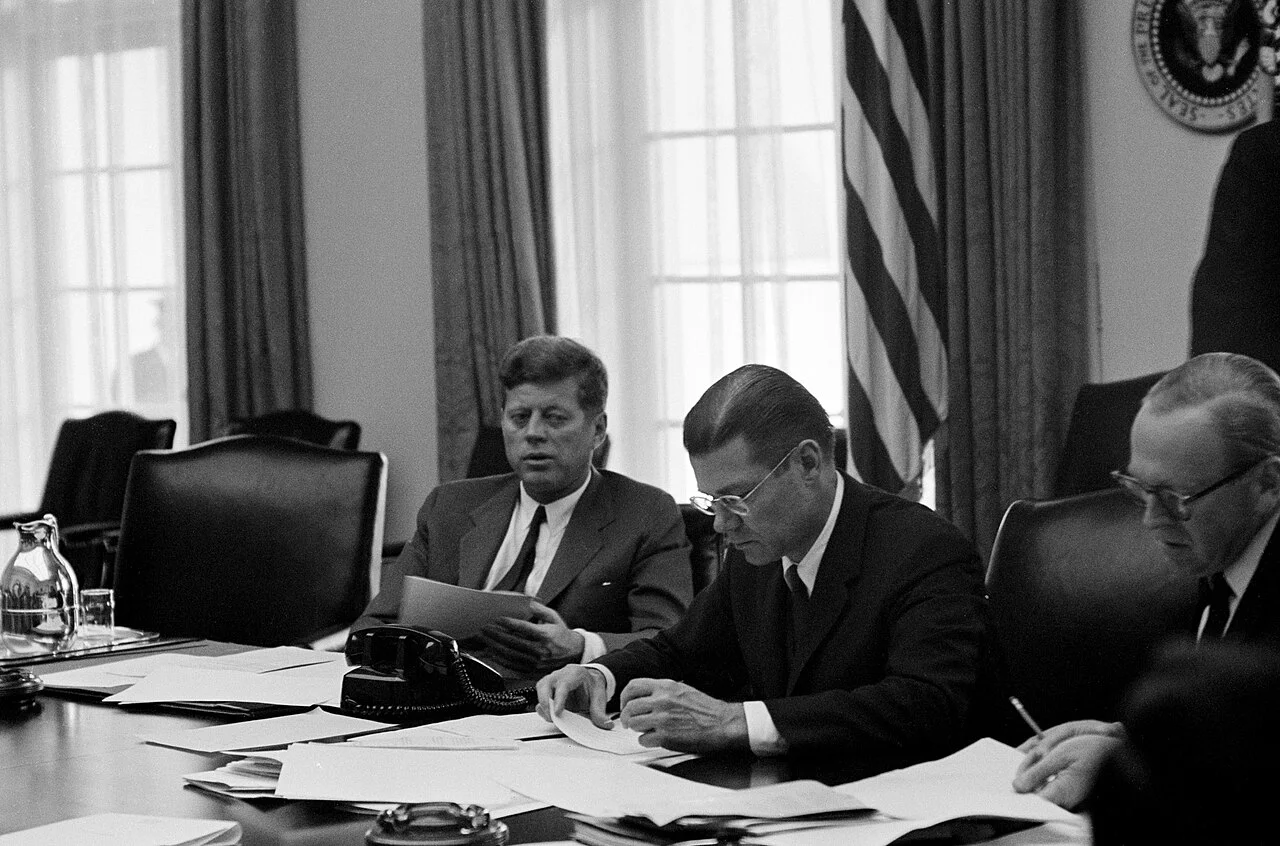
McNamara in the Rear-View Mirror

Bob McNamara's immense talent, high IQ, tremendous work ethic, and great love of this country were not enough to help him as he went down the wrong path with a demanding president and a challenging problem that American smarts and know-how alone could not solve.
To the extent that people still remember Robert McNamara, it is as the corporate manager with slick-backed hair who became secretary of defense under John F. Kennedy and then became the face of the Vietnam War under Lyndon Johnson. Those things are, of course, true, but there is much more to the McNamara story than simply a Ford CEO becoming a government executive, as brothers journalist Philip Taubman and academic William Taubman lay out in McNamara at War: A New History.
McNamara was born into modest circumstances in California. His father was a shoe salesman, and his mother was a homemaker with big ambitions for her talented son. Although he got into Stanford, he went to Berkeley because he couldn't afford the private university’s tuition. A brilliant student, McNamara later attended Harvard Business School, which became the accelerator of his career. He was on track for an academic career at Harvard Business School when World War II intervened. He became an important cog in America's military machinery, helping the U.S. Army Air Force maximize its effectiveness, i.e., the lethality, of its bombing runs. This would be important to his later decision making during the Vietnam War.
After the war, McNamara’s career took a surprising turn when he went to Ford Motor Company. The thought was always that he would do it for a while before returning to teach at Harvard, but he fit in well at Ford and became a successful executive, eventually becoming the company's president. If this were the end of the story, there would be no need for biographers, but as we all know, things changed with the election of John F. Kennedy in 1960.
Kennedy, wanting a Republican in his cabinet, selected the well-regarded McNamara as secretary of defense. This was a shock to McNamara, and he thought he was not qualified for the job. Of course, few people are actually qualified to hold a position of that stature, and McNamara was soon convinced that he should take the job. One of the first surprises of the book is that, when he left Ford, McNamara had been president there for only 51 days. This was not someone with a storied history as Ford's CEO, but that of a relative newbie who left Henry Ford the Second in the lurch to take a big government job. Later, when Lyndon Johnson was frustrated with McNamara, he even made a crack that, “I forgot he had been president of Ford for only one week” – exaggerating, but only slightly, for effect.
Though McNamara didn't know Kennedy before, he quickly became one of Kennedy's most trusted aides largely because of his effectiveness and his decisiveness. According to National Security Adviser McGeorge Bundy, Kennedy relied on McNamara because “he knew that he could not get an answer if he called the Secretary of State and he could get one if he called Secretary of Defense.” Secretary of State Dean Rusk was famously taciturn – Arthur Schlesinger called him Buddha-like in his memoirs – but Rusk claimed that his silence stemmed from his dislike of advising the president in front of others. According to Bundy, though, “the president does not find that he gets that much more from the secretary when they are alone together.”
McNamara stepped into the vacuum created by Rusk’s diffidence and became close to both Kennedy and his wife, Jackie, as well as a key member of the New Frontier crowd. McNamara worked hard to fit in with the Kennedy circle. Unlike the golf-loving Eisenhower administration, the Kennedy team was partial to tennis, so McNamara took private lessons with the legendary coach Allie Ritzenberg to become good enough to play without embarrassment. He would arrive for these twice-weekly lessons on Tuesdays and Thursdays precisely two minutes before the 7:00 a.m. start time, almost without fail. During the Bay of Pigs, a Pentagon aide came and told Ritzenberg that McNamara would be unable to appear that day, a rare absence in what became a 40-year habit.
As defense secretary, McNamara was hard-charging and demanding, and willing to take on the military brass. During the Cuban Missile Crisis, McNamara pressed Admiral George Anderson, who reported his readiness to attack any Soviet ship that “challenged the quarantine.” Anderson responded to a questioning McNamara that his stance was based on the Navy regulations manual, saying, “it's all in there.” McNamara replied: “I don’t give a damn what John Paul Jones would have done. I want to know what you are going to do now.”
Despite his talents and his work ethic, McNamara alienated military officials with his ego and his reliance on computers. There was even a joke in Pentagon circles that IBM stood for, “I, Bob McNamara.” One general told TIME magazine, anonymously, of course, that McNamara was “one of the most egotistical persons I know. It never dawns on him that he might get more help from the military. He doesn't take our advice.”
After Kennedy's tragic assassination in 1963, Johnson prevailed upon McNamara and some other key administration aides to stay in place. Staying, however, became a huge mistake for McNamara. If he had just left and gone back to Ford, he would have been remembered as a successful secretary of defense who tried to implement some key changes in the Pentagon bureaucracy and was an effective advisor to Kennedy. Instead, he stayed and became perhaps the aide most associated with the Vietnam War.
As he had been under Kennedy, McNamara made himself indispensable to Johnson through his hard work and obvious smarts. In one instance, Johnson asked about a complicated union wage increase proposal, and McNamara calculated the proposal’s cost in his head in about five seconds. The Department of Labor officials at the meeting spent five minutes doing their own calculations and eventually confirmed what McNamara had said. Johnson responded: “Thanks, Bob.”
Unfortunately for McNamara, smarts were not enough to solve the sticky problem of Vietnam. As Taubman and Taubman show, McNamara was not always a gung-ho proponent of Johnson's policies, but he was a smart reader of interpersonal and intra-administration dynamics. He saw that when Vice President Hubert Humphrey pushed for an end to the war in 1965, Johnson froze him out for months, until Humphrey changed his mind and began supporting Johnson’s position. For far too long, McNamara tried to maintain that cooperative pose even when he himself had questions about whether the US could win the war.
It wasn't until 1967 that Johnson first sensed McNamara's questioning of Johnson’s war strategy. In January of that year, Johnson hung up on McNamara while they were discussing it, and then stopped calling McNamara on his private phone. McNamara stayed on for another 13 months, until February of 1968, but they were uncomfortable months. When he would talk to his old friend Bobby Kennedy, now an anti-war Senator from New York, about Vietnam, he was careful to do it not from a government office or over the phone but while taking walks at Kennedy's private estate of Hickory Hill, as he feared that he might be bugged by Johnson. In the summer of 1967, when McNamara testified before the Senate, he did so without clearing his statement with the White House beforehand. Johnson was incensed and berated McNamara for four hours. McNamara later said, “I've been through a lot in my life, but never so completely drained as after that.”
Johnson finally had enough and fired McNamara, sending him to be the head of the World Bank as a soft landing. Washington Post publisher Katharine Graham complained about the move, saying, “It's absolutely horrible how the president is treating Bob McNamara.” She also told the New York Times’ James Reston that Johnson was treating McNamara “like a janitor working for a subsidiary company.”
The remainder of his life seems to have been an apology tour for Vietnam, and the remainder of the book chronicles that period. McNamara cries multiple times in the book – during the christening of an aircraft carrier for Kennedy, at a late-1980s dinner in Moscow, and during the filming of A Fog of War, among other occasions – a tendency that is far removed from his tough-guy reputation. He also seems to have had an affair with Tom Braden's wife, the author of the book and later of the TV show Eight Is Enough, which was another surprising revelation that ran counter to his puritanical reputation.
Bob McNamara had immense talent, a high IQ, a tremendous work ethic, and a great love of this country. But they were not enough to help him as he went down the wrong path with a demanding president and a challenging problem that American smarts and know-how alone could not solve. The Taubman brothers have combined their journalistic and academic talents to create a readable and well-researched work that is a useful addition to the scholarship on the Kennedy-Johnson era.
Tevi Troy is a senior fellow at the Ronald Reagan Institute, a senior scholar at Yeshiva University’s Straus Center, and the author of five books on the presidency.

Politics
%20Richard%20Samuelson%20%20-%20Is%20American%20Nationalism%20Still%20Creed-able_-1.jpg)
Is American Nationalism Still Creed-able?
We are not there now, but there is reason to worry that the United States is in danger, if we are not careful, of ceasing to be a nation with the principles of 1776 at its core.
National Civitas Institute Poll: Americans are Anxious and Frustrated, Creating a Challenging Environment for Leaders
The poll reveals a deeply pessimistic American electorate, with a majority convinced the nation is on the wrong track.
.webp)
%20(1).avif)


.jpg)
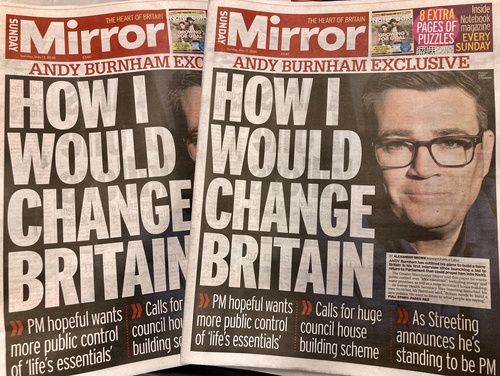
Can Britain’s Next Prime Minister Escape the Net Zero Trap?
Britain has burned through five Prime Ministers and is paying some of the highest electricity prices in the world.
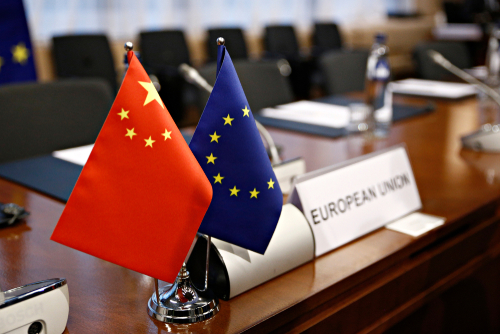
The Scanner at the Gate: Europe’s China Policy Litmus Test
China’s industrial policy is entering Europe through public procurement—and reshaping sensitive markets from within.

Confronting the New Antisemitism
"The postwar effort 'to rebrand Judaism as a religion' has made it impossible for American Jews to understand what they are facing today, because what we are facing today is an attack on the idea of Jewish peoplehood.”
“Democratic” Socialism Is Undemocratic
By promoting class hatred, suppressing private initiative, and seeking enhanced control of our lives, today’s democratic socialists undermine patriotism and individual initiative—two qualities that have long distinguished the United States from other major nations.

