
Inflation Killed The Penny

The final penny marks a moment for reflection. Inflation, even at “moderate” levels, chips away at purchasing power and quietly renders small denominations meaningless.
The United States minted its last penny this past month. The U.S. Mint was spending nearly four cents to produce one penny, a perfect metaphor for how inflation has eroded the value of money. The cent that once bought a piece of candy now buys nothing at all. Even charity jars ignore them. The penny has become a cost center, not a currency.
Its demise symbolizes a larger truth: for more than fifty years, the United States has lived with higher inflation than at any time before the 1970s, and many have come to excuse inflationary bursts as entirely caused by external supply shocks, completely unrelated to fiscal and monetary policy. The other central challenge is that nominal wages have struggled to keep pace with inflation.
Since 1971, when the U.S. left the Bretton Woods system and severed the dollar’s last link to gold, inflation has averaged three to four percent a year. On paper, that sounds modest. In practice, compounding is relentless: a dollar today buys only about 15 cents of what it purchased in 1971.
Contrast this with earlier eras. Inflation during the Bretton Woods era averaged closer to two percent. Under the classical gold standard, price levels were remarkably stable over the very long run despite having short-run periods of price instability. According to historical inflation data compiled by Harvard economists Carmen Reinhart and Ken Rogoff, cumulative U.S. inflation from 1800 to 1971 (the end of the Bretton Woods era) was 230.4 percent,, far less than the 700 percent cumulative inflation in the US over the past 54 years from 1971 to 2025. Inflation since 1990 (around when two percent inflation targeting began) has averaged around two and a half percent annually. Even being one-half percent above target each year adds up.
There is a historical irony here. The central bankers who restored stability in the 1980s did not view two percent inflation as “price stability.”
Paul Volcker repeatedly argued that “price stability means a stable price level—period,” meaning zero percent inflation over time. John Crow, the Bank of Canada governor who built Canada’s inflation-targeting framework, also backed a zero percent inflation target but lost out to the Canadian liberal government, which demanded a two percent inflation target.
The two percent inflation target, now universal among central banks today, did not emerge from deep theory. It originated in New Zealand in the late 1980s, almost by chance.
After years of high inflation, New Zealand’s Treasury and its reformist finance minister proposed a zero to two percent range mainly because it sounded simple, credible, and achievable. Don Brash, then governor of the Reserve Bank of New Zealand, later acknowledged the number was “picked in part for its convenience.” Other countries, from Canada to the U.K. to Australia, copied it.
The United States adopted its own two percent target informally in the 1990s but did not formally announce it until 2012. An improvised two percent inflation targeting benchmark thus became global orthodoxy. However, macroeconomic theorists also had, for some years, provided a broader rationale: that anchoring expectations with an inflation target (without specifying a target number) could be effective in influencing agents' forward-looking behavior, encouraging lower inflation and fewer output losses due to inflation. Inflation targeting brought greater price stability than the 1970s, but it also normalized the idea that persistent, low-grade inflation is acceptable. The penny is now collateral damage of that quiet drift.
The gold standard was arguably too rigid and vulnerable to supply shocks, leading to volatile price swings, including price declines during the Great Depression. But it did enforce one crucial virtue: in long-run discipline by keeping price levels anchored.
The fiat currency era brought flexibility but also repeated overshooting. Even after adopting a two percent target, the Fed often tolerated inflation above it, and the 2021–2023 surge accelerated the decades-long erosion of purchasing power by increasing the price level by over 20 percent..
The penny is the visible casualty. Other advanced economies, including Canada, Australia, and New Zealand, have already eliminated their smallest-denominated coins. Transactions will now be rounded, and consumers will barely notice the difference.
But policymakers should absorb the symbolism: money’s value must be actively protected. People experience inflation not through FOMC statements but through everyday reminders: slowly rising prices. A markedly higher price level from the early 2020s may be part of why consumer confidence is low today, even though real GDP growth is soaring amidst the ongoing Generative AI boom, unemployment is low, and the inflation rate has fallen.
The Fed cannot rewrite history, but it can avoid repeating it. That means taking low inflation seriously, restoring credibility after recent overshoots, not panicking if inflation runs below two percent, and recalling what Volcker, Crow, and the architects of New Zealand’s accidental innovation understood: price stability means preserving the value of money, not allowing it to erode slowly each year.
The final penny marks a moment for reflection. Inflation, even at “moderate” levels, chips away at purchasing power and quietly renders small denominations meaningless.
The penny’s disappearance is a warning. After five decades of high inflation, sometimes well above two percent, and an average (core) inflation rate of two and a half percent since 1990 around when the two percent inflation target began — the Federal Reserve needs to perform better moving forward.
Jonathan Hartley is a research fellow at the Civitas Institute, a senior fellow at the Foundation for Research on Equal Opportunity, a senior fellow at the Macdonald-Laurier Institute, and podcast host of Capitalism and Freedom in the 21st Century at the Hoover Institution.

Politics
%20Richard%20Samuelson%20%20-%20Is%20American%20Nationalism%20Still%20Creed-able_-1.jpg)
Is American Nationalism Still Creed-able?
We are not there now, but there is reason to worry that the United States is in danger, if we are not careful, of ceasing to be a nation with the principles of 1776 at its core.

National Civitas Institute Poll: Americans are Anxious and Frustrated, Creating a Challenging Environment for Leaders
The poll reveals a deeply pessimistic American electorate, with a majority convinced the nation is on the wrong track.
.webp)
%20(1).avif)


.jpg)

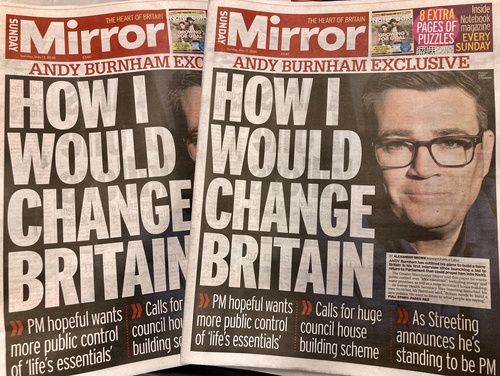
Can Britain’s Next Prime Minister Escape the Net Zero Trap?
Britain has burned through five Prime Ministers and is paying some of the highest electricity prices in the world.

The Scanner at the Gate: Europe’s China Policy Litmus Test
China’s industrial policy is entering Europe through public procurement—and reshaping sensitive markets from within.

Confronting the New Antisemitism
"The postwar effort 'to rebrand Judaism as a religion' has made it impossible for American Jews to understand what they are facing today, because what we are facing today is an attack on the idea of Jewish peoplehood.”

“Democratic” Socialism Is Undemocratic
By promoting class hatred, suppressing private initiative, and seeking enhanced control of our lives, today’s democratic socialists undermine patriotism and individual initiative—two qualities that have long distinguished the United States from other major nations.

