.avif)
Harvard's Civil Rights Violations Run Deep

If civil rights violations are ongoing and those violations are functions of deep-seated corruption, the Trump administration is within its rights to compel Harvard to change its ways or forfeit its federal support.
The Trump administration and the leadership of Harvard University are both posturing as principled heroes taking a stand against an unscrupulous enemy. The federal government has appointed a task force to combat anti-Semitism, the most apparent manifestation of corruption at progressive-captured institutions, most notably elite universities. The task force came down hard against Columbia and now claims to be rooting out bigotry and discrimination at one of our nation’s most storied universities with a wide-ranging set of demands. Recent reporting indicates that it may not have intended to raise its voice as loudly as it were, and issued demands before they were fully developed and calibrated. We may never know whether that is an attempt to backtrack or a true story.
Harvard, for its part, has roared back. A well-polished web page showcases its valuable work, smartly if predictably emphasizing its scientific achievements and ongoing projects. Its leadership denounced the Trump administration’s meddling in its internal affairs, which Harvard considers violations of academic freedom and the spirit of open inquiry for which it strives. While Harvard admits that anti-Semitism and other forms of discrimination – including a hostile campus atmosphere for Israelis and Israeli-Americans, which would be unlawful – persist on campus, it insists it is doing its best to deal with the problem. The government should leave it alone, period: “No government—regardless of which party is in power—should dictate what private universities can teach, whom they can admit and hire, and which areas of study and inquiry they can pursue,” Harvard President Alan Garber wrote on April 14. “The work of addressing our shortcomings, fulfilling our commitments, and embodying our values is ours to define and undertake as a community.” A week later, Harvard announced its lawsuit against the Trump administration for what it argues are violations of several laws protecting universities from sudden, onerous, and procedurally irregular government action.
Each is right, in a way – and each is wrong. Accordingly, each party has a leg to stand on in this showdown, but each seems to use that leg only to misstep.
The Trump administration has a few significant facts on its side. The big one is that Harvard has a national-origin-discrimination problem – “dire,” in the words of a June 2024 report – which it acknowledges has not been resolved. A private lawsuit and Department of Education investigation are ongoing. In a since-settled suit, Jewish and Israeli plaintiffs summarized what they have faced since October 7, 2023:
Mobs of pro-Hamas students and faculty have marched by the hundreds through Harvard’s campus, shouting vile antisemitic slogans and calling for death to Jews and Israel. Those mobs have occupied buildings, classrooms, libraries, student lounges, plazas, and study halls, often for days or weeks at a time, promoting violence against Jews and harassing and assaulting them on campus. Jewish students have been attacked on social media, and Harvard faculty members have promulgated antisemitism in their courses and dismissed and intimidated students who object.
Harvard did not, and does not, dispute this characterization. Nor could it; even if it claimed that rampant anti-Israel campus activity no longer veers into overt anti-Semitism, it would still have to admit that its campus is hostile to Israelis and Israeli-Americans. And they, too, are a protected national-origin group under Title VI of the Civil Rights Act.
Another significant fact is that Harvard continues to drag its feet responding to national-origin discrimination. As part of its settlement agreement, the university agreed to improve its reporting of discriminatory harassment, partner with Israeli institutions, and adopt the IHRA definition of anti-Semitism, which considers some prominent forms of anti-Zionism categorically discriminatory, and therefore unlawful. These measures may irritate activists, and are small steps in the right direction, but primarily they replace the simple available measure that would put a swift end to national-origin discrimination: Expulsion.
Harvard has not, as of this writing, expelled any of the individuals responsible for its unlawful encampments, building-occupations, or documented instances of discriminatory harassment. It has suspended a few and put some on probation, neither imposing a serious cost for rulebreakers’ actions nor establishing deterrence for would-be harassers. But refusing to expel the people directly (and repeatedly) responsible for the hostility against Israelis is a choice – a revealing one at that. Combined with some evidence suggesting Harvard continues to use race as a factor in admissions (and that its residual DEI apparatus still discriminates on the basis of race), there is ample evidence that it is leading universities’ quiet if massive resistance to the conservative civil-rights revolution.
The Trump administration is correct in one additional sense, a profound sense, perhaps more profound than the administration even grasps. The discriminatory harassment problem plaguing elite universities is related to their corruption more generally. The Trump administration is said to overstep when it targets faculty and administrative one-sidedness, but the lack of viewpoint diversity can foster discrimination. When seemingly all-powerful and intelligent figures on campus condemn Israel as a settler-colonial project wantonly subjugating indigenous Palestinians, it becomes a campus orthodoxy. Students are understandably more comfortable berating Israelis (in theory but also occasionally in person) when few if any prominent campus voices lend credibility to the view that Israel is not what far-left decolonialist theorists claim. The underlying assumption that Jews are white Europeans who have no legitimate claim to their ancestral homeland only amplifies when no one on campus can point out its logical centrality to the orthodox progressive view. That is just one way that a specific manifestation of campus corruption – ideological imbalance, which no one seems to (or should) dispute empirically exists – may be a legitimate target for an administration doing what universities won’t to extirpate discrimination root and branch.
It is true at a general level, too. When universities fail to discipline those who engage in discriminatory harassment under the guise of activism – even when the disruptions force classes to be canceled or prevent some students from traversing campus freely – they affirm that universities prioritize expressive activism over the genuine pursuit of knowledge or truth. The severity and pervasiveness of anti-Israeli hostility is thus a reflection of how universities no longer serve the public interest, or at least waste a tremendous amount of taxpayer support on those who feel no obligation to uphold their end of the bargain. That is especially pronounced among campus activists who say explicitly that they are working to eradicate Western civilization. Their hatred of Israel is closely related to their hatred for America. The federal government, implicitly if not explicitly making that connection, is on solid ground to try to root it out.
Civil rights law completes the syllogism. If civil rights violations are ongoing and those violations are functions of deep-seated corruption, the Trump administration is within its rights to meddle in Harvard’s affairs and even compel Harvard to change its ways or forfeit its federal support.
Harvard, for its part, is right to note that the Trump administration has not clearly explained the connection between specific elements of its conduct that are not connected to discrimination and the administration’s demands. Some requirements, like investigating plagiarism, seem part of a different effort altogether. But most contain the germ of a connection. The problem is that the means set out by the Trump administration do not fit their stated ends. Harvard is right to expect a more specific theory, buttressed by particular examples, of how Harvard’s lack of viewpoint diversity, questionable admissions practices, and other emblems of its drift from serving the public interest are related to the stated problem of national-origin discrimination.
It is wrong to pretend that such a connection is unfathomable or impossible to theorize, and to pontificate about the sacred force field around academic institutions. No amount of worthwhile scientific research cleanses civil-rights law violations; the odd arrangement of world-class scientists and deranged lawbreakers housed in one institution only suggests that Harvard should be split into two. (Why Harvard as we know it comes as a package deal, with lab researchers and Hamas supporters considered equally indispensable elements of knowledge production, is a question we can expect to hear increasingly in the coming months and years.)
Harvard is also right to demand that the Trump administration follow the procedures prescribed by law. Title VI provides that the Department of Education must allow a university to comply “voluntarily” with government-issued anti-discrimination measures. If the government finds a university’s compliance efforts inadequate, it can sue to revoke federal funding. Suspending that funding also requires some patience, as timing limitations prevent the government from acting too suddenly. Invoking these procedural requirements often distracts from substantive underlying problems – acting too swiftly does not mean the government is coming down too hard against discrimination, necessarily, or acting based on insufficient evidence – but it does put the Trump administration’s efforts at risk of losing in court.
The federal government has acted swiftly, which can sometimes be a virtue. When it comes at the expense of building a case against what it clearly views as an opponent in the fight for the American soul, though, it can lapse into haphazardness. Perhaps the goal is not achieving a long-term victory over the university but sending a signal about how the administration fights against pointy-headed academics who love radicals and hate America. A more cynical hypothesis is that the administration is setting up a showdown in court where the judge will have to take the side of unpopular, discriminatory, rich universities on procedural grounds. That could further poison the relationship between Trump fans and the judiciary, laying the groundwork for the administration (or the President himself) to flout future rulings.
Speculation aside, parsing the issues carefully reveals that neither party comes to this dispute with clean hands. Harvard is looking to hide its tolerance of rank discrimination, a reflection of its deeper institutional corruption, behind noble-sounding dissembling. The federal government is cutting corners and setting itself up for failure by playing fast and loose with procedure. With neither side being quite honest about its arguments, it’s a dispute sure to end in only greater frustration and polarization, unfortunately, at the expense of actually revitalizing American higher education, which is precisely the hard work neither side seems to want to undertake.
Tal Fortgang is a legal policy fellow at the Manhattan Institute.

Politics
%20Richard%20Samuelson%20%20-%20Is%20American%20Nationalism%20Still%20Creed-able_-1.jpg)
Is American Nationalism Still Creed-able?
We are not there now, but there is reason to worry that the United States is in danger, if we are not careful, of ceasing to be a nation with the principles of 1776 at its core.

National Civitas Institute Poll: Americans are Anxious and Frustrated, Creating a Challenging Environment for Leaders
The poll reveals a deeply pessimistic American electorate, with a majority convinced the nation is on the wrong track.
.webp)
%20(1).avif)

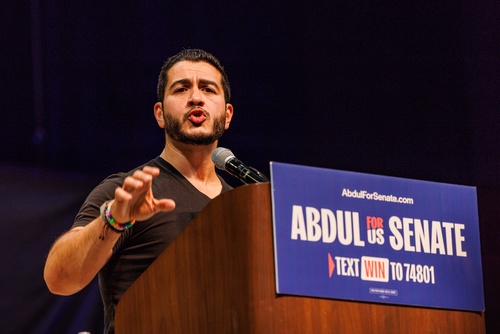
The Democrats Are a Menace to America’s Jews
Abdul El-Sayed’s victory in Michigan’s Democratic primary is an ominous sign.

The G7 Is Failing To Address Global Imbalances
The G7 was not created to issue an endless procession of carefully calibrated communiqués.


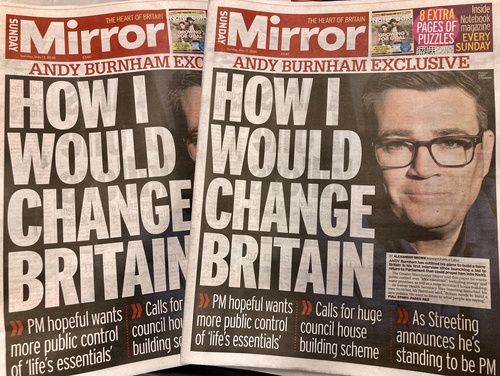
Can Britain’s Next Prime Minister Escape the Net Zero Trap?
Britain has burned through five Prime Ministers and is paying some of the highest electricity prices in the world.

The Scanner at the Gate: Europe’s China Policy Litmus Test
China’s industrial policy is entering Europe through public procurement—and reshaping sensitive markets from within.

Confronting the New Antisemitism
"The postwar effort 'to rebrand Judaism as a religion' has made it impossible for American Jews to understand what they are facing today, because what we are facing today is an attack on the idea of Jewish peoplehood.”
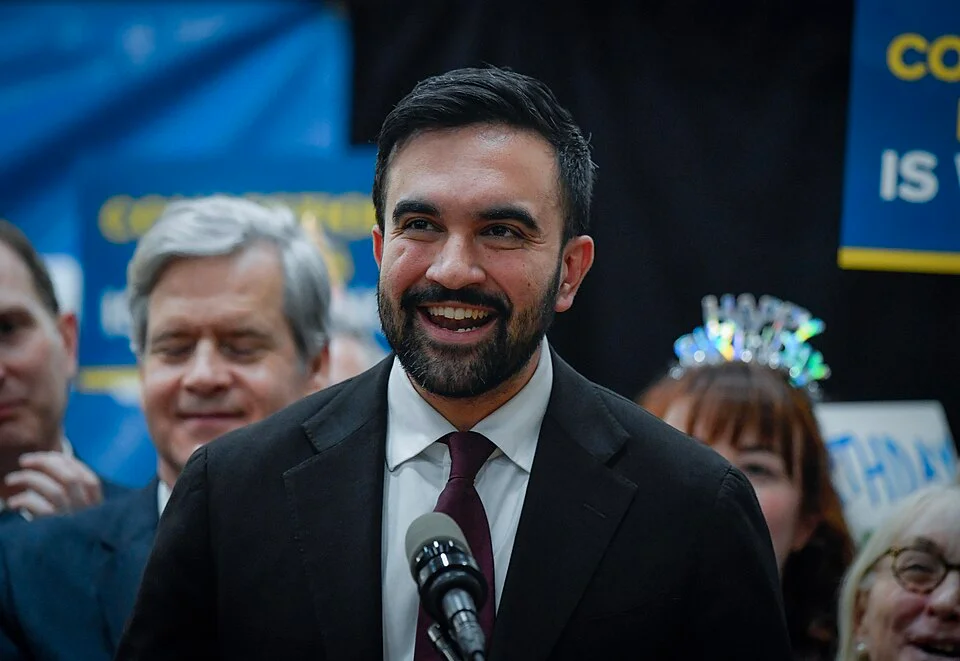
“Democratic” Socialism Is Undemocratic
By promoting class hatred, suppressing private initiative, and seeking enhanced control of our lives, today’s democratic socialists undermine patriotism and individual initiative—two qualities that have long distinguished the United States from other major nations.

