Edmund Phelps and the Culture of Dynamism

Edmund Phelps’ character and body of work serve as an example and a challenge to younger scholars who want to help others understand what real progress and prosperity look like in the world.
Edmund Phelps, who passed away on May 15 at age 92, leaves behind a body of work inviting us to think more creatively about what makes our world vibrant and dynamic. Famous for his pioneering work on inflation and unemployment, for which he was awarded the Nobel Prize in economics, Phelps turned his energies late in his career to understanding human flourishing itself. His research led him to a new theory of what he called “indigenous innovation,” whereby economic progress and growth are fueled not by inventions in labs that entrepreneurs commercialize or by R&D departments in large companies, but by widespread grassroots tinkering and experimentation in the day-to-day economy.
These conclusions led him further into the world of values and culture, where the aspirations of tinkerers and experimenters, rooted in a desire and willingness to create new things and new ways of doing things, are the fuel of economic progress itself. These aspirations, and the means to actualize them, were centuries in the making and a product of a modern culture in which nineteenth century Western societies began to value newness and invention in ways that both incentivized creativity and rewarded those who acted upon it. Previous cultures valued innovation but had not, until now, made it possible for ordinary people to realize the benefits of such activities.
“In this thinking,” Phelps writes, “a nation may possess the dynamism – an appetite and capacity, a desire and capability – needed to create innovations and a willingness as a society to accept their introduction into the economy.” The word “dynamism” gets thrown around a lot these days, especially in the context of the abundance movement, but note the implication in Phelps’ usage: it is first a cultural and anthropological reality before a purely economic one. Dynamism is not just about entrepreneurship, patents, and economic growth. It is a quality that exists within people and, in turn, is reinforced by the wider society and economy.
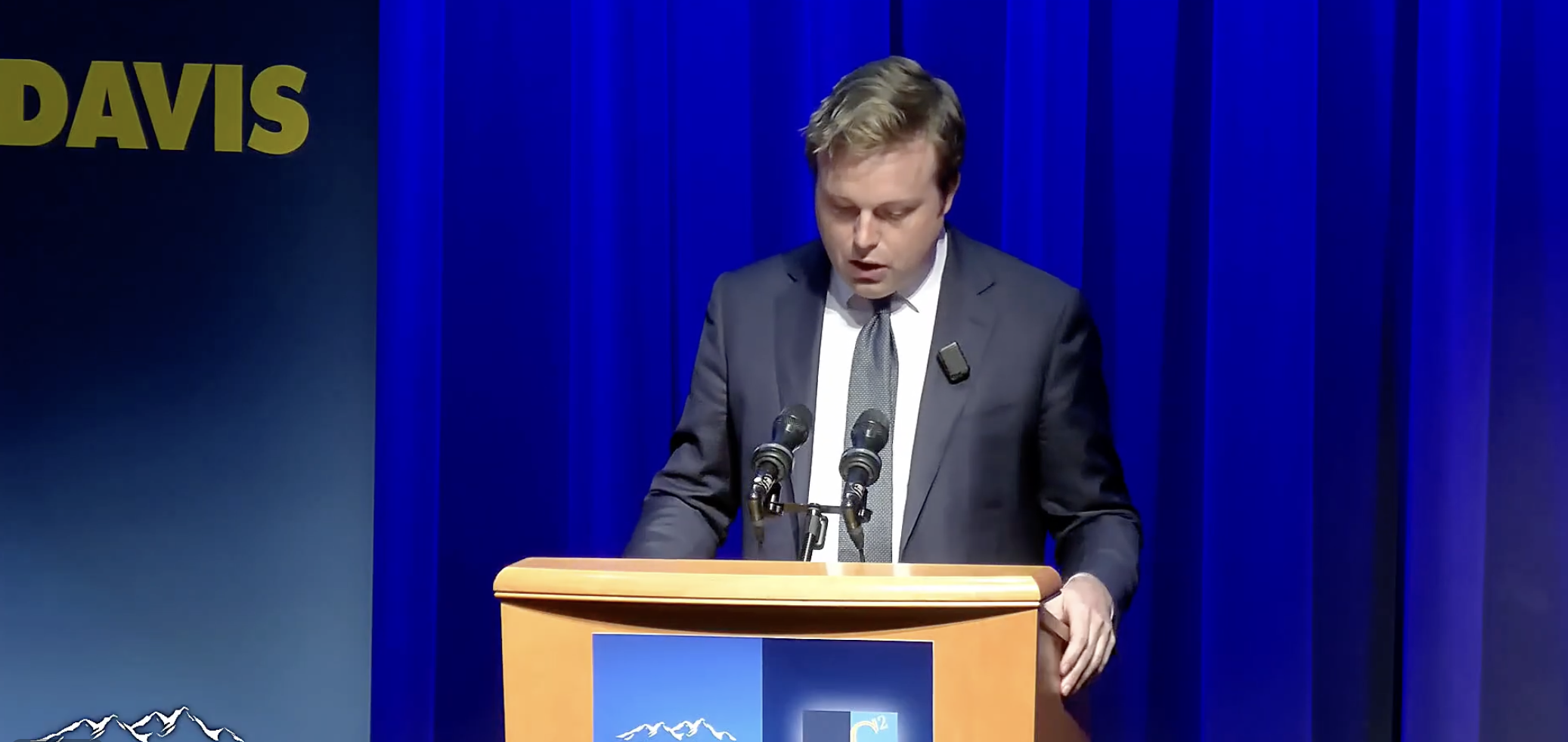
In his last public speech before a live audience in the United States (text here and video here), delivered at the Civitas Institute at the University of Texas at Austin in 2024, Phelps described how subjecting his theory of dynamism to empirical research has corroborated its main ideas. “In this thesis of mine,” he said, “the force driving people to conceive innovations was the rise and spread of certain modern values – individualism, vitalism, and a desire for self-expression.” These are not anti-communitarian values, as readers accustomed to regarding individualism negatively might surmise, but valuable cultural aims that make possible the kind of innovation and upward mobility most of us associate with the American way of life. Four studies that he and his co-authors undertook for their 2020 book, Dynamism, “give telling evidence of the existence and power of a people’s dynamism and an exciting test of the greater power of indigenous innovation over the power of exogenous innovation. The dynamism of the people won. The existing investigations of economic performance have attributed them to differences in institutions – thus paying little or no attention to values.”
Phelps did not set out to find cultural explanations for innovation in his work on dynamism and flourishing. He was trying to understand the deficiencies in other prevailing theories that placed too much weight on scientific breakthroughs or on entrepreneurs and left too much innovation and growth unexplained. What he found was that millions of people, scattered throughout a country and working in an environment that rewards creative endeavor, produce the homegrown innovation that does more to explain sustained periods of economic growth than other theories.
His 2013 book, Mass Flourishing, makes the case that “relatively modern-capitalist economies are more rewarding in nonmaterial terms than the relatively corporatist or socialist economies.” Societies that encourage and reward indigenous innovation by freely allowing investment and competition to select the winners and losers, rather than state actors and rent-seekers, always come out ahead. But, again, this is not merely a statement about policies and institutional arrangements. “[A]s important as institutions and policies may be, we must recognize that every economy is a culture or mix of cultures, not just policies, laws, and institutions,” Phelps writes.
The economic culture of a nation consists of prevailing attitudes, norms, and assumptions about business, work, and other aspects of the economy. These cultural forces may affect the generation of nonmaterial rewards indirectly through their influence on the evolution of institutions and policies, but also very directly through their impact on participants motives and expectations.
Put another way, he writes that an “economy may owe its vibrancy – its readiness to apply newly discovered technologies and adopt newly proven products – to one or more components of its economic culture; an economy may owe its dynamism – its success at using the creativity of people to achieve indigenous innovation – to some other components in its cultural repertoire.”
The empirical analyses underlying Phelps’ arguments about dynamism are varied and interesting, and while establishing causality in matters of culture is difficult, two sets of findings are worth highlighting, both because of their significance and as topics for further research for those who might pick up Phelps’ baton.
The first is the relationship between modern values, such as openness and self-fulfillment, and sustained economic growth. Conversely, societies that discourage such values do not experience the same levels of growth. Countries that have adopted corporatist policies, such as those in Europe with regulatory environments marked by negotiated agreements between industry and government, have seen a decrease in those values. The implication is that, over time, policy environments aimed at security and stability can change how people think and act regarding innovation and creativity. Formerly dynamic places become less so when the incentives to branch out, experiment, make a name for yourself, take risks, and be creative are replaced by incentives to conform, follow the rules, and stay put. Worse, the political class in Europe talks about this stagnation as an embodiment of traditional values that are “the precious glue holding society together” when, in fact, they are more closely associated with decay and unhappiness.
Second, Phelps found – counterintuitively to those who associate job insecurity with a dynamic, churning economy – that job satisfaction rises in dynamic societies marked by modern values and lots of innovation. It turns out that working-class people benefit from dynamism just like others. Their wages rise, they have options for job-hopping, and they benefit from working hard. The conventional wisdom that “creative destruction” – that perennial bogeyman of pro-worker conservatives and progressives alike – drives economic anxiety seems to have things exactly backwards. When a company town loses its main employer, that is a sign of too little dynamism, not too much. My own survey research on the economic attitudes of working-class people, as I have written before, aligns with these findings. Communities and societies with high levels of indigenous innovation ultimately treat hourly-wage workers well.
I first met Phelps in 2019 when he invited me, out of the blue, to speak at his annual conference on capitalism at Columbia University after reading an op-ed I had written. In my experience then and in subsequent interactions with him, including at his 2024 lecture at the Civitas Institute cited earlier, he was kind, curious, and focused. He was well known for defying ideological categorization because of his intellectual independence and creativity. His character and body of work serve as an example and challenge to younger scholars who want their work to help others understand what real progress and prosperity look like in the world.
Ryan Streeter is the Executive Director of the Civitas Institute at the University of Texas at Austin.

Economic Dynamism


.jpg)



.jpg)




.jpg)


Kevin Warsh and the Future of Fed Communication
Warsh is right that the Federal Reserve should not speak so loudly that it hears only its own echo.

An AI Commencement Address That Might Not Elicit Boos
Someone has to dare to point the path forward in those communities. We need many more Nehemiahs.