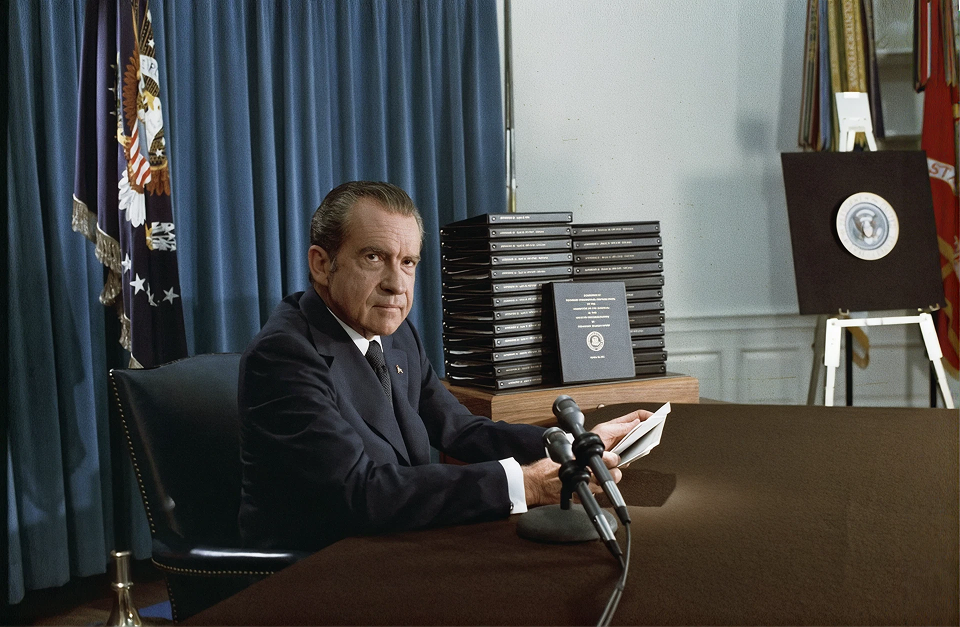
Trump’s Tariff Gambit: How to Win a Trade War with Mexico and Canada
.webp)

Trump's tariffs are part of a calculated strategy aimed at achieving specific policy goals.
The White House announced Feb. 1 that President Trump was implementing new 25 percent tariffs on imports from Canada and Mexico, and an additional 10 percent tariff on imports from China. It is an unpopular move, as demonstrated by the earlier letter to Trump from former U.S. Treasury Secretary Larry Summers and former Senate Banking Committee Chairman Phil Gramm (R-Texas), detailing how tariffs will be bad for America and the world, and signed by more than 1,000 economists.
But opposition from globalists and economists does not mean that tariffs might not benefit the U.S. To many, a trade war evokes images of economic chaos. But within the Trumpian playbook, it’s a calculated strategy aimed at achieving specific policy goals.
In Trump’s view, the unique economic relationship between the U.S. and its North American neighbors presents an opportunity for the U.S. to emerge victorious. The key lies in understanding the inherent vulnerabilities of Mexico and Canada, both of whom send more than 75 percent of their exports to the U.S. This dependence forms the bedrock of Trump’s strategy.

Politics
%20Richard%20Samuelson%20%20-%20Is%20American%20Nationalism%20Still%20Creed-able_-1.jpg)
Is American Nationalism Still Creed-able?
We are not there now, but there is reason to worry that the United States is in danger, if we are not careful, of ceasing to be a nation with the principles of 1776 at its core.

National Civitas Institute Poll: Americans are Anxious and Frustrated, Creating a Challenging Environment for Leaders
The poll reveals a deeply pessimistic American electorate, with a majority convinced the nation is on the wrong track.
.webp)
%20(1).avif)

.png)
Why ‘Progressive’ Ro Khanna Wants to Lend Money to Billionaires
California's Prop. 40 isn’t just a “tax.”

Proxy Firms Don’t Have to Disclose Conflicts. That Should Change
The firms whose advice can move those votes bear no comparable duty for the advice itself. States can close that gap by applying an enduring standard from the Supreme Court.



.png)