The Fed’s Missing Independence

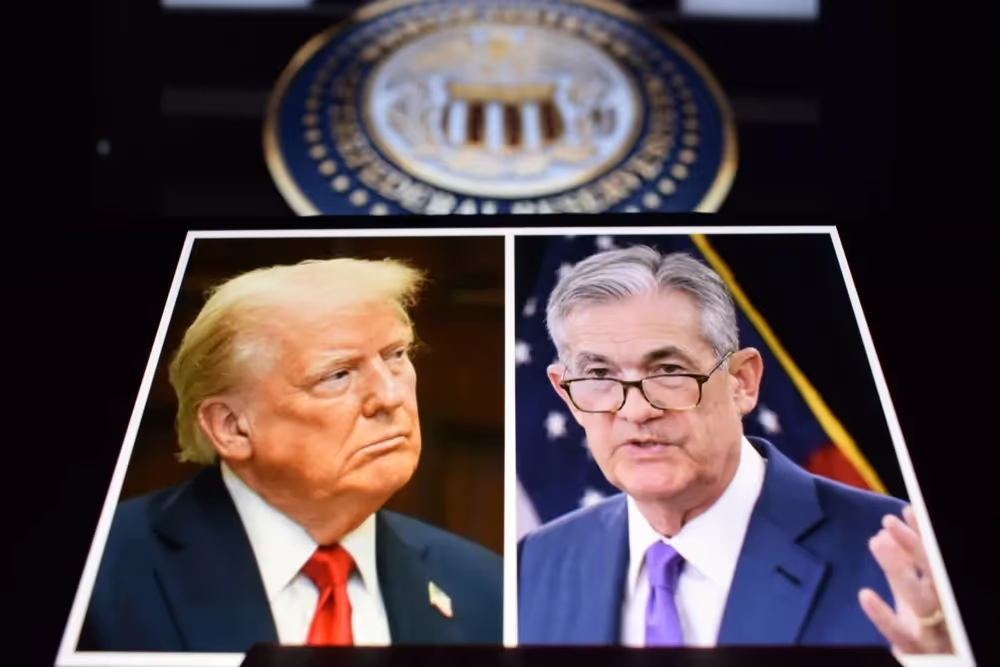
President Trump’s behavior is a textbook case of fiscal dominance, when monetary policy bends under fiscal pressure.
“Fed independence” sounds like a simple promise: central bankers set policy free from political meddling. In practice, it’s a narrower shield — one that’s thinning by the day. And contrary to what most people think, this isn’t just about President Trump’s pressure campaign for lower interest rates. Congress’s refusal to stabilize the debt will continue to threaten the Fed’s independence long after Trump leaves office.
When people worry about Fed independence, they often talk about two types of independence. First, operational independence. It was secured by the 1951 Fed–Treasury Accord, to allow the Fed to set interest rates without direct interference from the Treasury or the White House. Second, political independence. It is murkier: presidents nominate governors, the Senate confirms them, and Congress writes the Federal Reserve Act. Independence here means a norm of restraint — a commitment to avoid election-year manipulation — rather than an escape from politics. That norm frayed badly in the early 1970s and is fraying again today, as Trump publicly pressures the Fed to cut rates and threatens governors he dislikes.
The president’s behavior understandably worries people. First, Congress — not the president —establishes the Federal Reserve’s legal mandates through the Federal Reserve Act. That Act directs the Fed to pursue maximum employment, stable prices, and moderate long-term interest rates. When Trump pressures the Fed to change its mandate (for instance, by demanding it prioritize cheap borrowing to finance the deficit), he’s asking the central bank to defy the law Congress wrote. The only body with authority to redefine those goals is Congress itself. So, if Trump openly calls for rewriting or ignoring the Act’s mandates and Congress does nothing, Congress is effectively allowing an executive overreach that undermines its own constitutional role and the Fed’s statutory independence. That’s bad enough.
But the president’s behavior is also a textbook case of fiscal dominance, when monetary policy bends under fiscal pressure. Yet even in its heyday, the post-Accord Fed never floated above fiscal reality.
And that brings me to a frequently overlooked issue by those concerned about Fed independence. Even with strong political or operational independence, monetary and fiscal policy remain jointly determined (i.e. there is no economic independence). That interaction is unavoidable and will increasingly constrain the Fed’s choices in a world of massive federal debt.
According to the fiscal theory of the price level (FTPL), the value of money ultimately depends on the government’s fiscal position rather than the central bank’s balance sheet. It means that prices adjust so that the real value of government debt equals the present value of expected future primary surpluses. In this framework, monetary policy can influence inflation only insofar as fiscal policy provides credible backing for government liabilities. Fiscal policy, in other words, sets the boundaries of what monetary policy can achieve. The size, composition, and credibility of federal deficits and debt ultimately determine how much room the central bank has to maneuver. Also, every move the Fed makes reverberates through the budget. Raise rates, and you immediately increase the government’s interest bill; hold them down, and you risk rekindling inflation. Either way, the budget constraint always bites.
This is not to say that Trump’s efforts to pressure the Fed aren’t worrying. They are. However, they are symptoms, not the cause, of the problem. The real issue is structural. The interaction between fiscal and monetary policy will not vanish when Trump leaves office, because debt arithmetic does not care who is president. With debt near 100 percent of GDP, every percentage-point increase in real interest rates raises federal interest costs by roughly one percent of GDP — unless Congress cuts spending or raises taxes to offset it. If Congress does not deliver those offsets, pressure builds on the Fed to relent.
Relenting, in this context, does not mean surrendering to presidential tweets; it means allowing inflation handle the fiscal adjustment that Congress refuses to make. When the central bank tightens in a world of chronic primary deficits, higher rates raise the government’s interest bill and push the debt trajectory upward. If fiscal authorities do not respond with credible future surpluses, the Fed faces an impossible choice: keep rates high and allow debt to grow more rapidly, or hold rates lower and allow prices to rise, eroding the real value of debt. In practice, the Fed accommodates. Inflation becomes the mechanism that stabilizes the debt when Congress won’t. That is the core of fiscal dominance — the point where monetary policy no longer sets the price level because the fiscal authority has ceased supporting the stability of government liabilities in real terms.
We already had a taste of this dynamic between 2021 and 2023. Inflation surged after a multitrillion-dollar fiscal expansion. The Fed did nothing for a long time after inflation broke, then raised rates arguably too late, and inflation later eased without a deep recession. From a fiscal theory of the price level perspective, that episode was no mystery: deficit-financed transfers, with no credible promise of future surpluses, reduced the real value investors expected the government to repay. Concretely, as people spent the checks the Treasury sent them, they came to expect that the government would cover its debts through money creation rather than future spending restraint or higher revenues (brought on by more taxes or higher growth). Prices then rose to reduce the real value of outstanding debt and bring it back in line with the level of future surpluses investors considered plausible.
This has implications for the fight against inflation too. Monetary policy can influence the timing and path of inflation, but sustained disinflation requires fiscal backing. History offers a vivid example of how fiscal and monetary policies must align to make disinflation work. In the early 1980s, Fed Chairman Paul Volcker confronted double-digit inflation and proved that the Fed can’t do it alone. Rate hikes were necessary, but they weren’t sufficient without fiscal discipline. Understanding the interaction between fiscal and monetary policy, Volcker made clear to the White House and Congress that he would not adjust monetary policy to accommodate fiscal pressures. He communicated that message directly to Capitol Hill.
His policy was easier, since debt-to-GDP was around 25 percent in 1981, as opposed to our 100 percent today. But the most crucial part is that Volcker got his way. Over the next several years, fiscal consolidation followed — most notably the 1982, 1984, and 1986 tax reforms and the crucial 1983 Social Security deal, with further discipline arriving in the 1990s. That fiscal backdrop helped the disinflation stick. Monetary and fiscal policy moved in harmony to fight inflation.
This has implications for what true Fed independence would look like. If the Fed genuinely wants to exercise independence, it must make clear that it will not suppress interest rates or monetize government debt to accommodate fiscal deficits. If Congress insists on running chronic deficits, the Fed should allow the yield curve to rise and rotate upward — letting interest rates find their natural level rather than intervening to protect Treasury financing. That, after all, was the spirit of the 1951 Accord: a refusal to let monetary policy become a fiscal convenience. Back then, as fiscal discipline slowly returned, the primary deficit declined, and monetary independence was reinforced by responsible budgeting.
The lesson for anyone worried about Fed independence is that pressures on the Fed are inevitable in an era of chronic deficits. Without fiscal reform, inflation itself will cause adjustments, eroding the real value of debt when politicians refuse to do so And there is little the Fed can do about it.
Veronique de Rugy is the George Gibbs Chair in Political Economy and Senior Research Fellow at the Mercatus Center at George Mason University and a nationally syndicated columnist. She is a contributing editor to Civitas Outlook.

Economic Dynamism


.jpg)


.jpg)


.jpg)


Social Mobility Wins
When people live within an environment offering good jobs, good education, social networks, and a culture of self-improvement and hard work, they experience progress in a way that undercuts the philosophical rationale that socialists need to justify the policies they advocate.
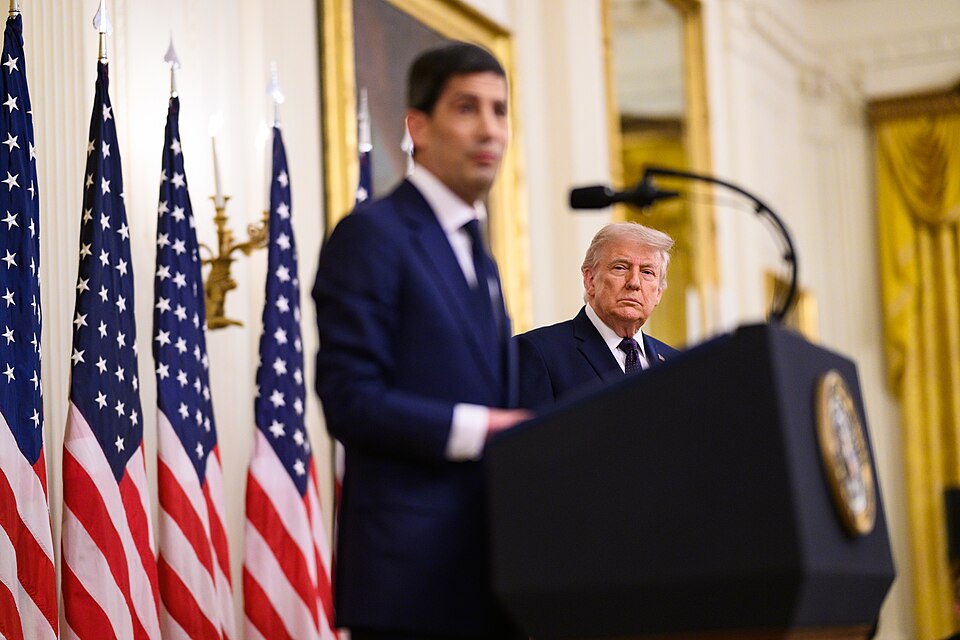
Kevin Warsh and the Future of Fed Communication
Warsh is right that the Federal Reserve should not speak so loudly that it hears only its own echo.