.webp)
Selling America Short

What is the Venezuelan affair ultimately about?
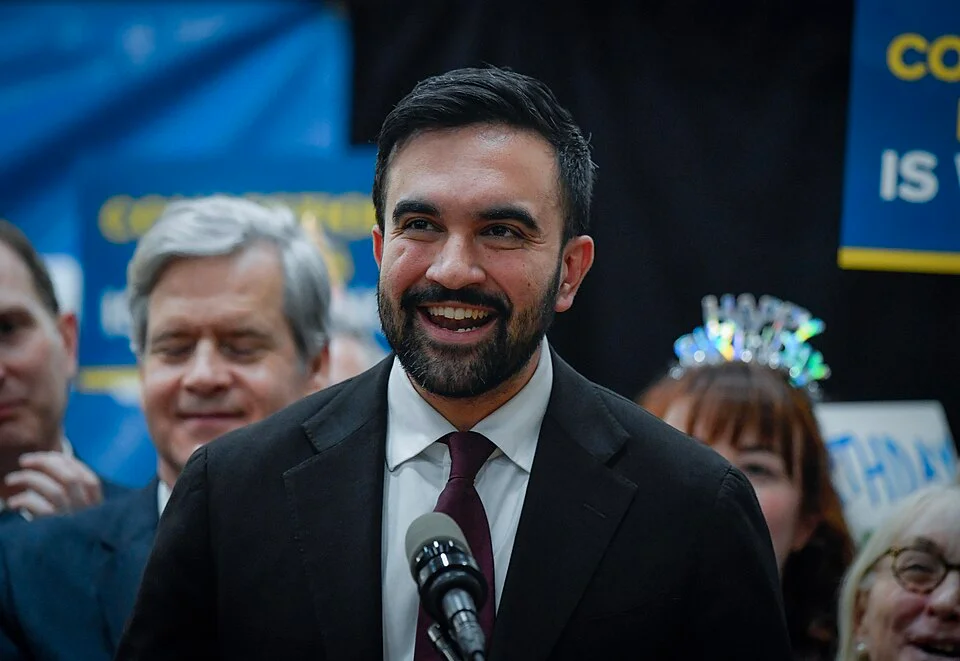
While lovers of freedom throughout the world had reason to celebrate American forces’ removal of Venezuelan dictator Nicolás Maduro, whose oppressive policies had driven his nation into poverty and forced (in conjunction with those of predecessor Hugo Chavez) some one quarter of the country’s population into exile, the grounds of that removal have been challenged not only (predictably) by the leaders of dictatorships like Russia and China, but also by some American politicians such as the newly elected socialist mayor of New York City, Zohran Mamdani. Given not only the effects of Maduro’s policies on his country and his alliance with American adversaries such as Communist-ruled Cuba and the terror-promoting Iran, but also the fact that Maduro was overwhelmingly defeated in his country’s latest presidential election, that challenge should not be hard to respond to.
Unfortunately, judging from the statement Trump administration spokesman Stephen Miller gave CNN news anchor Jake Tapper during the latter’s January 5 broadcast, it appears this administration has not yet worked out a satisfactory response. Instead, when asked by Tapper why President Trump was not yet calling for elections in Venezuela, or trying to install María Corina Machado, the opposition leader and winner of the Nobel Peace Prize, as the president, Miller simply explained that U.S. policy toward Venezuela is guided by what benefits the United States, not by efforts to install leaders or build democracy. The goal, he said, is to ensure Venezuela cannot be used against the U.S. by foreign adversaries.
Machado, as explained here, had been compelled by Maduro to withdraw from the 2024 election and had chosen centrist diplomat and political analyst Alex Edmundo González to replace her as the candidate. While Maduro was called the winner of the election by the country’s National Electoral Council, itself controlled by Maduro, more plausible estimates showed González winning some two-thirds of the vote. Upon Maduro’s removal, González (who himself had had to flee Venezuela immediately after the election) called for Machado to be installed as his legitimately elected replacement. But Miller responded not merely by saying that it was too soon to make that decision, but by quoting the President’s denial that Machado had the necessary “support” to become even the country’s interim leader. Instead, Trump authorized Maduro’s vice president (a member of his party who had supported his policies) to hold that office, at least temporarily.
Most troubling was Miller’s statement of the general policy that underlay Trump’s decision:
[T]he United States, this is sort of foundational … is using its military to secure our interests unapologetically in our hemisphere. We're a superpower, and under President Trump, we are going to conduct ourselves as a superpower. It is absurd that we would allow a nation in our own backyard to become the supplier of resources to our adversaries but not to us. To hoard weapons from our adversaries, to be able to be positioned as an asset against the United States rather than on behalf of the United States." He contrasted this policy with what he claimed the U.S. had been doing since the end of World War II, beginning “to apologize for being a superpower and exerting its influence on the world.” In consequence, he maintained, "for years we sent our soldiers to die in deserts in the Middle East, to try and build them parliaments to try and build them democracies, to try to give them more oil, to try to give them more resources. (Emphasis added.)
As a critique of U.S. foreign policy since 1945, Miller’s account is incoherent. How could America simultaneously have been “apologiz[ing] for being a superpower” and using our power to send our armies abroad? To which countries in the oil-rich Middle East would we have been supplying oil? (While Barack Obama indeed undertook an “apology tour” of the region immediately following his first Presidential victory, that was hardly representative of what most Presidents since Harry Truman have been doing.)
In his remarks, Miller correctly observed that the removal of the Maduro dictatorship is likely to greatly enhance the prosperity of the Venezuelan people – even, he claimed, making the country, with American “help and leadership,” to become “more prosperous than it has ever been.” He also rightly stated that “the future of the free world depends on America, being able to assert” its power, given the threats to freedom arising from numerous aggressive foreign dictatorships. But he insisted on putting the assertion of American power as a goal in an unqualified way, insisting that Americans must “assert ourselves, our interests, without apology. Period.” (Emphasis added.)
Even from the viewpoint of strict national interest, the way Miller asserts American policy seems likely to weaken rather than fortify this country’s influence abroad. If our goal is merely to advance our interests, accumulating “resources” for ourselves rather than our antagonists, just how will this make our motivation appear different from that of other, often aggressive, superpowers – like Putin’s Russia, Xi’s China, or the ayatollahs’ Iran? Unfortunately, judging from Trump’s remarks on January 3 justifying Maduro’s seizure, it appears that Miller was indeed mirroring his boss’s thinking, since (as the New York Times reported) he referred to America’s claim on Venezuela’s massive oil reserves (originally developed by U.S. oil companies) some twenty times, while never once discussing “promoting and restoring democracy” as an American objective, despite Venezuela’s “decades-long tradition of democratic practices” and free elections prior to Chavez’s coming to power. (Fortunately, Secretary of State Marco Rubio has expressed the Administration’s commitment to restoring democracy.)
No serious thinker doubts that a nation’s government is obliged to put the country’s interest first. But what has enhanced America’s reputation throughout much of the world for over a century is not only its attainment of domestic freedom, prosperity, and security, but the sacrifices we have undertaken for the sake of our long-range self-interest whether in two World Wars and the Cold War, through magnanimous aid programs like the Marshall Plan, combating (internationally) communicable diseases, or providing humanitarian assistance in the face of natural disaster. While mistakes have certainly been made in some of those actions whether exaggerated hopes for the spread of democracy (such as were expressed by George W. Bush at the seeming but not actual conclusion of the Iraq war) or strategic and tactical errors (as in Vietnam), advertising America’s goal as simply the acquisition of more power and resources, “period,” is not likely to help us win the support we shall need in the future.
If Miller is correctly articulating the Trump administration’s foreign policy, as the President himself initially made it appear, they are selling America short.
David Lewis Schaefer is Professor Emeritus of Political Science at College of the Holy Cross.

Politics
%20Richard%20Samuelson%20%20-%20Is%20American%20Nationalism%20Still%20Creed-able_-1.jpg)
Is American Nationalism Still Creed-able?
We are not there now, but there is reason to worry that the United States is in danger, if we are not careful, of ceasing to be a nation with the principles of 1776 at its core.
National Civitas Institute Poll: Americans are Anxious and Frustrated, Creating a Challenging Environment for Leaders
The poll reveals a deeply pessimistic American electorate, with a majority convinced the nation is on the wrong track.
.webp)
%20(1).avif)

.jpg)


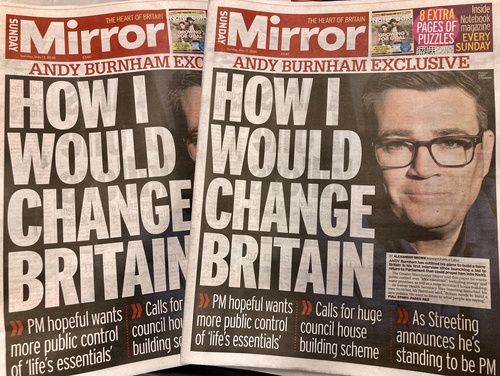
Can Britain’s Next Prime Minister Escape the Net Zero Trap?
Britain has burned through five Prime Ministers and is paying some of the highest electricity prices in the world.
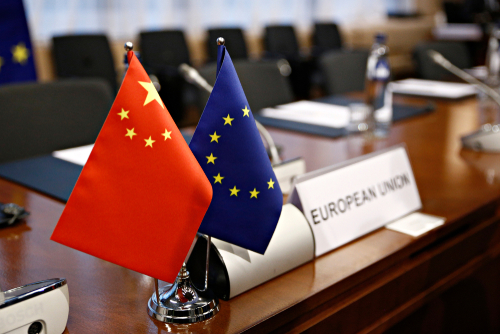
The Scanner at the Gate: Europe’s China Policy Litmus Test
China’s industrial policy is entering Europe through public procurement—and reshaping sensitive markets from within.

Confronting the New Antisemitism
"The postwar effort 'to rebrand Judaism as a religion' has made it impossible for American Jews to understand what they are facing today, because what we are facing today is an attack on the idea of Jewish peoplehood.”
“Democratic” Socialism Is Undemocratic
By promoting class hatred, suppressing private initiative, and seeking enhanced control of our lives, today’s democratic socialists undermine patriotism and individual initiative—two qualities that have long distinguished the United States from other major nations.

