
Remembering Ed Banfield's “The Unheavenly City"

At the peak of liberal domination of American life, Banfield’s book noted that liberalism had reached a core contradiction.
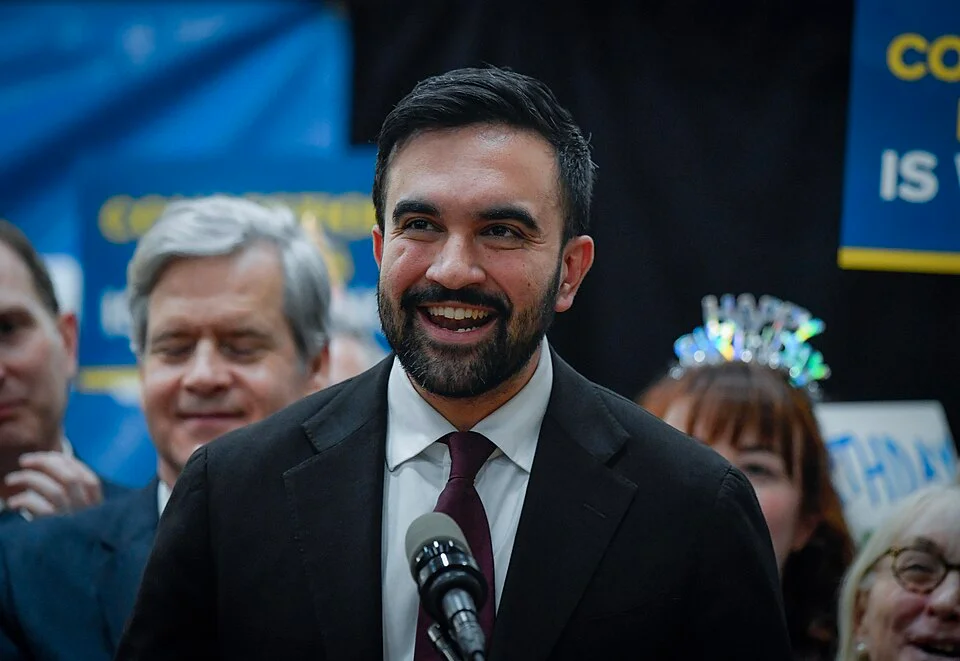
After about a decade of increasingly chaotic city politics, America is once again reaching a landmark of progress: Zohran Mamdani was elected mayor of New York City this November. The global significance of the financial capital is now aligned with the ideology of the globalization promoted by the “defund the police” and “globalize the intifada” movements. Other major cities worldwide, especially London and Paris, face a very similar political landscape, governed by a coalition of younger voters and third-world immigrants (to recall a Cold War phrase), alongside established academic elites with left-wing views. New York City differs from London only in that it has not yet experienced the related race and religion riots.
The news is sobering, but should not be met with too much indignation, certainly not with despair. First, we should take stock of our situation: America has two parties, one that has no idea that cities exist, the other that cannot govern them. Consequently, Republicans leave the city work, i.e., the task of city government, to liberals, even in the most critical red states, Texas and Florida nowadays. But then Republicans use the state governments to limit the liberal tax and spend agenda, as well as the love of criminals, typical of Progressive activists. Meanwhile, Democrats, offered urban supremacy, are nevertheless managing to lose voters, money, and credibility, coast to coast, from San Francisco to New York City. This exodus has greatly favored Red America. It’s remarkable!
Since we cannot count on political wisdom at this moment, let us try to understand what it would entail by consulting our scholarly resources. Serendipitously, The Unheavenly City Revisited, out of print for a generation, has just been republished by AEI. Ed Banfield, the author, is the most important American social scientist. The Unheavenly City (1970) is his most essential work and a remarkable bestseller. Here, we find ourselves in capable hands and can begin to rethink our expectations and attitudes.
At the peak of liberal domination of American life, Banfield’s book noted that liberalism had reached a core contradiction. On the one hand, liberalism was responsible for the engine of economic growth that is the modern city, oriented to commerce and technological development, and therefore requiring a highly educated class managing things. On the other hand, liberals had by the 1960s come to experience city life as an endless series of horrors, of crimes against humanity, not only problems in need of redress, but crises justifying revolution. Expectations of progress embodied in a new generation of urban, collegiate liberals led to a gradual abandonment of the Enlightenment.
Banfield therefore restated boldly the case for economic improvement (Chapter 2, The Logic of Metropolitan Growth), one of the most popular aspects of the Enlightenment, which had achieved its most remarkable success in the 1960s. He also began an analysis of the class problem in America, including what had led elites at that time — the people who most benefited from American peace and prosperity — to turn against America in the name of the poor, racial minorities, etc. (Chapter 3, The Imperatives of Class). The subsequent six chapters then made good on the promise of the introductory chapter to show how misguided elites, in policy as much as in the formation of opinion, had become regarding issues of race, unemployment, poverty, education, crime, and riots.
In the final three chapters, Banfield dealt with the future as he could glimpse it two generations back. He foresaw long, difficult fights in putting limits to the unreasonable demands of elites who wanted control over society in the name of justice, while proclaiming a new morality of freedom profoundly at odds with all the institutional restrictions and regulations they favored. The major problem for Banfield is the disjunction between learning and morality. Americans are do-gooders, and therefore very vulnerable to the combination of humanitarian ideology and technological or institutional mechanisms for exploiting beliefs and habits that otherwise issue in charity. Whereas much learning makes much sorrow. Banfield has only skepticism to offer, which seems to be largely negative. It’s an aid to the common-sense reluctance to engage in extravagant spending and to the fear of crime or riots. But it doesn’t offer certainty, as social science, or as great rhetoric that would help politicians and electorates. Social science can be remarkably feeble.
But we can begin to think about problems prudently if we follow Banfield’s class analysis. He lists upper, middle, working, and lower-class people as populating cities, in various mixes; they are arranged on a continuum, but the top and bottom have opposite preferences. Strangely, those opposites involve a similarity. Upper-class people are understood to be those whose time horizon is such that they largely prefer the future to the present; unlike lower-class people, who “live in the moment.” Yet upper-class people are usually the partisans of a social science that is premised on “social construction” and “social machinery” to be manipulated by policy experts with great urgency — and they reject any social science premised on the long, slow generational project of improving the culture.
Moreover, upper-class people are understood to have the strongest sense of self, yet they are also the people most concerned to identify with humanity as a whole; as opposed to lower-class people, who are said to have a weak sense of self and get lost in the passions of the crowd. Banfield, in short, uncovered the disturbing fact that our elites had reproduced at the level of the mind what lower-class people are like at the level of the body, so to speak. Civilized people accept some limits to experience as well as to power or authority; education properly understood requires attention to a variety of people and phenomena, moreover, which is impossible if one is in the passionate grip of abstractions claiming universality.
Banfield’s most valuable work, then, is his careful description of phenomena we have all recently noticed, and which were fresh in the minds of the spectators of the 1960s, the easy transition from student to activist to revolutionary to criminal. It is easiest to see what’s wrong with this by opposing it to the steadiness that is part of the responsibility of the scholar or the soldier. The remarkable fluidity of the new type, the post-American man produced by a noteworthy mix of peace and prosperity, is a danger to the public. But one would have to move into politics for a proper description of the threat of tyranny thus posed. Banfield carefully presents a case and lets the audience decide and take action.
The new foreword by AEI scholar Kevin Kosar is an important addition. It briefly tells the story of the consequences of Banfield’s unusual, incautious decision to write and publish The Unheavenly City. Banfield was attacked in print and personally humiliated by academics, intellectuals, students, and activists. In short, very many people who thought highly of themselves and had, in a way, the presumption of justice or wisdom on their side, given their professional occupation, proved they were barbarians. Banfield got his own private “May ’68” moment. He reacted with his characteristic equanimity by publishing a revised edition in 1974, dutifully reformulating or updating his work without any significant change. He did not brag about his sales — about a quarter of a million copies — nor complain about the attempt to destroy his reputation, which eventually succeeded.
It would be worthwhile to consider two critical aspects of Banfield’s story. In a review, all I can do is offer suggestions. First, Banfield realized that social science faces major internal and external challenges. Internally, how can we put it all together? How can we show that the various, endlessly specializing social sciences add up to an understanding of the human community? Nobody can do that now, which comes around to saying that nobody believes this is really science. It’s just something to do, presumably because it’s backed by state power. Also, how can we put the social sciences to use? What’s the point of wasting people’s lives and money on these studies? Banfield nobly attempted to save social science by showing that it had sense and could describe reality, while also defending it against the enthusiasts of “rational control.” He failed. We have lived with the failure so long that we have forgotten it; worse still, we have forgotten how much wiser Banfield was than most are now. We have to recover that much if we are to recover more. The fight against reducing science to serving a state increasingly in the hands of activists who have neither shame nor fear of the law is on again. It would be good to win this fight.
Second, Banfield realized that misguided rationalism would lead to equally misguided irrationalism; indeed, it would create it in its own image. He responded by reaffirming, with evidence, the connection between reasonableness and learning, something we might call wisdom. As a public figure and a bestseller, his work provided serious help to Americans who opposed the excesses of the 1960s but couldn't fully grasp or consider everything needed to understand the issue. In short, Banfield became a public educator. Republishing his long-out-of-print classic of American social science is a good step toward restoring that aspect of his work. We should make it required reading once again. Additionally, we should encourage a revival of his healthy critiques against activists, as well as his tentative analysis of the flaws in our upper class — flaws that we should aim to replace or supplement, at least with more serious, less sentimental individuals — people who learned from Banfield.
Titus Techera is the Distinguished Fellow in American Culture at Hillsdale College, the Managing Editor of the European Journal of Political Philosophy, and the International Program Coordinator at the Edmund Burke Foundation.

Politics
%20Richard%20Samuelson%20%20-%20Is%20American%20Nationalism%20Still%20Creed-able_-1.jpg)
Is American Nationalism Still Creed-able?
We are not there now, but there is reason to worry that the United States is in danger, if we are not careful, of ceasing to be a nation with the principles of 1776 at its core.

National Civitas Institute Poll: Americans are Anxious and Frustrated, Creating a Challenging Environment for Leaders
The poll reveals a deeply pessimistic American electorate, with a majority convinced the nation is on the wrong track.
.webp)
%20(1).avif)

.jpg)




Can Britain’s Next Prime Minister Escape the Net Zero Trap?
Britain has burned through five Prime Ministers and is paying some of the highest electricity prices in the world.

The Scanner at the Gate: Europe’s China Policy Litmus Test
China’s industrial policy is entering Europe through public procurement—and reshaping sensitive markets from within.

Confronting the New Antisemitism
"The postwar effort 'to rebrand Judaism as a religion' has made it impossible for American Jews to understand what they are facing today, because what we are facing today is an attack on the idea of Jewish peoplehood.”
“Democratic” Socialism Is Undemocratic
By promoting class hatred, suppressing private initiative, and seeking enhanced control of our lives, today’s democratic socialists undermine patriotism and individual initiative—two qualities that have long distinguished the United States from other major nations.

