Will Minneapolis Trigger the Insurrection Act?

Trump might invoke the Insurrection Act, but why? What is it? What are the risks? And will it succeed?
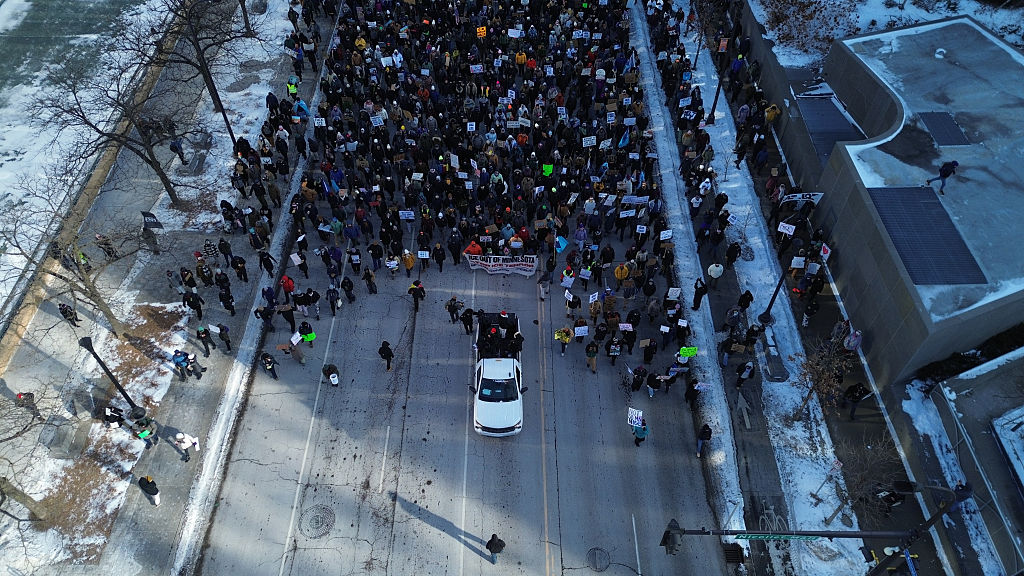
President Donald Trump appears poised to invoke the Insurrection Act to quell the rising violence in Minnesota, posting on social media his intention of doing so, “If the corrupt politicians of Minnesota don’t obey the law and stop the professional agitators and insurrectionists from attacking the Patriots of I.C.E., who are only trying to do their job.” Fifteen hundred active-duty soldiers from the Army’s 11th Airborne Division are standing by waiting for a deployment order. On the other hand, Minneapolis Mayor Jacob Frey, who earlier said that Immigration and Customs Enforcement (ICE) agents should “get the f —— out” of the city, is saying that Trump is trying to “bait” protesters through his immigration enforcement and threatened troop deployment efforts.
The tension has been building for quite some time, and not just in Minnesota. Violent acts against federal officers have almost become common. Federal immigration detention centers are being blockaded. Death threats against ICE officers are up over 8,000 percent since last year, and attacks are up over 1,000 percent. Protestors are ramming their cars into ICE vehicles and slashing their tires. A mob broke into an unmarked FBI car during the civil unrest in Minneapolis and stole guns and ammunition; a gang member has now been charged in connection with that theft. Drug cartels and gangs are tracking the movement of ICE agents and offering bounties ranging from $2,000 to $50,000 to individuals who doxx, kidnap, or kill ICE or Customs and Border Patrol (CBP) agents and high-ranking officials. Anarchists are encouraging people to use powerful laser pointers to try to blind the pilots of federal helicopters, and some have done so. Even greater violence could soon occur in Minnesota because it has already happened elsewhere. Remember: in 2025, an individual trying to assassinate ICE agents opened fire at a Dallas detention facility, killing two detainees and injuring a third, and late in November, a 29-year-old Afghan refugee shot two National Guardsmen: Sarah Beckstrom, who died, and Andrew Wolfe, who was in critical condition but is now (miraculously) recovering. The federal government is right to be worried about its officers and officials, along with their families, becoming victims of violent crime.
Federal district court judges in California, Illinois, and Oregon entered orders prohibiting the deployment of National Guardsmen to assist ICE and CBP agents, rejecting the invocation of the statutory authority (10 U.S.C. § 12406(3)) the government was relying upon and holding that those deployments exceeded Trump’s constitutional authority and violated the Posse Comitatus Act (18 U.S.C. § 1385), a federal law enacted in 1878 that generally prohibits the use of the military as a domestic police force. The Trump administration filed an emergency appeal of the Illinois order to the U.S. Supreme Court, but the justices, by a 6-3 vote, allowed that order to stand while the litigation continues below.
Significantly, though, in a concurring opinion, Justice Brett Kavanaugh stated that “the Court’s opinion does not address the President’s authority under the Insurrection Act,” nor does it “address or purport to disturb the President’s long-asserted Article II authority to use the U.S. military (as distinct from the National Guard) to protect federal personnel and property and thereby ensure the execution of federal law.” (The latter being a reference to a 1971 memo from the Justice Department’s Office of Legal Counsel authored by future Chief Justice William Rehnquist, which concluded that the President has inherent authority to deploy troops to protect federal property and to prevent interference with federal employees). Kavanaugh noted, ironically, that, “One apparent ramification of the Court’s opinion is that it could cause the President to use the U.S. military more than the National Guard to protect federal personnel and property in the United States.”
What is the Insurrection Act? The Insurrection Act’s historical roots can be found in the Militia Clauses (Art. I, §8, cl. 15 & 16) of the Constitution, other potential sources of authority would include the Commander-in-Chief Clause and the Take Care Clause. It was first enacted as part of the Calling Forth Act of 1792, but has since been amended and is currently codified at 10 U.S.C. §§ 251-255. The Act has been invoked 30 times by 10 presidents, first by George Washington in 1794 to put down the Whiskey Rebellion and last by George H.W. Bush in 1992 to suppress the Los Angeles riots following the beating of Rodney King. The Supreme Court has never overturned any of these invocations.
Two provisions of the Insurrection Act are potentially implicated here. They are as follows, with my added italicizations for emphasis.
Section 252 provides:
Whenever the President considers that unlawful obstructions, combinations, or assemblages, or rebellion against the authority of the United States, make it impracticable to enforce the laws of the United States in any State by the ordinary course of judicial proceedings, he may call into Federal service such of the militia of any State, and use such of the armed forces, as he considers necessary to enforce those laws or to suppress the rebellion.
And Section 253 provides:
The President, by using the militia or the armed forces, or both, or by any other means, shall take such measures as he considers necessary to suppress, in a State, any insurrection, domestic violence, unlawful combination, or conspiracy, if it—
(1) so hinders the execution of the laws of that State, and of the United States within the State, that any part or class of its people is deprived of a right, privilege, immunity, or protection named in the Constitution and secured by law, and the constituted authorities of that State are unable, fail, or refuse to protect that right, privilege, or immunity, or to give that protection; or
(2) opposes or obstructs the execution of the laws of the United States or impedes the course of justice under those laws.
Note that the language here is extremely broad, and purports to grant a tremendous amount of discretion to the President to use the armed forces “as he considers necessary” to crack down on domestic violence when he determines that the situation is such that it is “impractical” to enforce federal law in a state through “the ordinary course of judicial proceedings.” Moreover, it empowers the President to deploy the military when the violence in a state is such that “the laws of that State, and of the United States within the State,” cannot be adequately executed. Thus, were the President to invoke the Insurrection Act, troops would not be limited to protecting federal property or the safety of federal officers executing the nation’s immigration laws. They would be empowered to enforce all federal laws, not just immigration laws, themselves, which some would, no doubt, find alarming.
Also relevant is that the Insurrection Act is an exception to the Posse Comitatus Act. The latter generally prohibits the use of the military for law enforcement purposes. Yet, it contains an express textual exception for statutes that authorize the President to use the military for law enforcement purposes, allowing the President to invoke the Insurrection Act when necessary.
Some have criticized the Insurrection Act because of its lack of clear standards and time limits, as well as the non-involvement by Congress, and have called for it to be reformed. Such reforms have been introduced in Congress, but never enacted.
In 1827 in Martin v. Mott, the Court, in a unanimous opinion by Justice Joseph Story, addressed the question of whether, when confronted with “sudden emergencies, upon great occasions of state, and under circumstances which may be vital to the existence of the Union,” the President would be “the sole and exclusive judge whether the exigency has arisen ….” The justices answered that question in the affirmative, stating that they were “all of opinion that the authority to decide whether the exigency has arisen belongs exclusively to the President, and that his decision is conclusive upon all other persons.”
In 1849, in Luther v. Borden, the Court, in a 5-1 decision (with three justices not participating “on account of ill health when this case was argued”) reiterated this view. The Court answered the question, “After the President has acted and called out the militia, is a Circuit Court of the United States authorized to inquire whether his decision was right?” The Court said the answer was “no,” adding that if the judicial power were to extend that far, it would be “a guarantee of anarchy, and not of order.” The Court acknowledged that some believe that repositing this much power in a President could “be dangerous to liberty, and may be abused.” But, the Court concluded, “All power may be abused if placed in unworthy hands. But it would be difficult, we think, to point out any other hands in which this power would be more safe, and at the same time equally effectual.” Suffice it to say that President Trump’s critics would likely disagree with this assessment.
It is, of course, an open question whether the Supreme Court would be open to re-examining Mott and Luther, which are, after all, nearly two centuries old. The Court has been known to re-examine precedents that seemed to give the executive branch broad discretion, as evidenced by several rulings issued during the Bush administration’s War on Terror, including Hamdi v. Rumsfeld (2004), Hamdan v. Rumsfeld (2006), and Boumediene v. Bush (2008).
There are other foundational constitutional questions lurking too. For example, Ninth Circuit Judge Jay Bybee — a George W. Bush appointee and former head of the Justice Department’s Office of Legal Counsel — has raised the issue of whether the Domestic Violence Clause (Article IV, Section 4), which provides that the federal government shall protect the states “on Application of the Legislature, or of the Executive (when the Legislature cannot be convened) against domestic Violence,” might prohibit a President from invoking the Insurrection Act in the absence of such a request from the state. Bybee also raises the possibility that a President’s invocation of the Insurrection Act might be pretextual, as well as questioning whether special deference to a President, which is normally reserved for foreign affairs and national security, is warranted in this domestic context.
If the President invokes the Insurrection Act, the political and legal stakes will be high, especially with the midterm elections looming. Many believe that ICE agents have been overly aggressive in enforcing the law, leading to a sudden drop in support for those efforts, according to a slew of recent polls (see here, here, here, here, here, and here). The recent killings of two protestors by federal agents have only further inflamed what was already a charged atmosphere and volatile situation.
At this point, it is an open question whether the President will invoke the Insurrection Act. But if he does, how it will fare in the courts and whether it will minimize or exacerbate the violence currently occurring on the streets of several major cities is anybody’s guess.
John G. Malcolm is the Vice President of the Edwin Meese III Institute for the Rule of Law at Advancing American Freedom.

Politics
%20Richard%20Samuelson%20%20-%20Is%20American%20Nationalism%20Still%20Creed-able_-1.jpg)
Is American Nationalism Still Creed-able?
We are not there now, but there is reason to worry that the United States is in danger, if we are not careful, of ceasing to be a nation with the principles of 1776 at its core.
National Civitas Institute Poll: Americans are Anxious and Frustrated, Creating a Challenging Environment for Leaders
The poll reveals a deeply pessimistic American electorate, with a majority convinced the nation is on the wrong track.
.webp)
%20(1).avif)

.jpg)
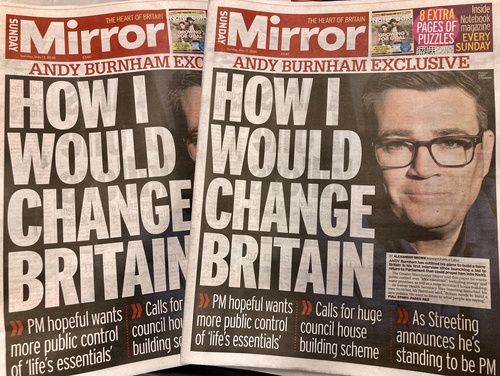
Can Britain’s Next Prime Minister Escape the Net Zero Trap?
Britain has burned through five Prime Ministers and is paying some of the highest electricity prices in the world.
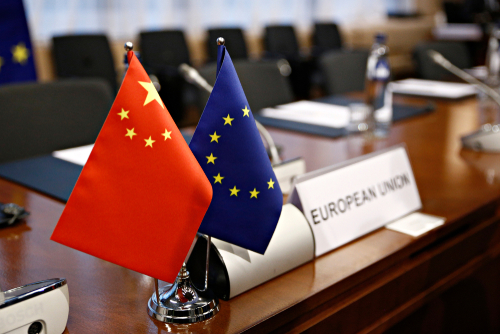
The Scanner at the Gate: Europe’s China Policy Litmus Test
China’s industrial policy is entering Europe through public procurement—and reshaping sensitive markets from within.

Confronting the New Antisemitism
"The postwar effort 'to rebrand Judaism as a religion' has made it impossible for American Jews to understand what they are facing today, because what we are facing today is an attack on the idea of Jewish peoplehood.”
“Democratic” Socialism Is Undemocratic
By promoting class hatred, suppressing private initiative, and seeking enhanced control of our lives, today’s democratic socialists undermine patriotism and individual initiative—two qualities that have long distinguished the United States from other major nations.

