Iran and the Laws of War

Operation Epic Fury can lead the way to a more realistic and effective system of international rules on war.
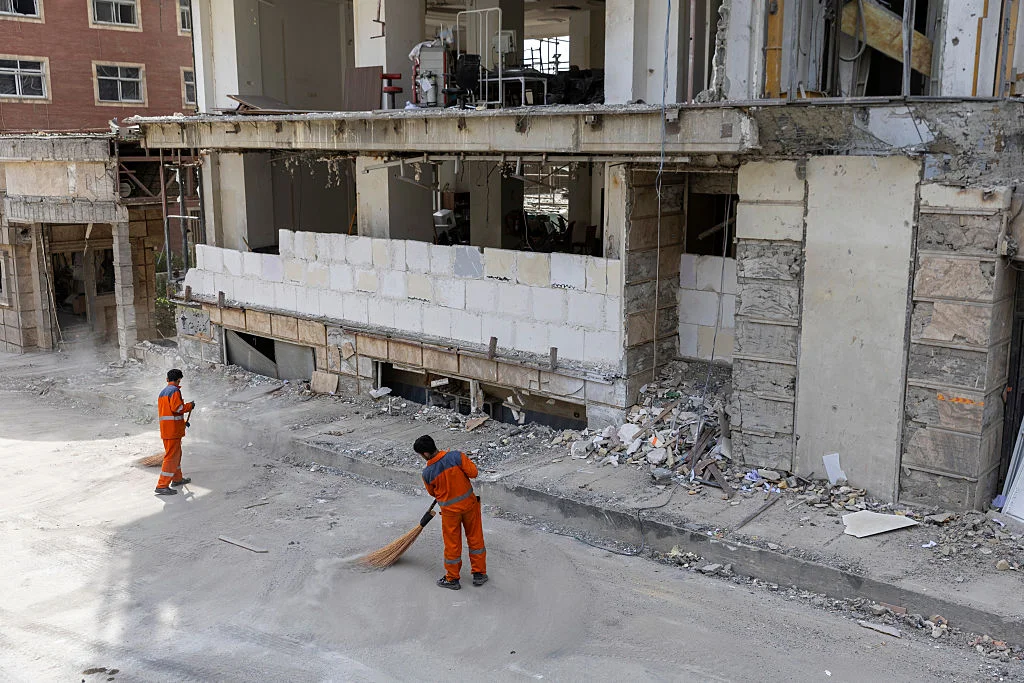
Operation Epic Fury is achieving what decades of diplomacy and sanctions could not. It is destroying Iran’s nuclear facilities, military, and political leadership – all of which posed threats to the region and the world. The U.S. attack on Iran also shifts the approach to international law and politics that modern technology and the return of great power competition have made outdated. The Iran war gives the United States the opportunity to re-formulate the rules of war, not to fight the old conflicts of the twentieth century, but the new ones of the twenty first century.
Rather than welcome the end of an authoritarian regime that has bankrolled terrorism for four decades, pursued a nuclear arsenal, and attacked its neighbors, foreign leaders quickly condemned the U.S. attacks. “The attack is described by Israel as a preventive strike, but it is not in line with international law,” said Espen Barth Eide, Norway’s foreign minister. “Preventive attacks require an immediately imminent threat.” Russian foreign minister Sergei Lavrov added that the strikes on Iran are an “unprovoked aggression” and “unacceptable.” The United Nations’ leader demanded a ceasefire. “I condemn today’s military escalation in the Middle East,” said Secretary-General Antonio Guterres. “The use of force by the United States & Israel against Iran, and the subsequent retaliation by Iran across the region, undermine international peace & security.” Legal scholars declared that the United States had violated the UN Charter’s prohibition on the use of force. Democratic Party leaders claimed Iran posed no imminent threat to the United States. “This illegal war is based on lies and it was launched without any imminent threat to our nation,” Senator Elizabeth Warren (D.-Mass.) declared. “Donald Trump still hasn’t given a single clear reason for this war and he seems to have no plan for how to end it either.”
The Constitution does not require imminence before the President can use military force. As I’ve explained in National Review, President Trump did not need congressional authorization before launching Operation Epic Fury, and the Constitution does not place any formal limits on the grounds for American use of force. Imminence, however, remains the rule governing the use of force under international law. Putting aside the Iran War opponents’ confusion about the difference between domestic and international law, and their belief that international law influences the interpretation of our Constitution, the idea of imminence should go the way of fears of World War I- and II-style mass land wars in Europe. Technology has driven changes in warfare, while the world has returned to a ruthless competition between great powers – the rules of international relations must adapt accordingly.
As set forth by the United Nations Charter, formal international law limits armed conflict to only two situations. One is when the U.N. Security Council authorizes states to use force to maintain “international peace and security.” Because the permanent members of the Security Council – the U.S., Russia, China, Great Britain, and France – have veto power, these interventions remain rare and will almost never be authorized when one of their interests is at stake. As recognized by Article 51 of the Charter, however, states also can use force unilaterally for “self-defense if an armed attack occurs.”
Even though the language expects states to wait for an attack to happen before defending themselves, customary practice among states has never followed such an impractical rule. Article 51 could not create a right of self-defense, nor could it limit the right of states to protect their security. The Charter merely recognizes a right that existed long before it was written. Customary international law has long acknowledged that states may defend themselves in anticipation of a grave threat to their security. The classic formulation arose from the nineteenth-century Caroline incident (1837), in which Secretary of State Daniel Webster explained that anticipatory self-defense requires a necessity that is “instant, overwhelming, leaving no choice of means, and no moment for deliberation.” The right of anticipatory self-defense was later adopted by the Nuremberg tribunal after World War II and most international tribunals and commentators since then.
Critics of Operation Epic Fury claim that the war in Iran simply fails this test. Iran did not pose an imminent threat to the United States, nor was it likely to do so soon. No attack was days or weeks away. No launch was being prepared. The common natural law roots of the international standard on the use of force and the individual right of self-defense appear to clinch the critics’ case. Under domestic criminal law, killing is prohibited, except when necessary to protect yourself or others from death or grievous harm. A police officer can only shoot first when a suspect is in the process of wielding a weapon that poses a threat; otherwise, an officer must normally use force only after an attack. Critics today wish to impose the same rule on the United States’ war against Iran.
But the argument that Operation Epic Fury violates international rules on the use of force shows that it is time to revise the rules on self-defense. The temporal conception of imminence may have made sense once upon a time when nations could observe each other’s mobilization of force, respond with their own conventional defenses, and trust that adversaries aimed to limit destruction to the battlefield and protect civilians. Imminence was never designed for a world where weapons of mass destruction could kill hundreds of thousands, or millions, in an instant, where terrorists or nations such as Iran disguise their forces as civilians, and these same terrorists and rogue nations target civilians as easily as combatants. When an adversary is developing a nuclear warhead and the means to deliver it, self-defense cannot wait until the enemy is about to launch a weapon. International rules should instead allow a nation to prevent the means for a devastating WMD attack while a window of opportunity remains open.
The United States should use this moment to redefine imminence from a time-limited idea to one grounded in both the magnitude of a threat and the probability that it could be realized. Ever since Webster’s Caroline standard, nations have, in practice, refused to follow the strict definition of temporal imminence. In the past several decades, the United States has used force in anticipatory self-defense against Libya, Panama, Iraq, and Afghanistan. The Reagan administration justified its 1986 strikes on Libya as necessary to forestall future terrorist attacks. Although several countries criticized the U.S. strikes as a violation of the UN Charter, Australia, Denmark, France, and the United Kingdom supported the United States. The United States again responded in self-defense when it took military action in Panama on December 20, 1989. During the fighting, the Security Council considered a draft resolution that would have labeled the invasion a “a flagrant violation of international law,” but Great Britain, France, and Canada joined the United States in opposing it. In 1998, the United States launched cruise missile attacks against al Qaeda training camps and installations in Afghanistan and a Sudan facility suspected of producing chemical weapons. The Security Council took no formal action in response.
A president need not wait until an attack is imminent when the strategic balance itself is at stake. To take the most well-known example, President John F. Kennedy imposed a naval blockade on Cuba in 1962 — an act of war even though the administration labeled it a “quarantine” – in response to Soviet deployment of intermediate-range ballistic missiles there. Soviet missiles, however, were not fueling on the launch pads. Kennedy acted because their deployment upset the superpower equilibrium in the Western Hemisphere. The international community and most American leaders applauded his restrained use of force.
The Trump administration has characterized the imminence of the Iranian nuclear threat as justification for Operation Epic Fury. Although the claim of imminence centers on timing, reliance on temporal factors alone is not enough. The administration’s use of “imminent” suggests a rationale that is more defensible than critics concede. When the White House refers to an imminent threat from Iran, it is not implying a literal launch countdown. Rather, it stresses a point in time at which any further delay could preclude reasonable action to prevent substantial harm. This understanding does not equate to imminence in a strictly temporal sense, as critics argue, but rather reflects an assessment of the potential consequences of postponement.
The use of force in anticipatory self-defense against rogue nations armed with WMD depends on three factors. First, we must ask whether the adversary possesses WMDs and demonstrates a desire to use them. Iran’s record leaves little room for doubt. It has pursued nuclear weapons for decades, defied repeated Security Council resolutions, and rebuilt enrichment facilities within weeks of their destruction in Operation Midnight Hammer. Since the 1979 revolution, Iran has waged a continuous campaign against the United States and its allies. It invaded the U.S. Embassy and held Americans hostage. Its proxies bombed the Marine barracks in Beirut in 1983 and killed 241 Americans. Iranian-supplied weapons killed at least 600 American soldiers in Iraq. Hamas, backed and funded by Tehran, launched the October 7 attacks on Israel. Every president since Clinton has declared Iran an unusual and extraordinary threat to American national security. Such a designation was not rhetoric but a legal finding, renewed year after year. Iran seeks to export a fundamentalist Islamic revolution, with the brutal suppression of individual rights and free markets, throughout the region. Its leaders have publicly hoped to wipe Israel from the map. It undermined reconstruction and reconciliation efforts in Iraq. It is tied to countless terrorist attacks throughout the world.
Second, nations must act within a reasonable window of opportunity that allows them to strike at WMD facilities and missile stocks with less force and destruction than would be required if an attack were temporally imminent. Were the United States to wait until Iran had assembled a weapon and developed the means to deliver it, the window for effective action would have closed. If the United States waited until later, it would have to use even greater force, with greater loss of military and civilian life, to be sure of destroying a better-hidden and more protected Iranian nuclear arsenal in the future. The Defense Intelligence Agency assessed that Iran could develop a militarily viable ICBM by 2035. As Senator Tom Cotton observed, Iran’s space program has yet to produce an astronaut, but it has produced the technological pathway to a missile capable of reaching the American homeland.
Third, nations must consider the extent of harm caused by an attack. The combination of nuclear weapons’ vast destructive capacity and the modest means required for their delivery makes them categorically different from conventional weapons. Even if the probability of a direct Iranian nuclear strike on the United States were small, the exceptionally high degree of harm that would result — combined with a closing window of opportunity and the certainty that the threat would grow if the United States did not act — supports military action now, rather than later.
Iran’s conventional aggression, though serious, was not what made Operation Epic Fury necessary. The U.S. attack came at a time when Iran’s nuclear ambitions, ballistic missile development, and terrorist proxy network were converging — and when the window of opportunity to stop this convergence was closing. After Operation Midnight Hammer destroyed its enrichment facilities at Fordow and Isfahan, Tehran rejected every opportunity to de-escalate. Three rounds of negotiations — in Muscat, then twice in Geneva — collapsed after Iran refused to abandon uranium enrichment. IRGC gunboats attempted to seize an American tanker in the Strait of Hormuz. Tehran continued rebuilding the nuclear facilities that Midnight Hammer had destroyed. The Iranian regime continued killing its own people.
Iran in 2026 represents a threat that the old rules on self-defense cannot address. This is not a radical proposition; nations have always adjusted to emerging military technology and aggressive behavior by belligerent nations. Reconceiving the rules on the use of force would not justify all forms of aggression. It demands rigorous analysis of costs, benefits, and alternatives. Russia’s attack on Ukraine, for example, would not satisfy a new test for self-defense. Ukraine posed no threat of attack on Russia, either using conventional weapons or WMD. Ukraine neither had the means nor the intent to attack its larger and more powerful neighbor. Putin’s invasion was aggression, pure and simple, to aggrandize the Russian state.
As World War II demonstrates, there can be things worse than war — a reality that international law must accept. War itself has not disappeared from the world. The law of self-defense developed in an era when the gravest threats moved slowly and were visible long before they could be carried out. The victorious nations of World War II designed the U.N. Charter to stop the war they had just survived – a massive cross-border invasion by one industrialized nation against its neighbors. It does not account for the proliferation of weapons, most prominently WMD, but now also including those based in cyber and space. It fails to address nations that destabilize their regions without engaging in open war, nor does it answer the problem of states that inflict massive human rights violations on their own populations. Limiting armed conflict only to self-defense or UN approval may reduce interstate war, but it does so without regard to the uses of force that will benefit the world, to say nothing of particular countries. When a single warhead can destroy a city, the danger lies not only in when an attack might occur, but in whether the opportunity to prevent it still exists. If international rules discourage armed intervention that would improve global welfare, nations must discard them and establish new standards to govern the new world.
The rules of the international system only compound the obstacles to wars that might increase global welfare by halting potential or actual human rights catastrophes, stopping WMD proliferation, preventing terrorist attacks, or removing oppressive regimes. As Justice Oliver Wendell Holmes once observed of the common law, legal rules are not a “brooding omnipresence in the sky.” Neither is international law. It evolves in response to the dangers nations confront. When the threat is the possibility of a nuclear attack, the right of self-defense must expand to consider not only the timing of an attack but also the catastrophic harm that could follow. Operation Epic Fury can lead the way to a more realistic and effective system of international rules on war.
John Yoo is a senior research fellow at the Civitas Institute and a distinguished visiting professor at the School of Civic Leadership at the University of Texas at Austin.

Politics
%20Richard%20Samuelson%20%20-%20Is%20American%20Nationalism%20Still%20Creed-able_-1.jpg)
Is American Nationalism Still Creed-able?
We are not there now, but there is reason to worry that the United States is in danger, if we are not careful, of ceasing to be a nation with the principles of 1776 at its core.
National Civitas Institute Poll: Americans are Anxious and Frustrated, Creating a Challenging Environment for Leaders
The poll reveals a deeply pessimistic American electorate, with a majority convinced the nation is on the wrong track.
.webp)
%20(1).avif)




.jpg)


Can Britain’s Next Prime Minister Escape the Net Zero Trap?
Britain has burned through five Prime Ministers and is paying some of the highest electricity prices in the world.
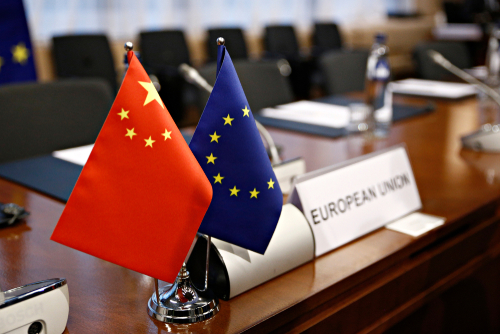
The Scanner at the Gate: Europe’s China Policy Litmus Test
China’s industrial policy is entering Europe through public procurement—and reshaping sensitive markets from within.

Confronting the New Antisemitism
"The postwar effort 'to rebrand Judaism as a religion' has made it impossible for American Jews to understand what they are facing today, because what we are facing today is an attack on the idea of Jewish peoplehood.”

“Democratic” Socialism Is Undemocratic
By promoting class hatred, suppressing private initiative, and seeking enhanced control of our lives, today’s democratic socialists undermine patriotism and individual initiative—two qualities that have long distinguished the United States from other major nations.

