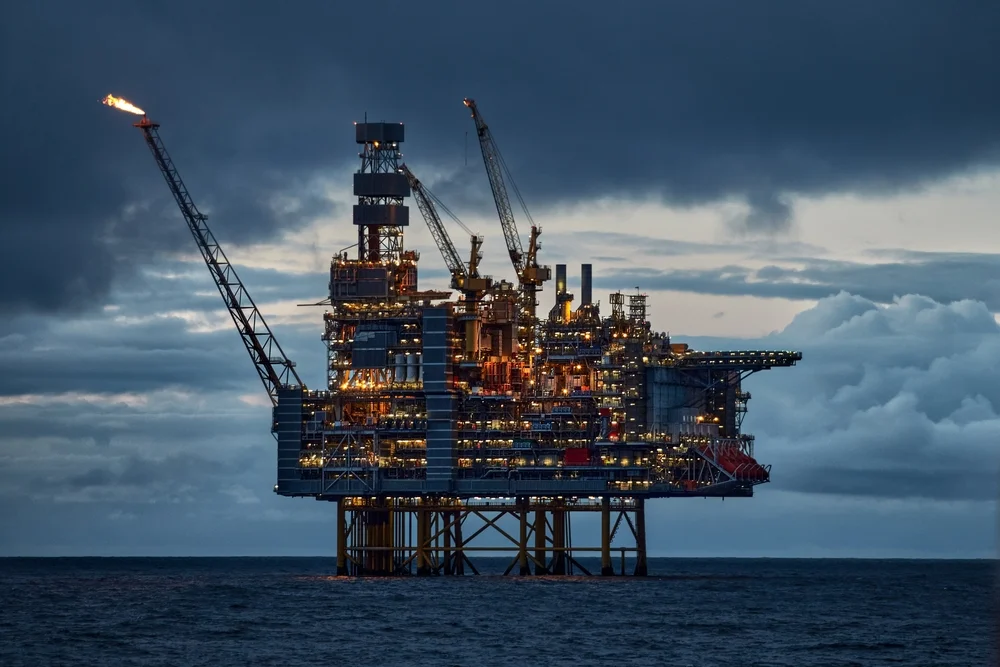
Oil, War, and Peace
.avif)
High fossil fuel use is key to winning a war and maintaining peace.
Right now, as the United States and Israel are pummeling Iran and its proxies, the question arises whether they will have sufficient time to complete their operations before the window of opportunity closes. Two obvious determinants of that are, of course, the political maneuvers on both sides of the conflict, where some form of regime change now appears to be part of at least Trump’s ambition, as he demands a say in who constitutes the next leadership of a much battered Iran. (Hint: Mojtaba Khamenei, son of the late Ayatollah, Ali Khamenei, who will continue, doubtlessly, his policies.) But this struggle has three participants, not two, and the third has no leader who can sit at the bargaining table with the other two. The market is not an entity. The oil market is a large number of interlocking actors whose decisions determine the price of oil, about 25 percent of which still flows through the Strait of Hormuz in normal times, which, for the moment, has slowed to a trickle. In response to the threat of foreclosure, oil prices went up by close to 40 percent last week as the short-term response to the turmoil in the strait. The fear today is that these disruptions will impose a price squeeze that will produce the greatest energy crisis in the past 50 years, which in turn could force the United States and Israel to bargain for some ceasefire that would at the very least prop up the Iranian theocracy so that it could bluster and perhaps fight until another day.
The hard question here in the short run is whether adaptations in the energy sector, most notably an increased flow of liquefied natural gas from the US, could cap the losses and overcome that short-term dislocation. The stock market was erratic on Monday but closed positive. The market for oil futures stood at $73 late last week, which is well within the normal range. So uncertainty has not generated profound pessimism. But, for the interim, as Professor Victoria Sutton of Texas Tech School of Law notes, the high prices at the pump quickly translate themselves into negative political fortunes for the president’s party during the midterm election, which cannot quite be estimated eight months before the November midterms. President Joe Biden certainly felt the brunt of those dislocations after the haphazard withdrawal from Afghanistan. But a prudent president has to start thinking about these ramifications now, which is what President Donald Trump is failing to do when, in the midst of this turmoil, he wants, over fierce legal and political opposition, to reimpose his 10 percent tariff, which has to be a gratuitous downer in this brittle and fidgety market in consequence of the war.
The deeper question about these matters is why the energy crunch had to occur at all. Supplies of fossil fuels are plentiful around the globe; fracking and similar technologies are better able today than at any time in the past to extract those fuels from the ground in a clean, low-cost manner, thanks to steady improvements in drilling techniques on both safety and efficiency. Potential price increases in fossil fuels have sparked a reaction on the buyer’s side of the market. Greg Ip has reported in the Wall Street Journal: “The U.S. consumed 4% less gasoline in 2025 than in 2007, while producing 42% more goods and services (as measured by gross domestic product, adjusted for inflation). In consequence, household use of energy dropped from 5.7% in 2007 to 3.7% in 2025.” Those numbers suggest that the United States could absorb this increase just as it survived the larger $45 barrel surge after Russia invaded Ukraine, with only a minor reduction in growth that year.
The fly in the ointment, however, is that global averages tell us nothing about local bottlenecks caused by distributional extremes, where the supply crunch has been noticeable and, wholly apart from the war, energy price increases have been large. The key blunder here, as identified by the Spectator, has been the relentless political push to switch away from oil and gas to use renewable energy sources that are said to have fewer adverse effects on the environment, which in turn has led to shutting down drilling of the ample oil reserves in the North Sea and the Netherlands, and the EU remains unwelcome to all extraction of oil from shale. Those choices embody a significant amount of wishful thinking, given that, in light of the overall market expansion, the percentage of energy supplied by fossil fuels remains stubbornly high at around 80 percent, mostly oil and natural gas, with about 20 percent from coal. The efforts to restrict these fuels in Europe have resulted in costs there being about three times those of getting energy in the American market, which, apart from noticeable holdouts like New York and California (both losing population), treat fracking as a blessing, not a curse.
The current high prices make clear what should have been evident: namely, that this energy shortfall will not be filled by expanded output from solar and wind energy, which are useless for powering aircraft, motor vehicles, and ships, whether for civilian or military use. No one, except an anti-renewable zealot, should object to the cost-effective use of solar, wind, water, and, yes, nuclear power as part of a sensible energy portfolio. But to see these energy sources as perfect substitutes for fossil fuels is belied by that enduring cost differential. Thus, so long as these sources cannot satisfy the pent-up demand for energy, the alternative to domestic production has to be importation of these fuels from other places, which, as recently as five years ago, included heavy supplies shipped to New England from Russia, which at the time helped fuel the Russian invasion of Ukraine. The more recent developments have been highlighted by increased shipments from Qatar, which are now bottled up in the Strait of Hormuz. But even if those substitutions could be implemented cheaply, the total amount of global emissions of carbon dioxide or any traditional pollutant has to be higher once these shipment costs are factored in, so that the nicest way to describe the shift is that it allows the champions of renewable fuels to ease their conscience by buying their stuff from other nations that emit as much carbon dioxide as they would. Yet the political ramifications are dire: so long as the new sources have to flow through the Strait, the bottleneck will persist.
At this point, the serious situation here depends on the utter foolishness of EU policy on one side, and stubborn American states on the other, both responsible for huge increases in energy costs. Their indirect costs (e.g., more wood burning) expose the sad fact that people who cannot access cheap off-grid energy will go elsewhere to keep warm at night. The only way to prevent a recurrence of this problem is to reverse a policy that never made sense in the first place. Committing to solar and wind energy as your first line of supply is to pretend that long-term stability can be achieved by relying on energy sources that vary by the hour and the week. The strains on the network and price variability thus increase the political risks brought on by war in ways that could tip the balance.
The situation in the United States is a complex interplay between federal and state regulation, and the sad state of affairs illustrated by the fierce debate taking place right now in the New York state legislature over whether to keep the state’s current climate law, passed in 2019, which set a primary goal of a 40 percent reduction in greenhouse gas emissions by 2030. This goal is now six years behind schedule, which means the rest of the program is hopelessly behind as well. No one appears to conduct even the most rudimentary reexamination of the highly contested claim that dangers from carbon dioxide emissions define some climate crisis, as Gavin Newsom has announced at every opportunity. At the very least, the palpable damage from climate regulation should spark a close review of the recent effort by the Trump EPA to undo the endangerment finding adopted by the Obama administration after the Supreme Court's decision in Massachusetts v. EPA (2007). Yet
Richard Epstein is a senior research fellow at the Civitas Institute at the University of Texas at Austin.

Politics
%20Richard%20Samuelson%20%20-%20Is%20American%20Nationalism%20Still%20Creed-able_-1.jpg)
Is American Nationalism Still Creed-able?
We are not there now, but there is reason to worry that the United States is in danger, if we are not careful, of ceasing to be a nation with the principles of 1776 at its core.

National Civitas Institute Poll: Americans are Anxious and Frustrated, Creating a Challenging Environment for Leaders
The poll reveals a deeply pessimistic American electorate, with a majority convinced the nation is on the wrong track.
.webp)
%20(1).avif)


.jpg)


Can Britain’s Next Prime Minister Escape the Net Zero Trap?
Britain has burned through five Prime Ministers and is paying some of the highest electricity prices in the world.
The Scanner at the Gate: Europe’s China Policy Litmus Test
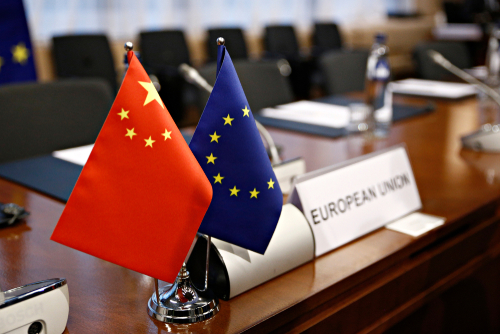
China’s industrial policy is entering Europe through public procurement—and reshaping sensitive markets from within.

Confronting the New Antisemitism
"The postwar effort 'to rebrand Judaism as a religion' has made it impossible for American Jews to understand what they are facing today, because what we are facing today is an attack on the idea of Jewish peoplehood.”
“Democratic” Socialism Is Undemocratic
By promoting class hatred, suppressing private initiative, and seeking enhanced control of our lives, today’s democratic socialists undermine patriotism and individual initiative—two qualities that have long distinguished the United States from other major nations.

