Junk the CAFE Standards
.avif)
In the end, CAFE fails every known test of social welfare.
In 1975, in the wake of the massive disruption in oil and gas markets stemming from the 1973 mid-east war between Israel and its Arab neighbors, Congress passed The Corporate Average Fuel Economy (CAFE) Standards that took the novel position that the proper way to introduce fuel economy was to set standards, not for each individual car or light truck, but for each fleet of cars or light-trucks produced by either a domestic or foreign automobile maker. The ostensible purpose of this initiative was to reduce the overall level of oil and gas consumption in light of the boycott that had been organized by the Organization of Petroleum Exporting Counties (OPEC) in 1973-1974, which raised prices and reduced the supply of gasoline at the pump. At the same time, the Nixon Administration introduced a set of price controls that in turn reduced the supply of domestic oil and gas, a misguided move made-to-order for OPEC as lengthy queues at the pump emerged across the United States. The market price for gasoline was far higher than the allowable price, and that gap meant that drivers were willing to wait in queues until the total cost of purchase price plus the cost of waiting time equaled their reservation price. The key defect of the system is that waiting time and idling engines did not increase supply but resulted in a deadweight loss of substantial proportions.
The OPEC embargo was eventually lifted. But the CAFE regulations lived on as an effort to reduce oil and gas consumption by putting ever tighter restrictions on average fleet mileage. During the Biden administration, the government doubled down on these restrictions, and the recent Trump Fact Sheet lost no time in taking pot shots at a standard that it branded as onerous on the industry. To the apparent pleasure of major automobile manufacturers, Trump stated that he would restore CAFE standards to levels that conventional gasoline and diesel vehicles can meet. The Biden administration's standards imposed unrealistic fuel-economy requirements, which meant that Trump’s lower mileage figure showed greater “fidelity” to the original CAFE program, which was followed by his more dubious claim that the Biden standards “broke the law.”
The differences here are not trivial. The new Transportation Department plan cuts the required fuel levels for new passenger vehicles to about 34.5 MPG, down from the 50 MPG standard planned by President Biden covering years after he left office. That number was designed as a covert means to compel the adoption of a larger EV fleet, because no modifications to the standard internal combustion engine could achieve that stringent target.
As critics quickly noted, this is Trump’s latest salvo in his long-standing effort to undo the entire Biden agenda. The last key step was to undo California’s effort to use its EV standards to ban the sale of new gas-powered cars in California by 2035 – a position that it adopted in lock-step with some 17 other states. He then gutted the CAFE standard by reducing the civil punishment for CAFE violations to $0.00. And his administration is now hard at work trying to undo the 2009 endangerment finding for carbon dioxide that lies behind the new move.
All of Trump’s moves under the current law are fully justified, notwithstanding the anguished cries of his critics, who regard his actions as foolishly leading us down a doomsday path. Indeed, my one regret here is that his Executive Order that rolled back the Biden CAFE orders could not go further, because it takes Congress to repeal a law that should never have been enacted in the first place. The argument here does not rest on some foolish overstatement that the emissions of deadly gases, such as nitrous and sulfur dioxide, or the occurrence of any small particulate matter, don’t count or will be somehow magically met exclusively by market responses. Indeed, it treats these risks as justifying a form of direct regulation, so that the entire nation does not look and feel like the smog-ridden Los Angeles basin that greeted me when I arrived there as a young law professor at the University of Southern California Law School in the fall of 1968.
Yet once the externality is confronted head-on, mechanisms must be deployed to enable emitters to enter various schemes that meet these external targets with minimal loss of productive activity. The regulation of air pollution, like that of any other dangerous externality, only works if the appropriate regulatory scheme is put in place at the outset, and that is where the current CAFE framework is fatally defective.
The Trump administration justifies its regulation on the ground that lower costs mean greater freedom to drivers, which is an incomplete analysis of the problem because it does not address the various externalities, both positive and negative, that the initiative will produce. To get that larger but much needed perspective, it is useful to turn to the framework that has been developed by Sam Kazman, now the retired General Counsel of the Competitive Enterprise Institute.
His initial question asks what harm the CAFE regulation is intended to suppress, and why that requires actions at the fleet level rather than at the car or light-truck level. The answer is that CAFE is surpassed by any other program that imposes a simple tax to address the risk. Two of these can be noted. The first is a generalized effort to reduce total fuel consumption as an end in itself. That might have sounded plausible in 1975 when the specter of running out of energy retained a shred of plausibility. However, modern technology has rendered that concern obsolete. The development of fracking is the most notable, but thousands of other smaller tweaks have combined to secure an abundant supply of fossil fuels for the foreseeable future. Not only is more energy available, but users of that energy, spurred by fears of rising prices and political instability, have made their own products far more resilient and energy-efficient than ever before. Market forces, wholly without the misguided CAFE policies, will lead rational firms (and firms are rational even if many of your family members are not) to spend one dollar in precautions to avoid $1.01 in added fuel expenses. So this item should be off the table.
The more serious problem is pollution, for which the appropriate response is a tax on its sources, whether cars or trucks of any size. It is the level of emissions, not the size or age of the vehicle, that matters. The standard should be set again to make sure that we do not get too much or too little regulation. In such cases, the usual approach in private law on nuisance is to employ a combination of remedies. Start with injunctions that prevent the most dangerous forms of pollution — e.g., fatal gas emissions — and then use fines calibrated to deter excessive pollution. The term “excessive” is key because the world is currently awash in pollution from natural sources, e.g., volcanic emissions, air pollution from animal emissions, and the like. We have clearly been able to survive these background risks; therefore, a helpful rule of thumb is to tolerate pollution from man-made sources so long as it is below the level of these natural emissions. Running this program will require some fine-tuning due to factual disputes regarding the putative damage associated with specific pollutants. However, the framework is sufficiently robust that these special adjustments should not undermine the basic modes.
CAFE laws undermine this sensible approach, as there is no safety rationale for offsetting the higher pollutant emissions from larger vehicles by subsidizing smaller vehicles. As Trump has noted, these cars are often in low demand and therefore sell at small profits. Hence, they sit on the shelves for an extended period of time –– if sold at all. Nor is there any reason to compel companies with expertise in constructing large cars and trucks to add additional vehicle lines when they lack the expertise or inclination to build smaller vehicles.
There are, moreover, other externalities that matter, many of which are ignored. Thus, a study from Consumer Reports treats it as good news that, adjusting for inflation, “vehicle prices didn’t increase during the time period studied — model years 2003 through 2021 — even as average fuel economy increased 30 percent and proven lifesaving safety technologies became common features.” However, this study makes no effort to separate the improvements attributable to market forces in safety and efficiency from those attributable to regulation. Worse still, the study ignores, as Kazman stresses, the safety differences between large and small vehicles. Large hitting large is safer than small hitting small. That difference could translate into saving 1,000 to 2,000 lives per year, depending not only on the existence of a difference between market standards and CAFE standards, but also on the magnitude of that difference.
Nor are environmental critics correct in claiming that eliminating CAFE standards “could increase oil demand and weaken the competitiveness of US companies in the emerging global market for low-emission vehicles” against Chinese and other foreign competitors. That misguided argument presumes that American companies will overlook a profit opportunity in this market niche. In fact, the opposite is true. A company that is exempt from CAFE regulations operating in this space should be able to perform as well as its foreign competitors. Government coercion is not needed to tell new firms and old ones how to make money. In the end, CAFE fails every known test of social welfare, and this outdated dinosaur should be laid to rest.
Richard A. Epstein is a senior research fellow at the Civitas Institute. He is also the inaugural Laurence A. Tisch Professor of Law at NYU School of Law, where he serves as a Director of the Classical Liberal Institute, which he helped found in 2013. Epstein is also the James Parker Hall Distinguished Service Professor of Law Emeritus and a senior lecturer at the University of Chicago.

Pursuit of Happiness
The Rise of Latino America
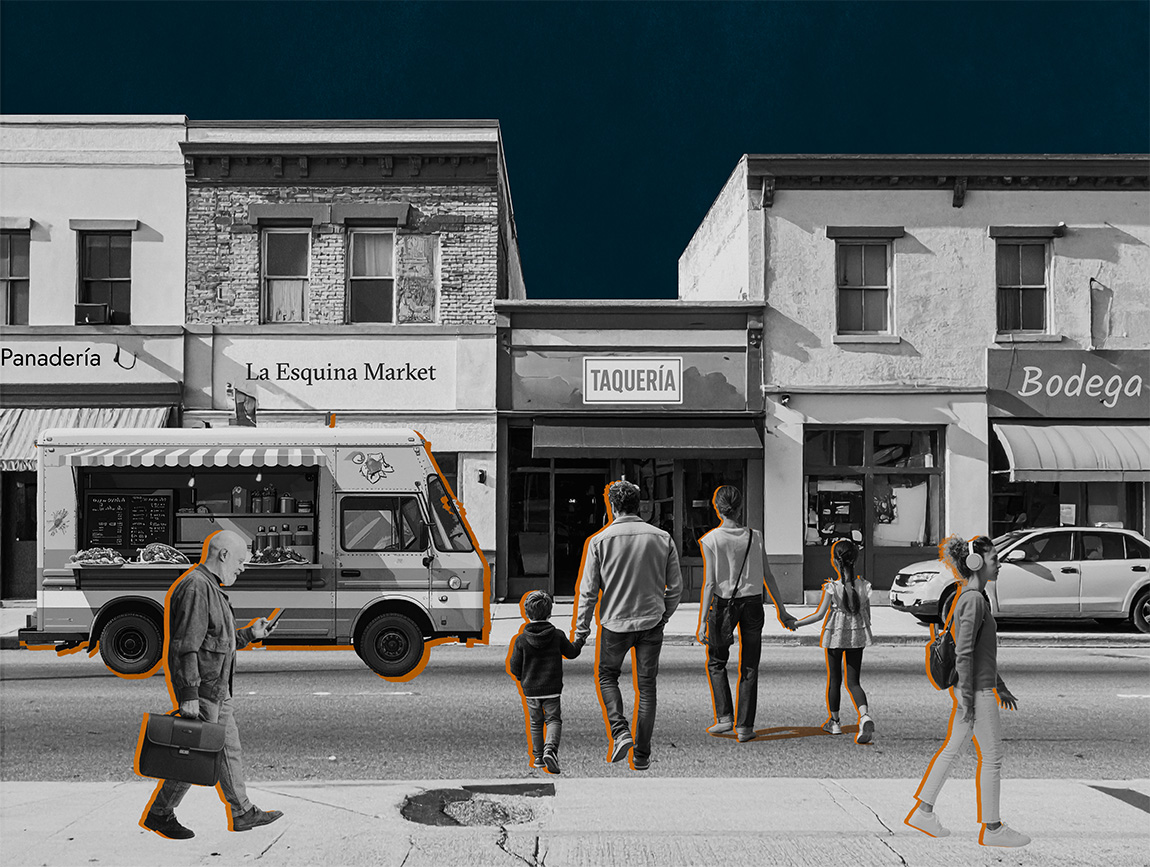
In The Rise of Latino America, Hernandez & Kotkin argue that Latinos, who are projected to become America’s largest ethnic group, are a dynamic force shaping the nation’s demographic, economic, and cultural future. Far from being a marginalized group defined by oppression, Latinos are integral to America’s story. They drive economic growth, cultural evolution, and workforce vitality. Challenges, however, including poverty, educational disparities, and restrictive policies, threaten their upward mobility. Policymakers who wish to harness Latino potential to ensure national prosperity and resilience should adopt policies that prioritize affordability, safety, and economic opportunity over ideological constraints.












Spielberg’s Empty Hope
'Disclosure Day' should have been called 'Hope and Change,' or rather 'Change and Hope.'
.jpg)
Deliberative Republicanism and the Triumph of the American Founding
Instead of rejecting the moral urgency of the postliberal right and left, it is fitting and proper that we redirect it through the right kind of education—both formal and informal—that can inspire affection for our Constitution.
.jpg)