John Wayne and the American Redemption

Why not accept that darkness does not have to dwell within us, but that God can extinguish it?
American film director John Ford despised intellectual snobbery and affectations in cinema. For him, the story itself represented the center and foundation of the film. Perhaps this is why Ford is, rightly, in the American film Pantheon for his insistence on telling a good story, eschewing cinematographic virtuosity for its own sake, and teasing out the moral dilemmas in his characters.
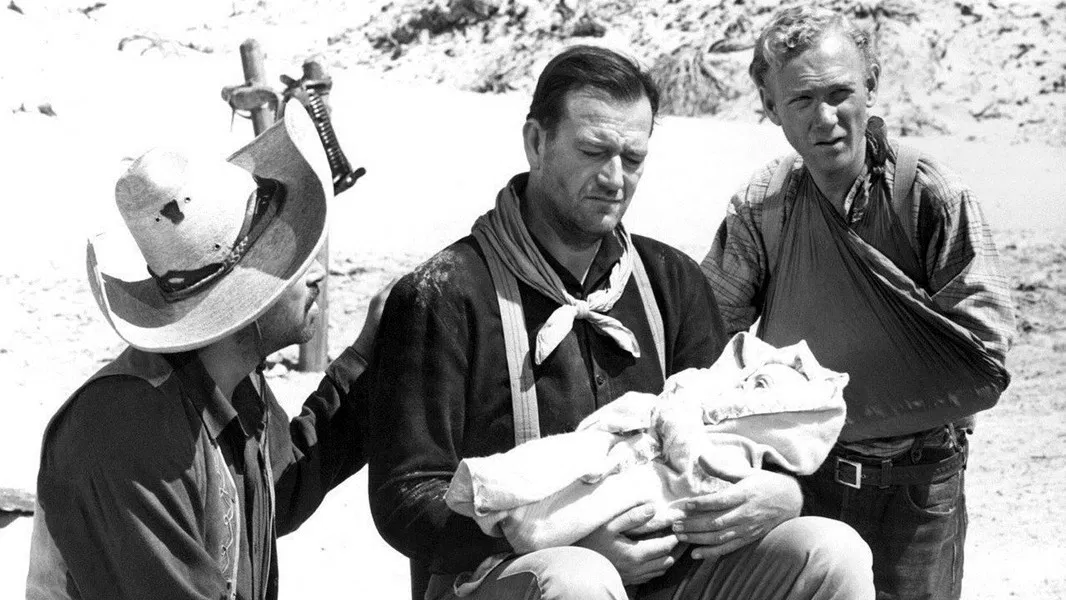
Ford’s 1948 film, 3 Godfathers, is no exception. It is a Western (a film style Ford is best known for) and an unlikely Christmas film, but, in his own fashion, Ford beautifully retells the story of the Magi through American Western myth and theology. The three men in this case are three outlaws: Bob Hightower (John Wayne), Pedro “Pete” Fuerte (Pedro Armendáriz), and William “The Abilene Kid” Kearney (Harry Carey, Jr.). They are headed to the town in Arizona aptly called Welcome with the intent to rob a bank.
Bob is clearly the leader of the pack. Although Pedro challenges him on some things, he usually gives in to Bob's final word. The Abilene Kid, as the name implies, is just a young kid whom Bob decided to take under his wing in his life as an outlaw.
Christmas is coming, but that doesn’t mean much to the three men. They are reluctant believers; some more, some less. Pedro treats his Catholic faith as a distant but pleasant memory of childhood and life in Mexico; William knows the Bible intimately but has rejected it; and Bob couldn’t care less about God or religion. He is a man without a past, as is often the case with characters John Wayne plays.
In Welcome, the three men are indeed welcomed and offered a cup of coffee by an older couple, Mr. and Mrs. Buck Sweet. At first, Buck (Ward Bond) appears to be just a man living a quiet life in a small town. His “aw shucks” innocence has made the three men falsely at ease, as it turns out that Buck is Welcome’s sheriff, which presents a problem for them. Despite this, Bob still goes ahead with the plan to rob the bank, and indeed they do.
The three outlaws are on the run across the Arizona desert, as Sheriff Sweet and his men pursue them. Bob tries to outmaneuver the sheriff by taking an unexpected route. This turns out to be the central existential choice of Bob’s life. Their escape across the desert turns into a sacred pilgrimage, for on their journey, the three men find a dying woman who is about to give birth. She turns out to be Sheriff Sweet’s niece.
The woman gives birth to a baby boy whom she names Robert William Pedro Hightower, names the outlaws as the three godfathers, and asks them to make one simple promise: to take care of the child. Even thieves like these cannot say no to the dying woman. The promise, in some form or other, must be honored, and the men intend to do it.
Ford employs some comedy as we see three men attempting to care for the baby, who know little about such things. But the comedy is brief, and this is hardly Tom Selleck, Ted Danson, and Steve Gutenberg in Three Men and a Baby (1987), having their hedonistic, bachelor life in New York interrupted when a baby is left on their doorstep.
Bob quickly realizes that the baby will not have enough condensed milk unless they set out across the mountain to the nearest town, appropriately called New Jerusalem. Bob doesn’t think much of this, but young William sees it clearly: this very experience is straight out of the Bible, and God is trying to tell them something. They need to listen to God’s word and the invitation to do good.
Bob is driven by something else and frequently tosses the Bible that the men found in the dying woman’s baby chest. The journey is brutal, and the three godfathers refuse to drink whatever water they have left to save it for the baby. Eventually, it is only Bob who manages to bring the baby to safety, but Sheriff Sweet has also caught up to him.
It is Christmas Day. In a tender moment, Bob, barely able to walk, enters the saloon. Everyone is captivated by the baby, and the piano player quickly changes the saloon tune to a soft rendition of Silent Night. But justice must be meted out. After all, Bob has robbed a bank. The sentence is 20 years behind bars. The saloon doubles as a courtroom, and the judge tells Bob that “the court may be willing to suspend that [20 year] sentence indefinite providing you sign this here paper leaving your godson to the marshal and Mrs. Sweet, and furthermore, providing that you never again set foot in the township of Welcome, territory of Arizona.”
Standing before the judge, Bob’s disappointment is evident. “You can throw the book at me, Judge,” he says. “I ain’t gonna do her. I ain’t breaking my promise to a dying woman.” The judge smiles and tells Bob that he is giving him the minimum sentence of one year in prison, to which Bob responds with jubilation. In a typical John Ford fashion, the sacred and the profane meet, and the judge declares, “Court’s closed. Bar’s open. Double bourbon, bartender, if you please.”
My eight-year-old son has often asked me, “Can bad people become good people?” It is a seemingly simple question, especially when it comes from a child, but the most direct questions often yield complex answers. In the case of John Wayne’s character in 3 Godfathers, the answer is yes. Of course, we must also assume that there was a speck of the good in Bob Hightower to begin with, before he turned to lawlessness. It was ultimately the existence of this child that quite possibly saved Bob’s soul, as well as the souls of William and Pedro.
In his biography of John Wayne, Scott Eyman calls 3 Godfathers “a studiously nonviolent picture.” In addition, “Wayne’s performance seamlessly combines fortitude, determination, anger, grief, responsibility, and exhaustion.” Only John Wayne can be simultaneously physically exhausted and still in control of his masculine power. But this masculine power is something else through John Ford's lens. In this case, the most authentic masculinity does not come from how fast a cowboy can shoot his gun or how much power he has over another man or woman. We see this kind of masculinity in Ford’s other films, such as The Searchers (1956) and The Man Who Shot Liberty Valance (1962).
In this tender story, protectiveness and implied fatherhood become central to masculinity. Wayne’s Bob humbles himself before God in a rather imperfect way. He is not a man of many spiritual words, nor is he an outlaw philosopher. Here, Wayne is a man struggling with the good and evil within himself. The baby is the reason why he chooses the good, even to the point of near-death exhaustion.
In The Searchers, John Wayne’s character is a nowhere man. He gets swept into the landscape of the American West. He is a man who, for a variety of reasons, cannot be part of any family, community, or town. The ending shots of The Searchers and 3 Godfathers couldn’t be more different. In The Searchers, Wayne crosses the house threshold and walks into the empty vastness and unknowability of the desert. He belongs to no one, and no one belongs to him.
In 3 Godfathers, he is taken into the fold of Welcome, Arizona. He has found a community, a family that accepts him. He has found reason for being. As Scott Eyman writes, “...Wayne wears the suspenders of and turned-up jeans…As he leaves on the train, he waves in impeccably composed farewell while the ladies of the town sing ‘Bringing in the Sheaves’.”
There is no explicit liturgy in 3 Godfathers, but spiritual and religious overtones are always present in Ford’s films. The film’s movement follows a particular journey –one from darkness to light, and we could even go as far as to say that Ford is a theological cowboy. Alluding to Psalm 126, Ford shows (but never tells!) that the spiritual harvest will only be good if we sow seeds of goodness. Wayne’s Bob Hightower has not only redeemed himself by honoring the dying woman’s promise but also pleasantly discovered that he belongs to a community. He went from a man who tossed the Bible into the desert’s cruel air and sand to being "surprised by joy,” to use C. S. Lewis’ phrase.
This is a story of uniquely American redemption. 3 Godfathers may dwell slightly in spiritual sentimentality. Darkness has been defeated here, unlike in other Ford films. Why not accept this reality as well–that darkness does not have to dwell within us, but that God can extinguish it? Isn’t this exactly what Bob Hightower ultimately accepted? Here, more than in other Ford films, we see a miracle of Being, especially in a child. It is the child who breaks the cycle of darkness and leads Bob Hightower out of his history of violence and into the future of creation.
Emina Melonic writes about culture, film, and books. Her work has been published in American Greatness, Claremont Review of Books, Los Angeles Review of Books, Modern Age, and The New Criterion, among others. She’s currently working on a biography of Edward G. Robinson and a book on Ronald Reagan’s Hollywood years.

Pursuit of Happiness
The Rise of Latino America
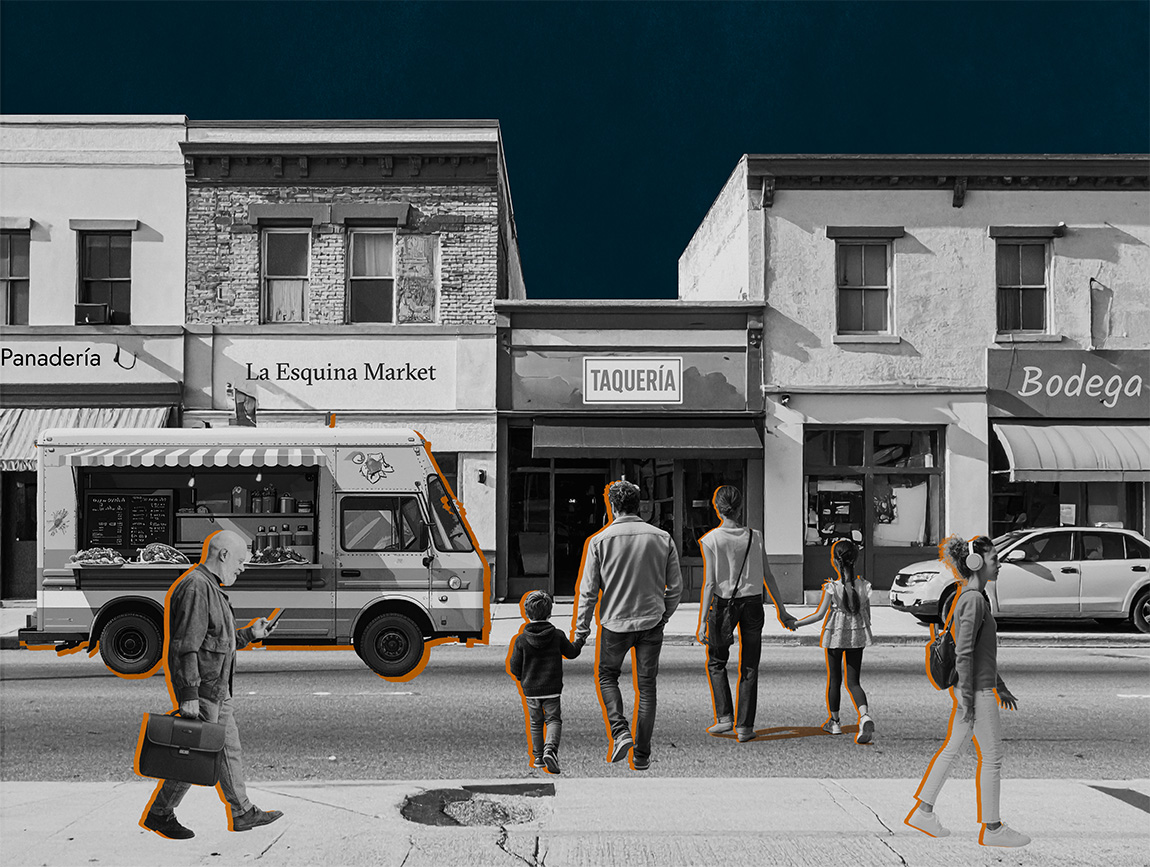
In The Rise of Latino America, Hernandez & Kotkin argue that Latinos, who are projected to become America’s largest ethnic group, are a dynamic force shaping the nation’s demographic, economic, and cultural future. Far from being a marginalized group defined by oppression, Latinos are integral to America’s story. They drive economic growth, cultural evolution, and workforce vitality. Challenges, however, including poverty, educational disparities, and restrictive policies, threaten their upward mobility. Policymakers who wish to harness Latino potential to ensure national prosperity and resilience should adopt policies that prioritize affordability, safety, and economic opportunity over ideological constraints.





.jpg)




.jpg)
The Declaration Is a Metaphysical and Political Triumph
It is the nature of genuinely lasting great texts that we observe new things in them that fit our moment.
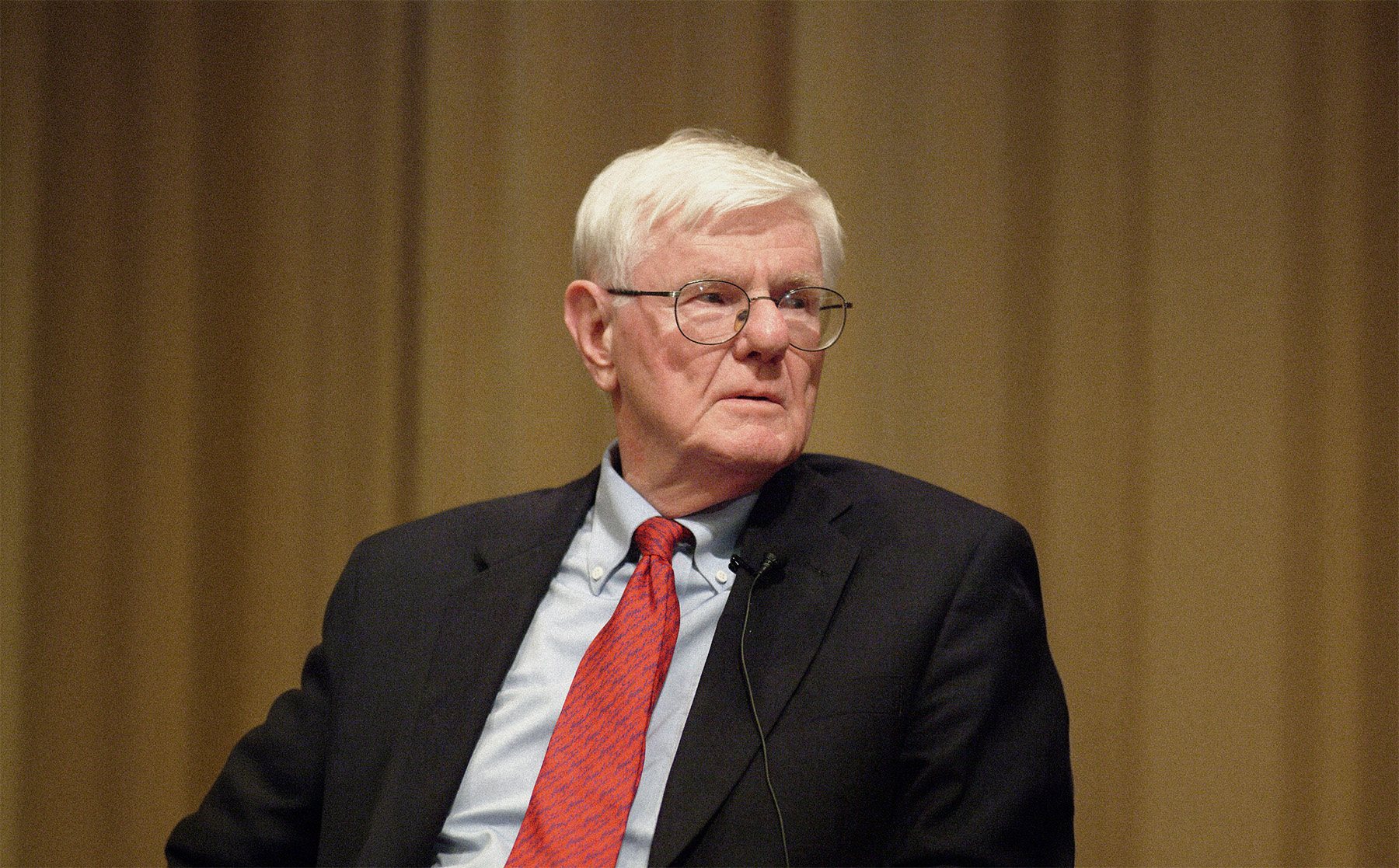
Gordon S. Wood's American Revolution
Widely acknowledged as the pre-eminent historian of the American Founding in our time, Wood was virtually without peer within academic American history today.