
Welcome to the Manosphere

Louis Theroux's recent documentary Inside the Manosphere is incomplete in ways that matter.
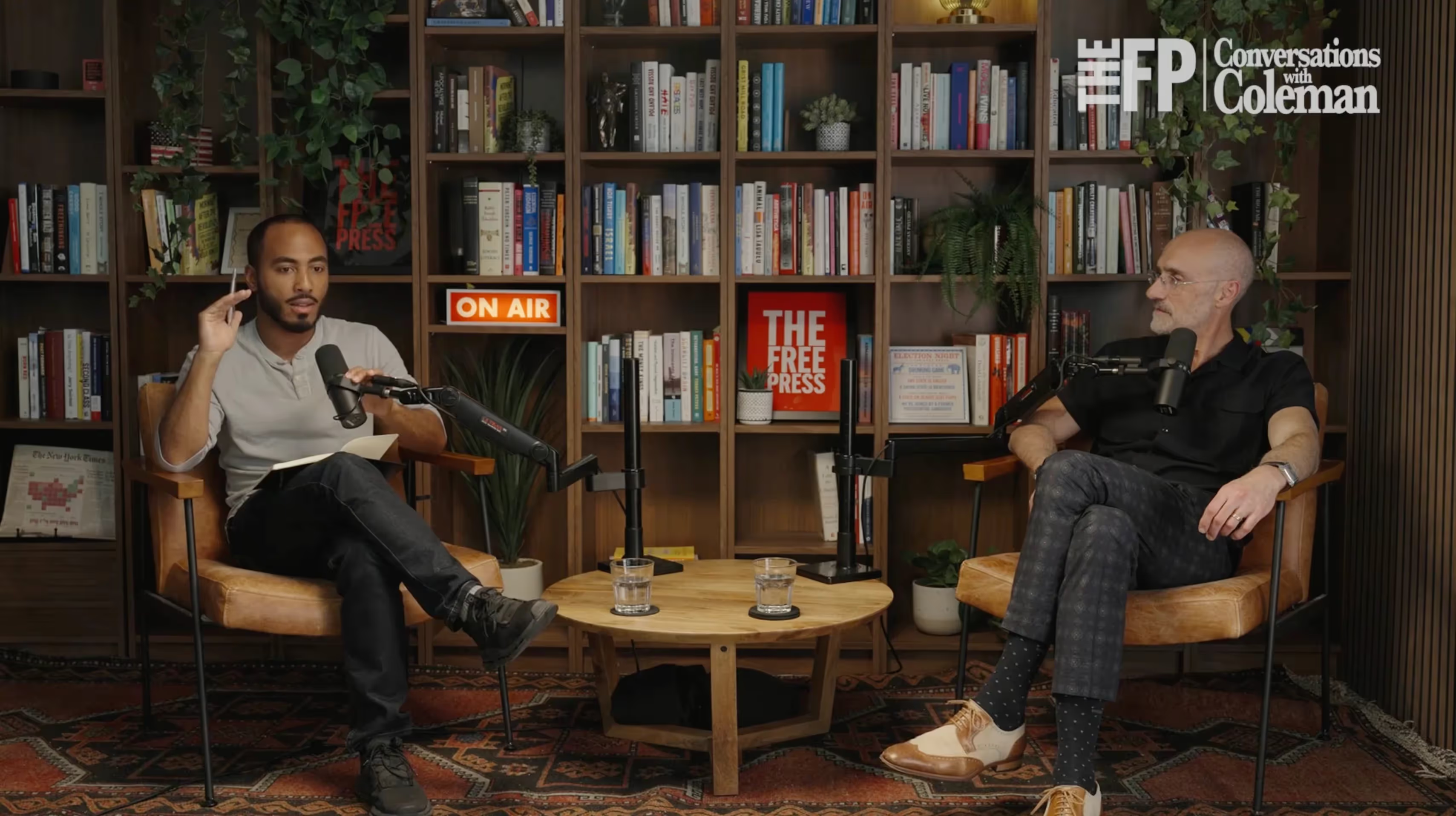
Louis Theroux is very good at something most journalists are not: making his subjects comfortable enough to reveal themselves. His recent documentary, Inside the Manosphere, is, in this narrow sense, a success. The men he films — the influencers, the grifters, the true believers who together constitute the online world of influential men teaching adolescents how to navigate a feminized world — gradually expose the thinness of their various performances. And yet the documentary is finally less illuminating than it could be, because Theroux and his producers seem to have arrived with a thesis already formed. The manosphere is a scam, and here are the scammers. Filming them will reveal the nature of their scams and the discomfort the grifters eventually show when confronted with the many contradictions they have embraced as they exploit everyone around them to show young men how they ought to behave. That is not wrong, exactly. But it is incomplete in ways that matter.
The more useful exercise — one the documentary gestures at but never quite performs — is to disaggregate. The “manosphere” as a concept does a great deal of flattening. It lumps together phenomena that are distinct in character, in appeal, and in potential danger. Examining the pied pipers of the manosphere should provide important insights about what ails young men in America. But if we are to take this social phenomenon and its attendant pathologies — anti-social behavior, including but not limited to violent misogyny and antisemitism — seriously, we need to be precise about which young men, drawn to which messages, for which reasons.
Consider Justin Waller. He is crass and materialistic, much like a man who grew up without money and made a great deal of it, tends to be materialistic — loudly, demonstratively, and without social grace. His commentary on women is even less graceful, especially his repeated suggestions of having multiple girlfriends (while his wife remains monogamous), which may be bravado or may be genuine and is, in either case, brutish. Theroux probes these seams for evidence of deep-seated misogyny, to partial success. If the point of the documentary were to show that these influencers are hypocrites or flout twenty first century pieties about race and gender, then it largely succeeds.
But without making comparisons about who is relatively better or worse than whom, Waller is no Andrew Tate (not interviewed), the alleged human trafficker with a massive and disturbing following, though they are apparent friends and occasional collaborators. Theroux inadvertently shows that it’s a category error to lump the two together despite their relationship—shallow friendships meant to increase clout being a regular feature of this views-driven universe. Two young men interviewed in the documentary — fans of Waller’s, clearly working-class strivers, clearly earnest — offer an unrefined distillation of Waller’s message that the film never quite absorbs. What they hear from Waller, they explain, is mostly productive neo-stoicism: nothing will be handed to you. Work hard — physically, mentally, and emotionally. Take care of the people you love. Don’t make excuses, whether they concern your brain chemistry or your unchosen station in life.
At the documentary’s end, we see that Waller lands closer to his fans than his peers. He is in a large family home away from the glitz of South Florida, surrounded by his growing family. The Horatio Alger message, delivered in the idiom of a construction foreman who discovered social media, is not a pathology. It comes with weird ideas about how men must earn their value while women are born with it and promises the female gaze as a prize — neither of which I would endorse, but neither of which is especially new as an idea or corrosive to men’s development.
Harrison Sullivan is something else entirely. He is, to put it plainly, a child — not merely in age but in psychological formation. He is rash, manipulable, not nearly as smart as he thinks he is, and still visibly working through a tangled relationship with his mother. He thinks he can bluster his way through any confrontation, but he is consistently mistaken. When Theroux asks him why he can’t just be a good person, contradicting Sullivan’s claim to being a role model, Sullivan meanders through an answer he surely thought was clever, but that ultimately reveals that he’s on a grift for money. He then quickly shifts back, insisting that he is a genuine role model for young people — before adding, when pressed, that young people probably shouldn’t be watching him at all. He is a good-looking, immature, attention seeker. In other words, an adolescent is living the dream of being his own boss and receiving tons of attention. Unlike Waller, he sends no coherent message: He’s just in it for the grift. Ultimately, Theroux baits him into a tantrum that probably makes Sullivan more popular with his high school clique.
Sneako, the widely banned streamer and convert to Islam, is in some ways the most interesting case study. His critique of modern society has a structure that will be familiar to anyone who has spent time with academic critical theory: norms and expectations are not neutral; they serve particular interests, they demand particular things from particular groups. In Sneako’s telling, what society demands of men — regular jobs, quiet domesticity, subordination of ambition — is not natural but constructed. So far, this is a recognizable argument and a conspiracy theory.
Not as clever as his academic counterparts, Sneako reaches for the Rothschilds, devil-worshipers, shadowy forces, and other classic antisemitic conspiracies. He has every financial incentive to do so — the algorithm rewards outrage, and outrage requires villains. But the documentary makes clear that as far as anyone can tell, Sneako believes it. Desperate for villains to help them make sense of life’s crushing difficulties, his followers seem thrilled that someone has shown them the light.
And then there is Myron Gaines, who is simply a weasel dressed as a provocateur. His transgressive bravado collapses the moment it is challenged — he becomes flustered, defensive, eager to walk back prior statements about polygamy and worse. He backs down from misogyny and antisemitism the moment he is pushed; Theroux senses weakness and pounces. Gaines’s stammering, backtracking excuses for the things he has said show that he is a performer whose shtick only works when he is, against the odds, the least dim bulb in the bunch. On his own podcast, surrounded by people chosen precisely for their incapacity to muster intelligent thoughts — much less challenge Gaines’s provocations on the spot — he reverts to form. He is a classic high school bully who lashes out at others because of crippling insecurities. Theroux has him dead to rights.
These are not great, or even good, men, though a case can be made for Waller among the film’s subjects. But examining their personas and ideas helps show how “the manosphere” is a category error. There is no unified ideology here, no coherent philosophy of masculinity gone wrong. Instead, we see a confluence of supply and demand. The supply of toxic and addictive nonsense about being a man in the twenty first century overflows through digital infrastructure run completely amok, with streaming services beyond all adults’ control and incentive structures that reward outlandish behavior and punish nuance. The demand comes from a genuine, widespread crisis in the formation of young men.
This confluence masks important distinctions on both sides of the equation. The young man drawn to Waller’s tough-love ethic may or may not be drawn to Sneako’s cosmic conspiracism, and neither is the same as the adolescent who finds in Sullivan a mirror for his own arrested development. Young people can draw distinctions —to be fans of Waller and reject Gaines or his buddy Nick Fuentes. If this is indeed a serious social problem, it deserves to be disentangled and addressed through rigorous, granular social analysis.
Theroux’s documentary is a useful entry point. It would have been nice, though, if he had stepped back from probing the influencers’ internal contradictions and allowed each to reveal himself and his message more fully. Those messages may be good, bad, or mixed. The message of some is no message at all —j ust transgressive juvenility. That’s important to know, too, even as we would not paint Waller and Gaines with the same brush. Accusing them of all identical sins is a sure way to signal to vulnerable young men that critics are way out of touch.
It would behoove those of us spooked by the inroads these influencers have made among young men to take it seriously, which is not to say make excuses for it or whitewash it. We will need those insights to fashion a healthier culture that offers alternatives to young men tempted by this insane world. What counter-programming might resonate, reaching young men with the message that unhealthy conspiracism and cartoonish machismo need not be a part of a healthy striver mentality? What can place a wedge between the sickest influencers and those tempted by their product? What institutions, relationships, or honest mentorship stands a chance of reclaiming them? Whether they’ve fallen prey to an outright scam or are simply in it for the transgressiveness, that is the question we ultimately need to answer.
Tal Fortgang is an adjunct fellow of the Manhattan Institute.

Pursuit of Happiness
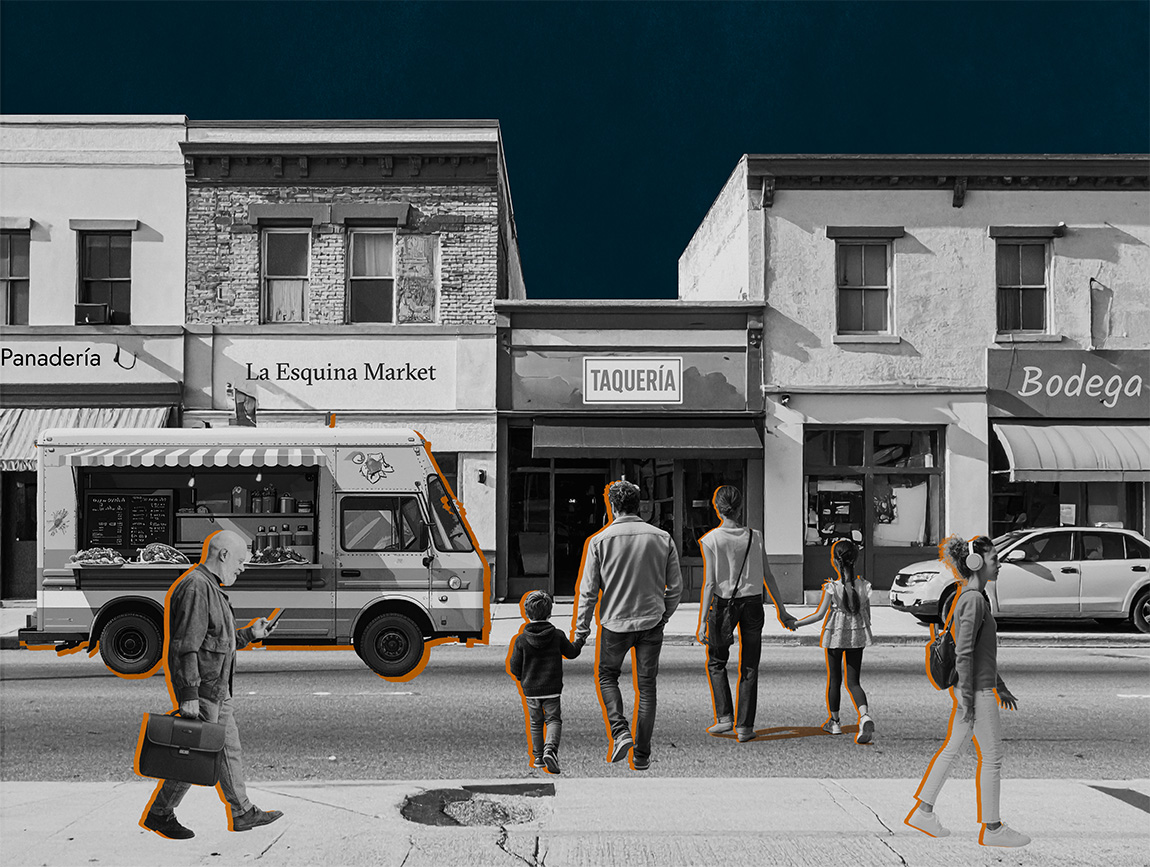
The Rise of Latino America
In The Rise of Latino America, Hernandez & Kotkin argue that Latinos, who are projected to become America’s largest ethnic group, are a dynamic force shaping the nation’s demographic, economic, and cultural future. Far from being a marginalized group defined by oppression, Latinos are integral to America’s story. They drive economic growth, cultural evolution, and workforce vitality. Challenges, however, including poverty, educational disparities, and restrictive policies, threaten their upward mobility. Policymakers who wish to harness Latino potential to ensure national prosperity and resilience should adopt policies that prioritize affordability, safety, and economic opportunity over ideological constraints.











.png)

.jpg)

