Venezuela Post-Maduro

The downside is that after Maduro's exit, Chavismo becomes a guerrilla group, and the upside is that oil revenues, better managed by a new business elite, are used to finance a reconstruction plan for Venezuela modeled on the Marshall Plan.
Editor's Note: This essay is part of our Venezuela Symposium.
At present, we can judge the events surrounding Venezuela or consider what is coming given the current situation. Let's do the latter.
As much as the defiant Maduro did not believe that what happened would actually happen, it did, and with astonishing ease! It became clear that Trump doesn't just talk; he acts, especially when his vanity is at stake. The temptation, moreover, was too great to let go. When the time was right…: stopping the oil privileges granted by Venezuela to Russia and China, under the pretext of 'liberating' Venezuelans from their dictator, who was also labeled a drug trafficker, was a narrative so attractive that it could not be missed. Indeed, for many, the Venezuelan situation seemed to have no other way out, since everything had already been tried without success. It was about time, was the clamor, because the only way to remove someone who had imposed himself by force, ignoring the popular will, was to use force. Hence the international rejoicing.
What's next?
It all depends on whether the current Venezuelan government, led by the Rodriguez brothers (Delcy, interim president, and Jorge, president of the National Assembly), manages, on the one hand, to reassure the Chavistas and, on the other, to obey the plan the United States proposed from the beginning: a sustainable pro-American turn.
But it also depends on the United States continuing to support them. That is, without a doubt, the main task of Secretary of State Marco Rubio. What could happen is uncertain, because Maduro's power is very strong, and the suspicions that the Rodriguez brothers handed over Maduro and his wife to the Americans, and that they betrayed Chavismo in this way, are also very strong.
And what about Colombia?
Some claim that Colombian President Gustavo Petro should be next. Performing an incursion into Colombia like Venezuela would be a very serious miscalculation for Trump, since there is a great difference between the two presidents and between the two countries. Petro does not face equivalent levels of illegitimacy, and Colombia does not face the same institutional weaknesses. In addition, Petro has very little time left in power and threatening him would empower him and his presidential pick, Senator Ivan Cepeda, even more. Either way, Petro knows that he can no longer challenge Trump and that he is at a crossroads. Should he continue with the policy of ‘Total Peace’ involving narcotics dealers or decisively confront drug trafficking? The two are incompatible.
Meanwhile, what happened in Venezuela fuels the local fight between patriots condemning US interference, leftists frustrated with Petro’s poor accomplishments, and pragmatists, adding fuel to the fire and stoking passion and polarization in Colombia. This is already playing a big role in the context of the next presidential and legislative elections, which take place in a few months.
What is left of multilateralism and global peace?
Multilateralism, global or regional, necessary both politically and economically to guarantee global peace, is entering a terminal phase. This reflects not only the atomization of discourse among governments in the region but also the practical impossibility of enforcing multilateral agreements under their current design, which allows the powerful to impose their will.
Even worse, Trump's actions legitimize equivalent unilateral actions of Russia in Europe, and of China in Taiwan, and on and on.
Big questions
How is the transition process going to take place (if it happens) in Venezuela? If not, what can happen? Who is Maduro going to 'muddy' if his links with drug trafficking are proven? How can Colombia, drawing on its experience and capacity, contribute to the dreamt political and economic reconstruction of Venezuela?
It will dawn, and we will see...
For the time being, two possible scenarios have been identified: one positive and one negative. The downside is that Chavismo becomes a guerrilla group, and the upside is that oil revenues, better managed by a new business elite, are used to finance a reconstruction plan for Venezuela modeled on the Marshall Plan.
The two scenarios are, in fact, not incompatible... Either one will take time to judge its viability.
Gonzalo Ordóñez-Matamoros is the dean of the Finance, Government, and International Relations at Universidad Externado de Colombia. Member of BeLatin.

Politics
%20Richard%20Samuelson%20%20-%20Is%20American%20Nationalism%20Still%20Creed-able_-1.jpg)
Is American Nationalism Still Creed-able?
We are not there now, but there is reason to worry that the United States is in danger, if we are not careful, of ceasing to be a nation with the principles of 1776 at its core.
National Civitas Institute Poll: Americans are Anxious and Frustrated, Creating a Challenging Environment for Leaders
The poll reveals a deeply pessimistic American electorate, with a majority convinced the nation is on the wrong track.
.webp)
%20(1).avif)

New York’s War on its Jews
It can happen on any street corner or at any transit stop and increasingly does: a young man with a yarmulke is assaulted for no apparent reason.

Rail Giants Hate the $71 Billion Merger. The Rest of Us Should Love It
Based on the record, the case for approving the merger is even stronger than when it was first announced.
.jpg)
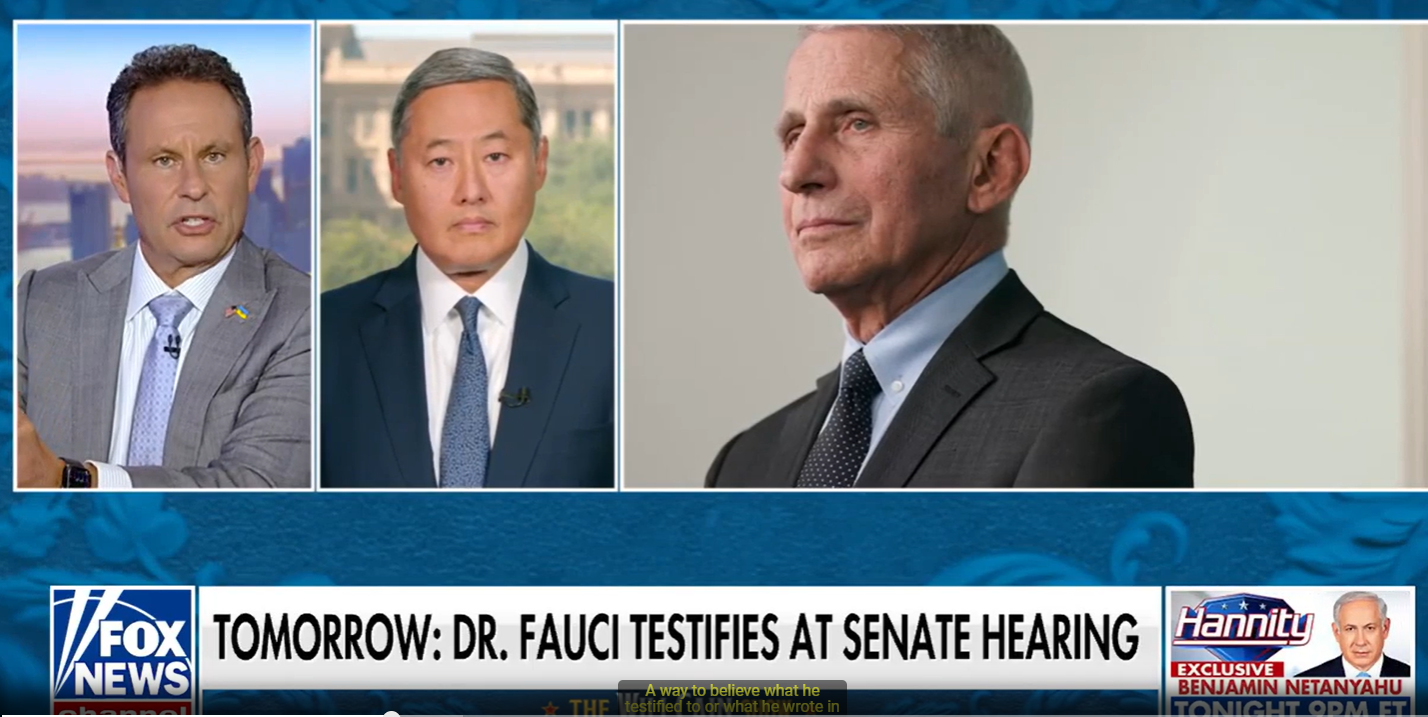
The Fall of Fauci
The greater the scope of authority granted to a single individual, by circumstance or deliberate action, the more important scrutiny and accountability become.
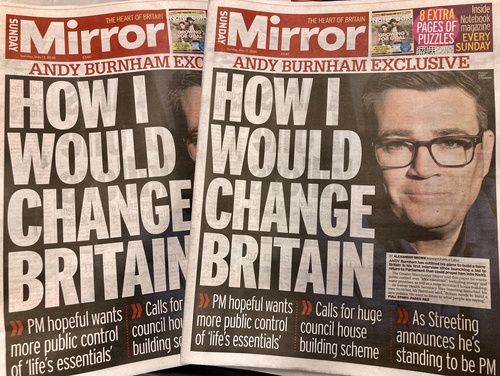
Can Britain’s Next Prime Minister Escape the Net Zero Trap?
Britain has burned through five Prime Ministers and is paying some of the highest electricity prices in the world.