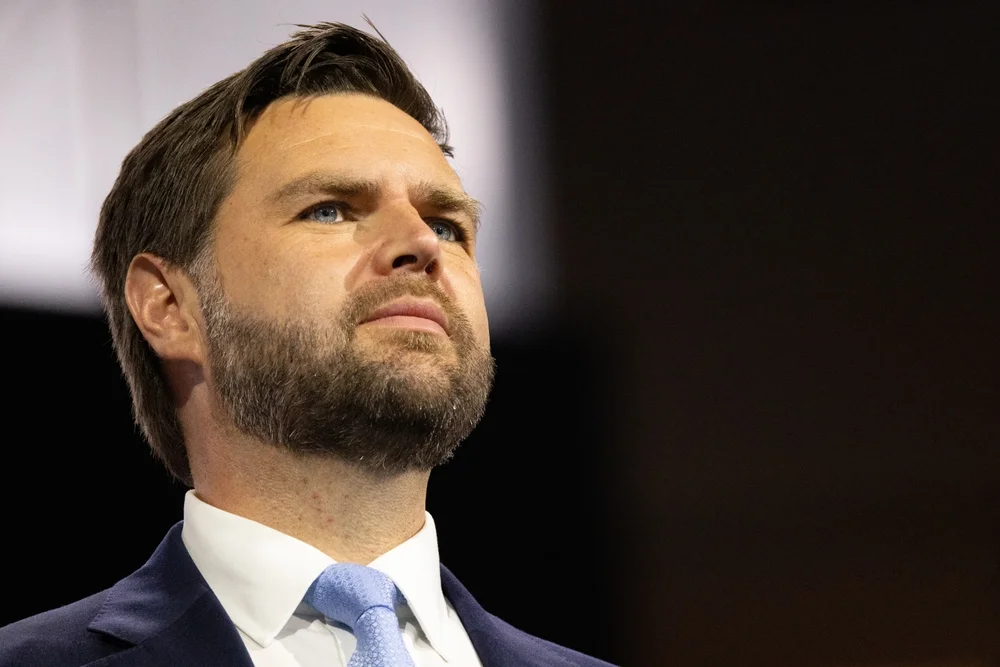
The Poverty of Vanceonomics

One need not be a political insider to understand that Vanceonomics is as much about politics as economic policy.
Vice-Presidents of the United States have mixed records in influencing policy. Neither Harry Truman nor Lyndon Johnson had much sway during their respective vice-presidencies. Dick Cheney, by contrast, has been described as one of the most powerful vice presidents in American history.
Which brings me to the present occupant of Number One Observatory Circle. Vice President J.D. Vance’s rise in American politics has given new meaning to the word “meteoric.” He is also positioning himself to become the 2028 Republican presidential nominee. However it turns out, Vance’s candidacy will tell us a great deal about American conservatism’s future direction.
There are few areas in which Vance has departed more from the core commitments of post-1980s American conservatism than in economic policy. A closer look at Vance’s economic preferences is thus merited, partly because of what they suggest about the American Right’s trajectory, but also because of what they might mean for the US economy. And, unfortunately, the news about Vanceonomics is not good. Taken as a whole, it amounts to a recipe for even more state capitalism, embraced across the American political spectrum, thereby increasing the long-term likelihood of a less prosperous America.
Big Government, New Right-Style
Vanceonomics does not represent a complete break with American conservatism’s once-favorable disposition towards free markets. Vance loudly supported (as would be expected of any vice-president) the Trump Administration’s Big Beautiful Bill’s extension of the 2017 tax cuts and its other tax reduction measures. There are also economic sectors where Vance believes the government should have the lightest regulatory touch. He has, for instance, stated his opposition to the overregulation of AI and the cryptocurrency industry. Vance has also argued for deregulating the energy sector and repealing the green energy subsidies that were baked into the Biden Administration’s misnamed Inflation Reduction Act. As for the welfare state, Vance warned in his 2016 book Hillbilly Elegy of the economic and cultural results of welfare dependency, having witnessed its devastating impact on those on society’s margins.
That said, at the core of Vanceonomics is a preferential option for government intervention. Vance, for example, has spoken in favor of raising the federal minimum wage and even supported legislation to that effect as a senator, despite the well-documented negative economic effects that such raises have on the job prospects of younger, poorer, and less-educated Americans.
This is not the only area in which Vance’s economic position aligns with the preferences of American progressives. Vance’s support for expansive antitrust laws that go far beyond the consumer welfare standard, which assesses the impact of proposed mergers and conduct on consumers, places him in the same camp as Senator Elizabeth Warren and former Federal Trade Commissioner Lina Khan, the latter of whom Vance once described as “doing a pretty good job.”
Past and present advocates of expansive applications of antitrust insist that such measures ensure that large corporations don’t destroy market competition by leveraging their greater resources to establish monopolies by crushing medium- and small-sized businesses that might become potential rivals. In the past, Vance’s opposition to what Justice William O. Douglas once labelled “The Curse of Bigness” was particularly directed against big tech companies. In February 2024, for example, Vance called for the breakup of Google.
Vance’s antitrust views directly clash with long-standing critiques of expansive antitrust advanced by scholars such as Milton Friedman, Robert Bork, and Richard Posner. They pointed out that U.S. antitrust laws have been characterized by vaguely worded statutes and complex case law that introduce excessive uncertainty into the economy by making standard business practices, such as exclusive contracting, potentially unlawful. The subsequent shift towards the consumer welfare standard in court decisions from the late-1970s onwards simplified matters by focusing attention upon what really matters: the principle of consumer sovereignty, thereby limiting the type of government interventions that actually undermine competition in the name, perversely enough, of preventing monopolies.
By contrast, Vance’s antitrust views downplay the extent to which more expansive understandings of such laws have been weaponized by companies to undermine existing competitors, but also by government officials seeking to punish businesses that refuse to cooperate with whoever is in the White House. Presidents ranging from Richard Nixon to John F. Kennedy have gone down that path.
There is reason to be concerned that Vance might bring that outlook to the conduct of economic policy more generally. The vice-president has, after all, associated himself with those conservatives who have adopted the New Right’s friend-enemies logic to legitimize using the state to punish one’s political opponents. Penalizing people for their political views is hardly the purpose of, for instance, tax policy in any society that takes the rule of law seriously. Yet there have been occasions when Vance has expressed a desire to raise taxes on specific groups because of what he regards as their willingness to side with a “global oligarchy” instead of the United States.
More generally, Vance would like to use tax policy to try to influence people’s purchasing decisions. In 2023, he introduced legislation to eliminate tax credits for electric vehicles while promoting tax credits for the purchase of American-made cars. Tax policy, however, should not be about economic or social engineering — period. That opens the door to endless tinkering with tax law as different administrations and legislators seek to promote their preferred groups at the expense of others. The resulting ever-changing, complicated, and hyper-politicized tax code generates undue uncertainty, incentivizes cronyism, tends to shift capital investment away from its most economically optimal destinations, and makes compliance more difficult for small- and medium-sized businesses: the very type of companies that Vance says that he is looking out for as part of his America First view of the US economy’s future.
Fortress America
Vance’s America First economic agenda is not limited to the domestic scene. It also translates into unabashedly protectionist policies. Absent a radical change of view on Vance’s part, there is little doubt that a J.D. Vance Administration would continue pursuing the Trump Administration’s protectionist agenda in the name of bolstering specific economic sectors, especially US-based manufacturing.
No amount of economic nationalist rhetoric, however, can hide the fact that, in the long term, protectionism will make the US economy less competitive and more prone to cronyism and special-interest capture. It also raises prices for American consumers. Indeed, the Trump Administration’s protectionist policies are already faltering. For one thing, the costs of increased tariffs are being passed on to American consumers (a point conceded by Vance). The same trade policies have also failed to reverse the fall-off in manufacturing employment. The number of US manufacturing jobs actually declined between January and November 2025, not least because reducing their workforces allows manufacturing companies to cope with the costs imposed by tariff-increases.
Efforts on Vance’s part to shield the US economy from the rest of the world would not, however, be limited to trade questions. They also manifest themselves in Vance’s thinking about the economics of immigration.
Vance is hardly alone in his firm opposition to illegal immigration. As the 2024 election underscored, President Joe Biden’s disinclination to enforce immigration law in a consistent manner for four years — epitomized by what was effectively a crypto-open southern border policy — infuriated millions of Americans, including many otherwise sympathetic to allowing more people to migrate to the United States. The rule of law matters, and presidents and legislators don’t get to suspend laws that they happen to disagree with. If politicians dislike particular immigration laws, they should seek to amend them through constitutional means available to them. For similar reasons, individuals seeking to reside in America should follow the legally mandated procedures for pursuing this goal. No one is exempt from the rules, no matter how complex they may be.
Opposition to illegal immigration is one thing. Calling for a reduction in legal immigration on economic grounds, as Vance has on several occasions, is quite another matter. Here, the arguments Vance deploys to support his position are at odds with long-standing research on the topic, which shows that immigration, for example, results in more businesses being created, increases the size of the labor force, and augments tax revenues.
The vice-president, however, takes a different viewpoint. He has contended, for example, that immigrants suppress the wages of native-born Americans. Yet there is a mountain of evidence suggesting the downward pressure of immigration on native-born wages and employment levels is marginal at best. Instead, the impact is primarily upon earlier immigrants rather than native workers.
Vance is on more solid ground when he states that immigrants put upward pressure on housing prices. In this area, the evidence supports him. However, the same body of evidence indicates that more than 90 percent of the pressures on housing come from other factors. These include zoning regulations, land-use laws, and government involvement in the mortgage business — all of which impede housing prices from adjusting to the true state of supply and demand.
Significantly, Vance’s arguments in favor of reduced legal immigration also clash, as the Wall Street Journal’s editorial page has observed, with President Trump’s stated position in favor of bolstering certain types of legal immigration. Moreover, if Vance really wants AI to take off in America, he should consider that it makes no sense to try and reduce the legal immigration of bright people with the type of human capital likely to turbocharge growth in this emerging sector. To this, we should add a broader point crucial to any discussion of economics and immigration: immigrants increase aggregate demand — something that is especially important in our time, given the declining propensity of native-born Americans to have more than one child.
There have been instances when Vance has acknowledged the economic benefits that immigrants bring to the United States. But in the same breath, he has also said that less legal immigration is needed if America is to become “a common community again.”
Certainly, anyone migrating to America must sign up to its founding principles and constitutional order. That type of assimilation is the sine qua non of any sound US immigration policy. Nor is there any obligation on America’s part to admit specific categories of individuals ranging from convicted criminals to jihadists. Likewise, there is no reason to admit individuals who come to the United States primarily to access its welfare system. We should also acknowledge that it takes time (even a long time) for some migrant groups to embrace political institutions and cultures with which they have little experience, and that there are costs associated with this.
All such conditionality and caveats, however, are compatible with elevated levels of legal immigration and reaping the benefits it can bring to America. Conversely, Vance’s restrictionist vision of legal immigration would be economically deleterious to the nation whose interests he seeks to prioritize. For two centuries, America has successfully assimilated millions of people who have entered the United States seeking only opportunity often denied to them in their native lands, who want to live in a political system in which the rule of law prevails over the rule of men, and who have zero interest in either living at American taxpayers’ expense or perpetuating the tribalism and dysfunctional politics of envy, resentment, and clientelism that frequently mark their homelands.
The economic benefits of this have been very real. Vance himself has said that “many immigrants do in fact enrich the United States of America.” Turning such people away would be a serious economic error.
Weak Economy, Political Oblivion
One need not be a political insider to understand that Vanceonomics is as much about politics as economic policy. Vance’s stated positions align well with the wing of American conservatism that favors more economically interventionist policies. Electorally, these policies are considered central to maintaining blue-collar workers, especially in crucial Midwestern swing states, within the election-winning coalition that triumphed in 2016 and 2024.
It is naïve to expect political leaders to reduce all policy questions to economics. In democratic societies, you win elections by forging alliances. That means making compromises, including at the policy level. Politicians also need to consider other issues whose significance extends beyond economics, including foreign affairs, defense policy, and the social and cultural implications of mass migration. And if governments fail in these areas, you end up like the sad dystopia that is much of contemporary Western Europe.
But as important as they are, such considerations don’t let Vice-President Vance off the hook for backing many economic policies that not only contradict each other, but, in the end, are likely to disproportionately hurt those Americans whom he says that he wants to support. Whether it is raising tariffs or developing tax policies that can only complicate an already byzantine tax code, the losers are those who cannot easily absorb higher prices or afford to pay accountants to help them navigate their way through America’s convoluted tax maze.
Good economic policies are not sufficient for a flourishing United States, but they are indispensable. Moreover, if there is anything that American voters are quick to punish (as presidents ranging from Jimmy Carter to George H.W. Bush learned the hard way), it is a lousy economy — and whichever administration happens to be in office at the time. Those who want to win the ultimate prize in American politics and be America’s 48th president would do well to remember that.
Samuel Gregg is the President and Friedrich Hayek Chair in Economics and Economic History at the American Institute for Economic Research.

Economic Dynamism

.jpg)


.jpg)



.jpg)


Social Mobility Wins
When people live within an environment offering good jobs, good education, social networks, and a culture of self-improvement and hard work, they experience progress in a way that undercuts the philosophical rationale that socialists need to justify the policies they advocate.
Kevin Warsh and the Future of Fed Communication
Warsh is right that the Federal Reserve should not speak so loudly that it hears only its own echo.