American Immortals

Measuring the Man is a valuable addition to the already vast literature on the Civil War because it helps us see these truths more clearly, embodied in the lives of these great men. In understanding them, we might better understand the country for which they toiled, suffered, and even died.
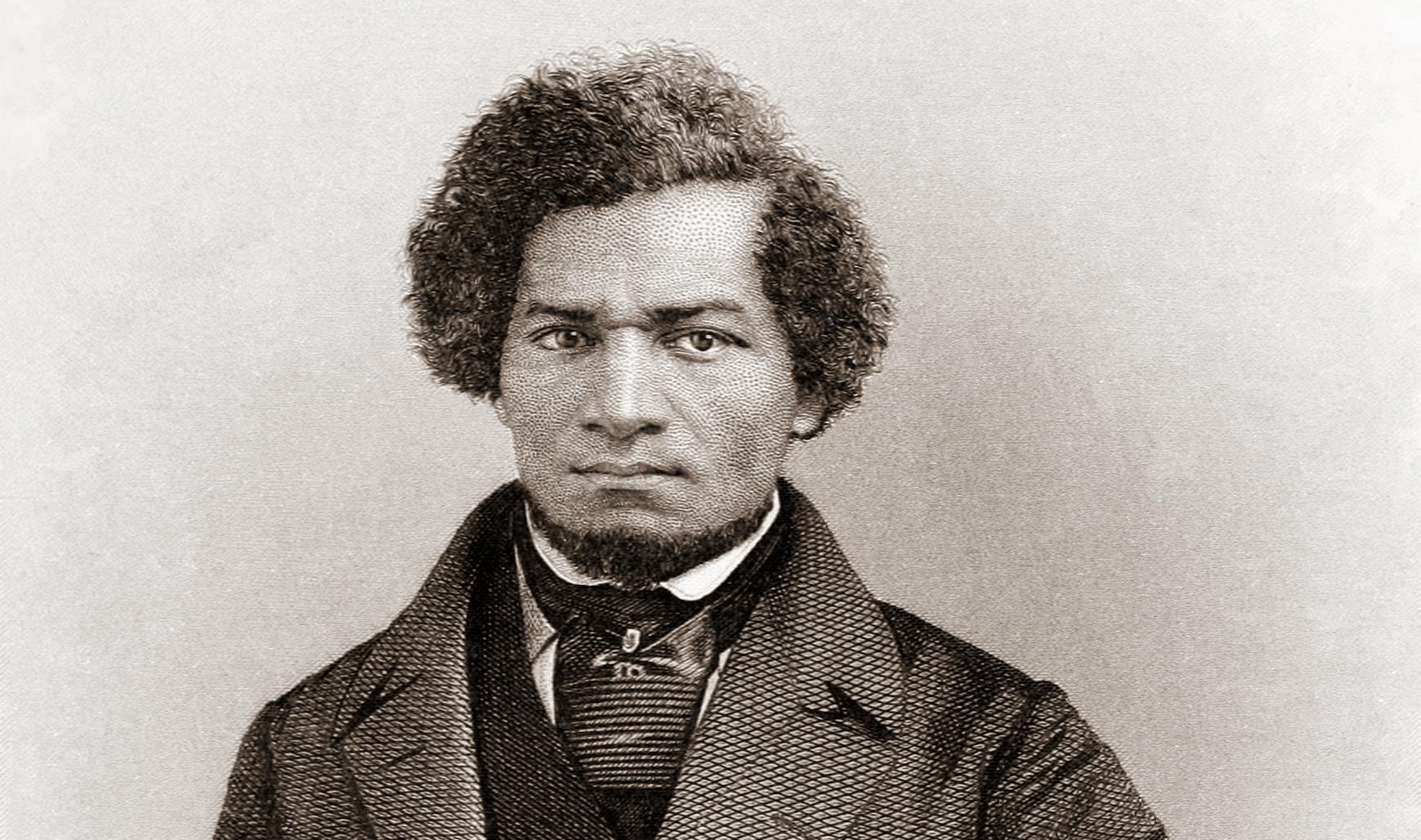
Frederick Douglass was the most searing critic of American slavery. After freeing himself from a Maryland plantation — an event he movingly recounted in his autobiographies — Douglass committed himself to freeing his people from bondage. He became one of the nineteenth century’s most famous orators and most photographed men, a symbol of liberty on both sides of the Atlantic. His speeches held up a mirror to the Republic’s moral hypocrisy. How could a nation founded on the promise of liberty and equality, Douglass asked American audiences, allow millions to languish under abject tyranny?
Unlike other abolitionists, though, Douglass never lost his faith in the American Founding. Indeed, he believed that the fundamental premises of our republic were the very principles that could save her from this moral crisis. Douglass shared that belief with the other great voice of antislavery, Abraham Lincoln. In their new collection Measuring the Man, Lucas E. Morel and Jonathan W. White gather together for the first time in a single volume all of Douglass’s reflections, public and private, on Lincoln — including previously unpublished letters that may reshape how historians think about the relationship between the two men. Morel and White rightly contend that these writings “present a civic education of the highest order,” an important teaching about the American Republic itself.
Aside from the inherent spectacle of one great man reflecting on another, understanding the historical context revealed by the documents Morel and White collected can help explain why Douglass’s assessments matter so much. While most Americans today justly revere Lincoln as the Great Emancipator, the man who actually won the Civil War and ended American slavery was not always popular among his abolitionist contemporaries. Before his assassination, Radical Republicans in Congress, for example, constantly hamstrung his war effort to push him toward more extreme antislavery policies. Activists in the press and on the campaign trail lampooned him as a waffler and a squish. Other antislavery voices were more measured but nonetheless questioned the Rail-Splitter’s decisions and motives.
Unlike Douglass and his peers, Lincoln was never an advocate of immediate abolition. He believed the federal government ought to take steps to put slavery on the path to an eventual end, but he did not believe the U.S. Constitution granted it the powers to free enslaved people and interfere with the institution in the states. Lincoln’s antislavery politics, then, were constitutional rather than revolutionary; he sought to salvage the Founders’ republican institutions by persuading the people as a whole to accept a fuller definition of the freedom and equality at the heart of the nation.
In a subtle way, the core argument of Morel and White’s book is that Douglass came over time to more-or-less embrace Lincoln’s constitutional approach to emancipation. At the outset of his career, of course, the orator was just as radical as any abolitionist. He became close friends with William Lloyd Garrison — an ideologue so extreme he actually burned a copy of the Constitution on Boston Commons and condemned it as “a covenant with death, and an agreement with Hell.” Some of Garrison’s allies even proposed seceding from the Union to preserve the free states’ moral purity. But as he toured the country advocating for freedom, Douglass broke with these radical abolitionists.
Douglass most eloquently expressed his own republican vision in perhaps his most famous speech, “What to the Slave is the Fourth of July?” He declared that chattel slavery is “the great sin and shame of America,” and said that Independence Day celebrations were a “sham” and “a thin veil to cover up crimes which would disgrace a nation of savages.” At the same time, though, Douglass asserted that the true principles of the American Founding might redeem the country. The Constitution, which other abolitionists despised, became for Douglass “a glorious liberty document.” The Founders’ principles were fundamentally antislavery, and emancipating the enslaved masses would, in fact, restore their original intent.
Douglass’s first notice of Lincoln came in 1858, during the heated campaign for Illinois’s U.S. Senate seat. Like future scholars, the abolitionist detected something more than partisan politics in the debate between Lincoln and his Democratic rival Stephen A. Douglas. “The truth is,” Douglass told an audience in Upstate New York, “that Slavery and Anti-Slavery is at the bottom of the contest.” Douglas’s “popular sovereignty” position aimed to neutralize the heated moral debate dividing the republic, whereas Lincoln sought to confront the fundamental issue. “One system or the other must prevail,” Douglass concluded. “Liberty or Slavery must become the law of the land.”
Lincoln would lose the ’58 election, but went on to defeat his home state rival in the 1860 presidential election. Frederick Douglass and many other abolitionists, however, were disappointed by both Lincoln’s nomination and general election victory. Though Douglass recognized him as “a man of unblemished private character,” he refused to, in fact, support Lincoln for president and was profoundly disappointed by the early months of his administration. He was horrified that Lincoln vowed to enforce the Fugitive Slave Act and generally felt that Lincoln’s conciliatory attitude toward the South smacked of appeasement. Still, Douglass recognized that Lincoln was, in many ways, an improvement over both the Whigs and the Democrats, who had done so little to halt the Republic’s decline into sectional crisis.
And the war came. Douglass had mixed feelings about Lincoln’s prosecution of it. On the one hand, he agreed that preserving the Union was a vitally important cause and knew that an independent Confederacy would be a great tragedy for both enslaved people and the very hope of self-government. On the other hand, Douglass often complained that Lincoln’s approach was too “lawyerly” when a more war-like spirit was necessary. “I am bewildered by the spectacle of moral blindness — infatuation and helpless imbecility which the Government of Lincoln presents,” he wrote to his fellow political abolitionist Gerrit Smith on December 22, 1861. Douglass was especially incensed by Lincoln’s reversal of General John C. Frémont’s emancipation order earlier that year.
Things began to change, however, when Abraham Lincoln issued the Emancipation Proclamation in 1863. At long last, he was persuaded that freeing the slaves was a constitutional act as a wartime necessity. Douglass celebrated the decision — calling it “a new dispensation in America” and “the first chapter of a new history” — and even performed an important (if informal) diplomatic function by writing to British abolitionists, in praise of it, who helped keep their own government from siding with the Confederacy. Although Douglass remained critical of Lincoln’s gradualist approach to antislavery, his opinion of Lincoln markedly improved after 1863.
During the rest of the Civil War, Douglass became a leading voice of moral urgency. He recognized that the Emancipation Proclamation was not the end of his fight but only the beginning of a new stage. Douglass pushed Lincoln to enlist black men in the U.S. Army and to defend those serving against the Confederates’ truly heinous atrocities. As White and Morel report, “While Douglass was not completely satisfied with Lincoln’s responses to these concerns, he was gratified that Lincoln treated him with dignity and respect.” The pair met several times more, and Douglass was consistently impressed by the President’s sincerity and humanity.
During this stage of their relationship, Douglass also articulated a serious republican theory of black citizenship. Lincoln’s decision to enlist black volunteers, Douglass believed, gave his people a chance to prove themselves as full participants in the life of the Republic. As he put it in a speech on July 8, 1863 — just days after the Union victory at Gettysburg — the enlistments were a “thunderous welcome to share with them in the honor and glory of suppressing treason and upholding the star-spangled banner.” By fighting for the law, Douglass believed, black Americans would defend their liberties and prove their claim to equal citizenship. He spent much of his time recruiting black soldiers, including all three of his sons, and advocating for their equal treatment. Lincoln was sympathetic, if unable to meet every one of Douglass’s petitions.
Most of Douglass’s reflections on Lincoln’s character, however, came after the tragedy of his assassination. Immediately after the terrible event, Douglass recognized that the fallen president would become an important symbol for the American Republic. In his first remarks upon learning of Lincoln’s death, he recalled his second inauguration. “It was only a few weeks ago that I shook his brave, honest hand, and looked into his gentle eye and heard his kindly voice uttering those memorable words [of his Second Inaugural Address] — words which will live immortal in history, and be read with increasing admiration from age to age.” Whatever he thought of the statesman’s shortcomings, Douglass understood that Lincoln had given his “last full measure of devotion” to the cause of human liberty.
Douglass, therefore, was often much kinder to Lincoln’s memory than he was to the man in life. One could dismiss this shift as Douglass merely respecting the dead, but Morel and White indicate that there is something more meaningful behind it. At the outset of his career as an advocate, Douglass was full of what Martin Luther King, Jr., would later call “the fierce urgency of now.” While he never lost that sense of moral urgency, by reflecting on Lincoln’s career, he came to appreciate more fully how republican institutions filter public opinion for the sake of the common good. As they put it, “Douglass’s opinions [of Lincoln] exhibit not just a high-minded abolitionist but also a political strategist seeking every way possible to move public opinion — on both sides of the Atlantic — to support the full enfranchisement of black Americans.”
As much as Douglass, as an advocate, fervently hoped for both immediate emancipation and integration, he came to see that Lincoln, as a statesman, could not achieve these goods in one fell swoop. Whatever their disagreements about the precise constitutionality of one particular act or another, Douglass respected the fact that Lincoln never took the easy route of Caesarian despotism even for the sake of a truly moral crusade. As he worked to lift black Americans to their birthright as equal citizens of the United States during the Reconstruction period, Douglass embraced this Lincolnian wisdom far more than many of his peers.
From the conclusion of the Civil War to the end of his Life, Douglass gave more than a dozen orations in which he memorialized Lincoln after some fashion. Morel and White conclude their volume with these speeches, and they provide the best evidence for their thesis that the relationship between statesman and advocate provides a civic education. “As circumstances deteriorated for black Americans in the late nineteenth century,” they write, “Douglass pointed to Lincoln as an aspirational model for all Americans to follow.” He hoped that the Rail-Splitter could be a symbol of reconciliation and justice that might put an end to racial violence and rebind the Republic.
In 1863, during some of the darkest moments of the Civil War, Douglass delivered a speech titled “The Decision of the Hour.” He argued, as Lincoln did, that the destruction of slavery and the preservation of the Union had become one and the same cause. And, with a great moral profundity, he reflected that
“All the progress toward perfection ever made by mankind, and all the blessings now enjoyed are ascribable to some brave and good man who, catching the illumination of a heaven-born truth, has counted it a joy, precious and unspeakable, to toil, to suffer, and often to die for the realization of that heaven-born truth.”
In their own, different ways, Lincoln and Douglass both caught sight of the “heaven-born truth” that inspired the American Founding. Measuring the Man is a valuable addition to the already vast literature on the Civil War because it helps us see these truths more clearly, embodied in the lives of these great men. In understanding them, we might better understand the country for which they toiled, suffered, and even died.
Michael Lucchese is the founder of Pipe Creek Consulting, an associate editor of Law & Liberty, and a contributing editor to Providence.

Politics
%20Richard%20Samuelson%20%20-%20Is%20American%20Nationalism%20Still%20Creed-able_-1.jpg)
Is American Nationalism Still Creed-able?
We are not there now, but there is reason to worry that the United States is in danger, if we are not careful, of ceasing to be a nation with the principles of 1776 at its core.
National Civitas Institute Poll: Americans are Anxious and Frustrated, Creating a Challenging Environment for Leaders
The poll reveals a deeply pessimistic American electorate, with a majority convinced the nation is on the wrong track.
.webp)
%20(1).avif)






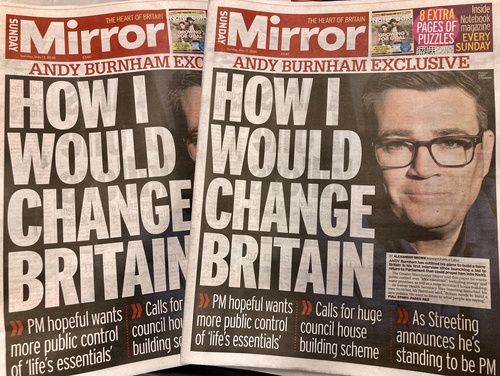
Can Britain’s Next Prime Minister Escape the Net Zero Trap?
Britain has burned through five Prime Ministers and is paying some of the highest electricity prices in the world.

The Scanner at the Gate: Europe’s China Policy Litmus Test
China’s industrial policy is entering Europe through public procurement—and reshaping sensitive markets from within.

Confronting the New Antisemitism
"The postwar effort 'to rebrand Judaism as a religion' has made it impossible for American Jews to understand what they are facing today, because what we are facing today is an attack on the idea of Jewish peoplehood.”
“Democratic” Socialism Is Undemocratic
By promoting class hatred, suppressing private initiative, and seeking enhanced control of our lives, today’s democratic socialists undermine patriotism and individual initiative—two qualities that have long distinguished the United States from other major nations.

