When Vanity Leads to Impropriety
.avif)
We cannot agree with Shakespeare when he asks what’s in a name. A politician is a far more dangerous breed than a rose.
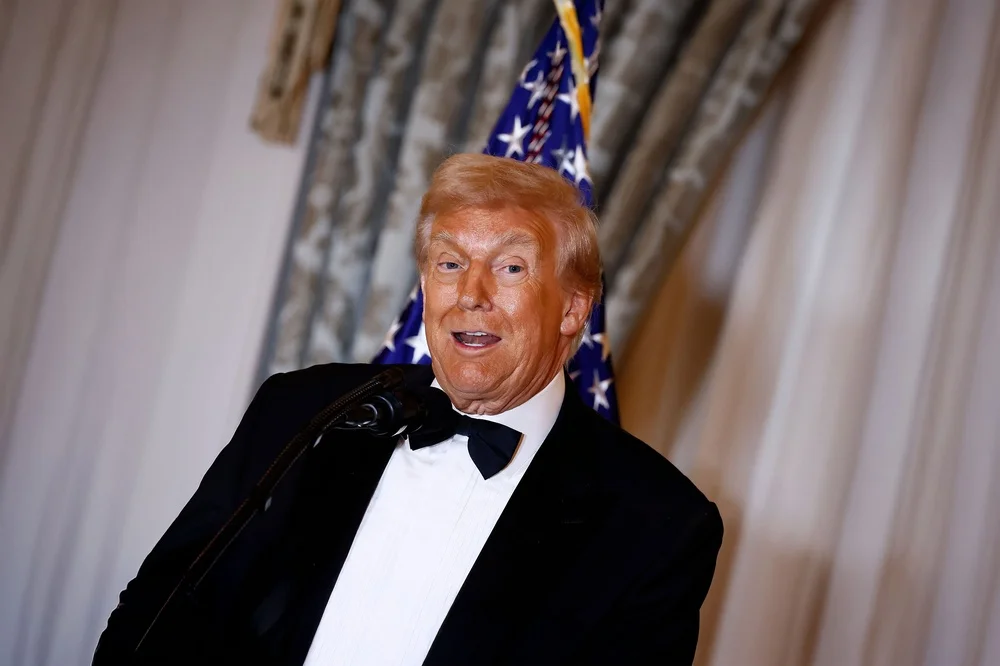
Donald Trump, fast approaching 80, understands that mortality is fleeting. He knows all too well that to remain in the public eye after death, he must find novel ways to achieve that end. The simplest path is by indirection. Ignore the possibility of fame, lead a life of good deeds, honor, and distinction, so that others will gladly confer on you the recognition that you may (or may not) crave. The list of such deserving individual recipients starts with musicians, writers, scientists, athletes, and entrepreneurs, and also includes selfless politicians celebrated for standing for a cause larger than themselves. But a president should simply not be allowed to name anything after himself without checks from Congress or an independent commission. Congress should, in a bipartisan bill, strip Trump’s name from self-designated landmarks and end his naming spree, just as it should stop him from canceling grants willy-nilly.
These activities are major breaches of the duties of care and loyalty that bind all public officers. Yet their application has been stymied to date by the political forces backing Trump. But more recent polls show that “Trump’s core base is shrinking,” which should limit his political options going forward. Indeed, right now his recent actions have led to serious rebuffs, including a recent decision by Judge Richard Leon, which strongly castigated the Trump effort to strip Senator Mark Kelly’s retirement benefits for his criticisms of the Trump effort to use military force against the alleged drug boats in international order.
Against this background, the larger point is clear. The one politician who has dominated the political scene for close to a dozen years but will never, ever, earn such approbation is Donald Trump. Sadly, in his final term of office, he has launched a full-scale initiative to force his name into every nook and cranny of the public eye, no matter how perverse the consequences to him, the nation, and the world. Fawning self-congratulation, coupled with crude coercion against innocent actors, has led him to constantly flout well-entrenched moral norms and legal obligations. There are all too many instances in which Trump has treated the government as a subsidiary of Trump Industries, with no effective barriers between his official work and the private deals undertaken by his family members in the cryptomarket.
But these irregularities extend beyond financial markets to Trump’s effort to brand public ventures with his own name and likeness. It was not surprising, therefore, that one of the first
commercials in the Super Bowl saw an advertisement extol the new set of government investments for minor children named after, guess who, Trump. And when it comes to a new set of price caps on pharmaceutical drugs, the place to find the lowest prices is TrumpRx, a dangerous government experiment that undercuts the resources needed for the development and testing of new drugs.
But the heavy-handed efforts are made more visible in connection with the rechristening of the John F. Kennedy Memorial Center as the Trump-Kennedy Center, with second billing for John F. Kennedy, by stacking its Board with his own cronies. No wonder serious artists headed for the exits to express their contempt for such a sham operation. Trump then shut the Center down for two years for a set of tasteless renovations that will only add insult to injury, especially as they seem to follow the gaudy Rococo redesigns of the White House. It is a close question whether the Center should be allowed to rot rather than be reconstituted in this sorry direction. Much the same can be said of Trump’s hasty demolition of the Old East Wing to make way for a glitzy 90,000 square foot ballroom. Trump’s actions violated every landmark preservation law known to history, all of which require public review before destruction, especially in public places. Yet sadly, Trump’s current legal defense of reversing the well-established order is pure double talk:
Plaintiff’s claims concerning demolition of the East Wing are moot because the demolition has already occurred and cannot be undone. . . . As for future construction, Plaintiff’s claims are unripe because plans are not final.
First, the claim is far from moot because the available remedies still include damages, stop orders, and demolition. And so long as it is clear that no possible plans can be legal, the case is ripe and need not be held over until further damage is done. It’s a magical midpoint, at once too far along and not long enough to be enjoined.
The same callous attitude is evident in Trump’s publicly stated desire to rename both Dulles Airport outside Washington and Penn Station in New York after himself. Trump has conditioned the release of previously appropriated federal funds on this demand despite the critical need for airport renovation and the completion of a long-needed tunnel connecting New York and New Jersey. These are not cases he has contributed to the new project or has a special connection to it. It is pure egoism that has the power to upset stable expectations — unless you believe Trump’s claim that Senator Chuck Schumer first made that suggestion, which Schumer branded as an “absolute lie.” Yet, note the predicament. To fight the man is to disrupt both projects. If capitulation to blackmail is needed for the work to be done, the naming should be undone with bipartisan support lest every other avaricious politician use Trump’s successful gambit to please his own ego.
The grim analysis that applies in a domestic situation carries over to foreign relations. Donald Trump has every right to proclaim that he is worthy of the Nobel Peace Prize. But his basic claim that he ended eight wars is outright nonsense because one of the wars that he supposedly ended was the war in Gaza between Hamas and Israel. This war is far from over, as the Hamas remnant still controls parts of Gaza with an iron hand. It is unclear whether Israel will not invade further to eliminate that peril. The war between Iran and Israel is also far from over because Iran remains defiant and vengeful after Trump’s correct move to take out its nuclear facilities, but no one knows whether the United States wants to eliminate or contain the current regime. However those loose ends play out, the Trump claim is surely false, even if we put to one side his destabilizing initiatives with Greenland and Canada that have strained the NATO alliance.
Even if Trump merits some prize, why this year, given what Maria Corina Machado did in Venezuela to help advance democracy, at some risk of personal harm? She offered him the plaque, which, of course, could not make him the recipient of the award, but did give him another opportunity for tasteless egotism when Trump ordered his ambassador to Poland to announce that Polish parliamentary Speaker Włodzimierz Czarzasty was blacklisted because he opposed supporting Trump for that peace prize. That episode promptly escalated when the Polish Prime Minister Donald Tusk gently reprimanded Trump’s Ambassador for his behavior, only for Trump to land with both barrels by stating: “And I know you agree that insulting and degrading the @realDonaldTrump President of the United States — the greatest friend Poland has ever had in the White House, is the last thing any Polish leader should do.” Nothing is more harmful to any system of prize awards than asking others to lie on someone else’s behalf. Nor is the request warranted by the undocumented assertion that Trump is, as in all things, the “greatest friend” that Poland has.
On this issue, there are the inevitable comparisons to former President Joe Biden, who was also eager to exercise the power to rename old institutions for new causes, as with his rebranding of Fort Benning to Fort Moore in 2023, only for Trump and Secretary of War Pete Hegseth to restore the original name in 2025 while sneakily changing the Benning so honored from a Confederate General to a previously unknown World War I hero with the same last name. The same device was used to restore Fort Bragg to its original name with a new honoree. In general, it is inappropriate for any president to unilaterally rename any facility, as his decision will long outlast his term in office. Better that job be done by an independent commission. But at least Biden had a political agenda, not a personal one like Trump. And so the only way to stop Trump is to pass a law that makes it illegal for any president to name anything after himself, unless checked either by Congress or some commission. But the man has to be stopped because on this issue, at least, we cannot agree with Shakespeare when he asks what’s in a name. A politician is a far more dangerous breed than a rose.
Richard Epstein is a Senior Research Fellow at the Civitas Institute at the University of Texas at Austin.

Politics
%20Richard%20Samuelson%20%20-%20Is%20American%20Nationalism%20Still%20Creed-able_-1.jpg)
Is American Nationalism Still Creed-able?
We are not there now, but there is reason to worry that the United States is in danger, if we are not careful, of ceasing to be a nation with the principles of 1776 at its core.
National Civitas Institute Poll: Americans are Anxious and Frustrated, Creating a Challenging Environment for Leaders
The poll reveals a deeply pessimistic American electorate, with a majority convinced the nation is on the wrong track.
.webp)
%20(1).avif)


Proxy Firms Don’t Have to Disclose Conflicts. That Should Change
The firms whose advice can move those votes bear no comparable duty for the advice itself. States can close that gap by applying an enduring standard from the Supreme Court.
Texas May Soon Have More People Than California — Here’s Why
California natives are voting with their feet.
.jpg)