The Mind in a Mustard Seed

Spencer Klavan reviews David Bentley Hart's All Things Are Full of Gods.
Last year, a Harvard research team put about one cubic millimeter of human brain matter—roughly the size of a mustard seed—under an electron microscope. They generated 1.4 petabytes of data, which is one quadrillion and four trillion bytes, or enough to store 12,317 copies of the movie Lawrence of Arabia in 4K Ultra HD. Petabytes are among the quantities used to measure the amount of data required for training the latest AI chatbots—the kind of staggering number that gestures at the sum of all human knowledge, the teeming universe, the void. The images from the Harvard study, freely available online, are just as laden with alien mystery and majesty as those that come careening back from the reaches of outer space via NASA’s James Webb Telescope. And if ye have grey matter even as much as a mustard seed, all this is in you. When we casually discuss “mapping the brain,” this is what we’re referring to.
The Harvard study came out just months before All Things are Full of Gods, a new philosophical dialogue by theologian David Bentley Hart on The Mysteries of Mind and Life. Hart’s characters—especially the two principals, Psyche and Hephaistos—would surely have much to say about that little brain fragment. Hephaistos, ancient lord of technology and metalwork, might take the microscope images as further proof that life is a product of automatic physical processes, which at one point he describes as “legions of exquisitely orchestrated systems within systems, guiding the flow of information through ever more sophisticated systems.” Indeed, Hephaistos insists, somewhere latent within that magisterial architecture, occult principles are waiting to be discovered that can explain human consciousness in physical terms.
Psyche—whose name designates her as the eternal principle of life or soul—would probably agree that the mind is a wonderwork, a microcosm unto itself. William Blake might have called it “a world in a grain of sand.” But Psyche would add that, to the embarrassment of materialists everywhere, no tangle of neurons can explain anything at all about what it is like to experience the world as a sentient creature. For Hephaistos, all things flow upward from some basic set of raw materials which gradually, over eons, form into DNA and produce the sensations we experience as consciousness. For Psyche, the river of life has to flow the other way, down into nature from what she calls “a higher causality—a top-down causality written into nature.”
This is the central dividing line between Hart’s two gods. They joust and parry across it for almost 500 pages, taking breaks to refresh themselves with feasting and ambrosia. It’s an ancient debate, befitting immortals: does primordial chaos resolve spontaneously into order, as in Hesiod’s Theogony and the Sumerian creation legends, or does an eternal mind call order out of nothingness, as in the Bible’s Book of Genesis? Is the world pervaded by divine logic and structure, as Greek philosophers of the Stoic school believed, or does nature produce innumerable worlds “without the oversight of gods, spontaneous and free,” as in the Epicurean doctrine taught by the poet Lucretius? When Christianity prevailed in Europe, the majority tended to be on the side of Psyche, Genesis, and the Stoics. Then, of course, with the scientific revolution, the balance of consensus began to shift in favor of Hephaistos, Hesiod, and Epicurus—until Tom Wolfe worried, in 1996, that the human soul had died in the MRI machine.
In a fascinating twist, however, All Things Are Full of Gods comes when the tide may be shifting in the opposite direction, back toward a general suspicion that soul and mind might precede chaos and matter. Since the question has been live for all of human history, it’s unlikely ever to be “settled,” which is one reason why Hart chose to write in dialogue form and give a hearing to a variety of ideas: “some degree of uncertainty seems not only inevitable, but virtuous,” he writes in his introduction. But writers of philosophical dialogues, from Plato and Cicero to St. Augustine and Bishop Berkeley, have tended to pick winners in advance. So does Hart, whose Psyche is buttressed by Eros and Hermes, the gods of love and language.
It’s not that Hart could be accused of giving short shrift to opposing views. One impressive thing about the book is that the gods keep well abreast of contemporary developments in the philosophy of mind, and they present a formidable array of materialist and physicalist arguments in terms their authors could probably accept. There are long stretches on Daniel Dennett, the “new atheist” cognitive scientist who represented first-person experiences like pain and pleasure as a kind of delusion generated by the automatic processes that really govern our behavior. (But then, asks Psyche, who is being “deluded”?) There are chapters inspired by the physicist Paul Davies, who, according to Hephaistos, “explains quite lucidly to my mind that information as a scientific principle consists in the reduction of randomness.” (And yet, replies Hermes, if some kind of knowledge or information comes “built in” to the system of nature, then nature is already imbued with more than physical matter.) The whirligig of topics and references is too intricate to summarize exhaustively, though Hart’s pyrotechnic writing style keeps it about as lively as possible. Ultimately, the cumulative effect is to put Hephaistos on the back foot, and to give the impression that those who think like him are running out of ways to defend the view that mind is a byproduct, or an after-effect, or even an emergent property, of matter.
The mechanical model of the world inherited from the Enlightenment has been collapsing for some time, and people are starting to notice. In another recent book, the best-selling apologia Believe, New York Times columnist Ross Douthat proposes that almost every treatise that reduces feelings to objects “either feels like so much humbug or a well-meaning exercise in missing the point.” What the philosopher David Chalmers called the “hard problem” of consciousness remains hard, or even impossible. How can a materialist bridge the chasm between quantitative measurements of physical things like ganglia or neurons and irreducibly qualitative experiences like dread or delight?
Douthat cites the neuroscientist Erik Hoel, who proposes “a cruel parlor trick: ask a neuroscientist to explain something about human cognition. Listen to their answer. Then ask them to explain again, but to say nothing in their explanation about location.” Very well, fear lights up neurons in the amygdala—but what is it? For over a century, scientific discoveries like cosmic fine-tuning and quantum indeterminacy have been compounding to suggest that human consciousness is not an accident but an essential component of a purposefully ordered universe. Much of this history is recounted in Stephen Meyer’s indispensable Return of the God Hypothesis, and I add a bit to the story in Light of the Mind, Light of the World. From biologists like Suzie Bohlson to philosophers like Matthew Crawford, serious thinkers are finding it increasingly likely that whatever the world may be made of, it’s not just hunks of debris colliding in a limitless void.
The hardest problem of all, though, might be determining just what the world is made of. Not everyone will be able to accept Hart’s answer, which is suggested in his title: all things, from the merest flicker of quantum possibility to the glorious structures of the brain and the galaxy, are called into ever-fuller resolution because “there’s mind in nature at every living level.” If this veers perilously close to pantheism, it will reassure some readers to know that Hart is a Christian—though not, perhaps, that he dabbles in Hindu mysticism and has mounted forceful defenses of “universalism,” the belief that all souls will at last be saved. Still, it would be a mistake to recoil from Hart’s valuable book for fear of its heterodoxy. The beauty of a dialogue is that readers can entertain a variety of conclusions without having to swallow any of them whole.
Besides, at this delicate moment—when scientists are reawakening to transcendent mystery even as some technologists are proposing to stud the brain with digital hardware or “build god” in the form of Artificial Superintelligence—the urgent task at hand is to throw as much weight as possible onto the side of transcendent mystery. Either the synaptic whorls and coils that unfold endlessly under Harvard’s electron microscopes are so much gunk, or else they are heaven in a mustard seed, living forms called forth from matter by the life of all life in service of intelligence and meaning. Before we go on tinkering any further with our brains and bodies, it will matter desperately which of those two perspectives we adopt. Hart and Psyche have that fundamental issue right,
Spencer A. Klavan is associate editor of the Claremont Review of Books, host of the Young Heretics podcast, and author, most recently, of Light of the Mind, Light of the World: Illuminating Science Through Faith (Regnery Publishing).

Pursuit of Happiness
The Rise of Latino America
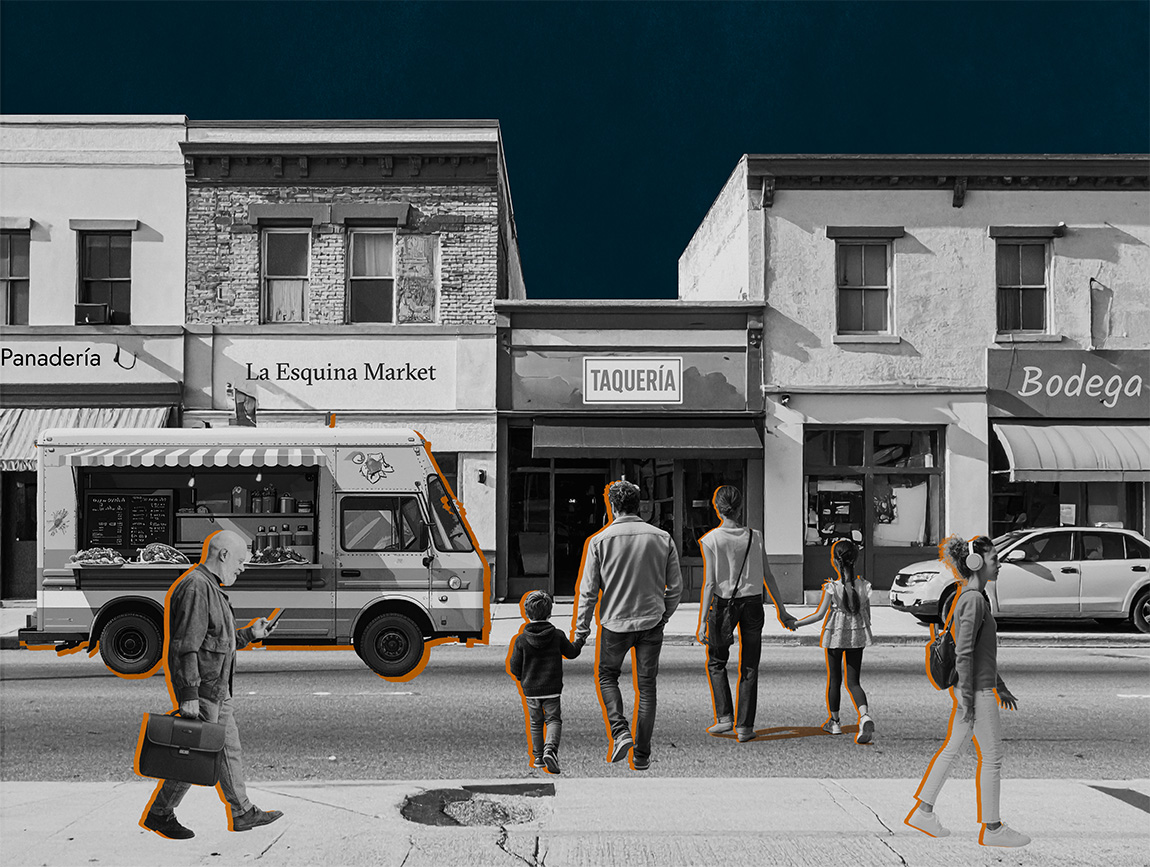
In The Rise of Latino America, Hernandez & Kotkin argue that Latinos, who are projected to become America’s largest ethnic group, are a dynamic force shaping the nation’s demographic, economic, and cultural future. Far from being a marginalized group defined by oppression, Latinos are integral to America’s story. They drive economic growth, cultural evolution, and workforce vitality. Challenges, however, including poverty, educational disparities, and restrictive policies, threaten their upward mobility. Policymakers who wish to harness Latino potential to ensure national prosperity and resilience should adopt policies that prioritize affordability, safety, and economic opportunity over ideological constraints.



.jpg)


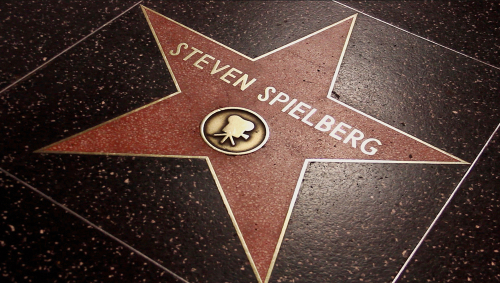
Spielberg’s Empty Hope
'Disclosure Day' should have been called 'Hope and Change,' or rather 'Change and Hope.'
.jpg)
Deliberative Republicanism and the Triumph of the American Founding
Instead of rejecting the moral urgency of the postliberal right and left, it is fitting and proper that we redirect it through the right kind of education—both formal and informal—that can inspire affection for our Constitution.
.jpg)