
The Dignity of Relational Beings

Modern technological and societal innovations can perpetuate misleading myths about individual agency.
In 2024, Uber launched an ad campaign to highlight its commitment to helping customers support the important people in their lives. The “On Our Way” campaign expresses empathy: “We all need someone to show up.” Whether delivering flowers to a distant loved one or a hot meal to the sick friend across town, Uber is here “so you can be there for them.” Uber wants to demonstrate that, by reducing physical distance, its service makes it easier to care — to “show up.”
The campaign came to mind while reading The Dignity of Dependence, Leah Libresco Sargeant’s study on the intricacies of need, care, and interdependence. The work examines what Sargeant identifies as a social and structural hostility towards dependent relationships, as well as the uneven burden such relationships place on the female sex. She attributes much of the hostility to impossible ideals of an independent self and a “false anthropology.” This is the philosophical foundation for much of the thinking and practices that Sargeant documents in the book. If we conceive the person as an autonomous self who can flourish without love or sacrifice, then future technological developments will inevitably contribute to that deformed understanding. These technological and social innovations promise liberation from these restrictive states of giving or receiving care, but they often deceive us. Uber is an example of such an innovation — with Uber’s promise to help us care, or “show up,” for others, we may, in turn, discount the personal effort required to show up.
Sargeant draws from wide-ranging anecdotes to testify against our hostility towards dependence. She appeals to aspects of the physical world: the standard countertop height of 36 inches is too high ergonomically for the average woman. She explores legal technicalities that affect Medicaid, such as certain care voucher programs that provide fewer benefits when recipients care for disabled dependents themselves. She considers the case of an elderly neighbor who requested help shoveling his driveway on Facebook — after writing an extensive preamble apologizing for what he viewed as a shameful exposure of his need. Three different situations illustrate the range of dependent relationships discussed in the book: those dependent on others and those on whom others depend. The narrative effect sometimes feels discordant, but I believe discord is the intended outcome.
Sargeant argues that such situations reflect the unrealistic expectations set by design standards, institutional structures, and our own internal scruples, resulting in harm to relationships of dependence. While she provides a rigorous defense of her thesis, she only tangentially articulates what I consider a primary source of these social failings: modern technological and societal innovations that perpetuate misleading myths about individual agency.
Assistive tools serve as a clear example. Sargeant contends, “Machines let us extend ourselves past the limits of our bodies, usually without making our need for assistance apparent.” Like the neighbor ashamed to solicit shoveling help, a tool is “preferred to a person because the tool cannot stand in judgment of the user’s needs.” In addition to facilitating a concealment of need, I wonder if such tools also socialize the denial of need. For example, Sargeant considers techniques to suppress unwanted menstrual periods. Such innovations claim to eliminate a significant inconvenience for many young women. However, does the presence of that option create an expectation to use it? After all, why choose to physically impair yourself for a period every month? The impression of choice undermines any expectation, our own or others', to choose the more difficult path. Returning to the case of Uber, when presented with the option to send soup to a sick friend, the alternative of physically caring for the friend feels much less urgent.
A chapter on devices to help women “be better men” considers the promise of other innovations to alleviate dependence and their potentially harmful knock-on effects. Sargeant points to breast pumps sold as a solution to external claims on the female body. She details the frictions associated with their use, such as searching for a discreet location to pump or the possibility of malfunction. Moreover, Sargeant insinuates that such devices disappoint twice: first, if they fail to properly alleviate the problem of inconvenient lactation, and second, if their very existence signals a false resolution. While not solving all the inconveniences that come with lactating when, for example, a young mother wishes to return to the workplace, the breast pump additionally creates the impression of a ready solution. As Sargeant explains, “The false tools feed the illusion that those needs can be confined” rather than reasonably shared by others to accommodate, in this case, new mothers. In this way, a useful assistive device like the breast pump might also advance a misleading narrative about the needs and barriers of individuals, like postpartum mothers, marked by dependence.
When presented with a seemingly effective solution to address a dependence, one might imagine the greater flexibility it would empower. However, if the option to adopt an assistive innovation becomes an expectation, that shift can undermine the technology’s promise of liberation by creating a new constraint.
The illusion of a solution brings to mind an initiative by some law firms to help associates freeze their eggs, a fringe benefit one can easily imagine comes with strings attached. Certainly, the technology has offered and will continue to offer many women the miraculous ability to start and grow a family on their own terms, but could the benefit evolve into a minimum requirement for success in corporate law? In other words, when given the choice to delay pregnancy for career advancement, how can a young female lawyer resist such a promising path to “have it all”?
Whether the expectation comes from the firm hoping to improve gender equity or the young associate keen to maintain her billable hours, the tempting solution may become a professional requirement. To draw from the language of coordination games, such a dynamic might have two equilibria: If no young associates freeze their eggs and instead start a family sooner, the law firm must seek another, perhaps more family-forward solution to retain female talent who also hope to become mothers. On the other hand, if egg freezing persuades even just some young associates to delay motherhood, then the benefit scheme proves a success from the perspective of gender equity. Nevertheless, as studies provide varying estimates around the chances of a successful pregnancy from frozen eggs, the victory of greater gender equity at the firm will come at an unexpected personal cost to a number of individual female associates who cannot get pregnant from frozen eggs. Without detracting from the many positives of such fertility innovations, I wonder whether firms might arrive at a more constructive solution for all if delaying pregnancy did not offer a quick fix.
At the same time, innovations like ride-sharing and assistive devices like breast pumps may also facilitate care, complementing dependent relationships rather than replacing them. I think of my mother ordering groceries delivered to her elderly parents via InstaCart when unable to fetch them herself — does this delegation enhance or replace her ability to care? I venture the difference, as is the trial with all technology, depends on human choice: if technological innovation heightens personal agency, do we use that agency to empower our capacity to care? Or will it lead us to expect greater personal autonomy from both ourselves and from others?
By improving individual agency, advances from fertility solutions to assistive devices might persuade us that need is a choice, not a fact of life, and that others will treat that need as such. Given the option to pump at the workplace, why should the new mother expect an exception to work from home to accommodate her lactation needs? Or, given my ability to order an Uber from the airport, why should I ask my friend to pick me up? It is the presence of the choice to automate or professionally delegate that creates the expectation that we address personal needs autonomously.
Sargeant articulates the negative consequences of this untenable logic: “[W]hen the freedom we enjoy is imagined to be the freedom to ‘control…one’s destiny’ rather than to shape it within natural constraints, then the whole outside world becomes women’s enemy because it does not bow to our will.” In other words, a false perception of control begets future disappointments, since no promise of total agency will ever fully manifest. If we hold ourselves and others to impossibly high expectations, buttressed by the promises of modern innovations, we inevitably encounter natural constraints that no assistive device or employer exception can overcome.
Reality offers the best remedy to this illusion of agency, a readily available antidote presented by Sargeant. Children naturally emerge as a common anchor to this reality: “For almost all of human history, children have been the primary way that we are called to live for someone else.” Living for someone else, according to Sargeant, makes a parent, or caregiver, “subject to reality.” In contrast, a “lack of external constraint [makes] the world slightly unreal.” In the same way a game needs rules in order to take form, humans need constraints to feel real; we “need the feeling of resistance to be able to perceive [ourselves]”.
In a world that increasingly expects individuals to choose personal convenience over tethering to others, The Dignity of Dependence reminds us that dependence and its ability to anchor us to reality is essential to our humanity. By dignifying dependent relationships, whether among family, neighbors, or friends, Sargeant urges the reader to find and inhabit a reality that resists the perception of oneself as solely autonomous. Her concluding sentiment echoes a line from Tolstoy that sticks with me: “We love people not so much for the good they’ve done us, as for the good we’ve done them.” By choosing to live for someone else, we subject ourselves to the reality Sergeant speaks of and can reap the rich personal rewards it offers.
Ainsley Weber is a Research Assistant at the Federal Reserve Board of Governors. The analysis and conclusions set forth are her own and do not reflect the views of the Board of Governors or the staff of the Federal Reserve System.

Pursuit of Happiness
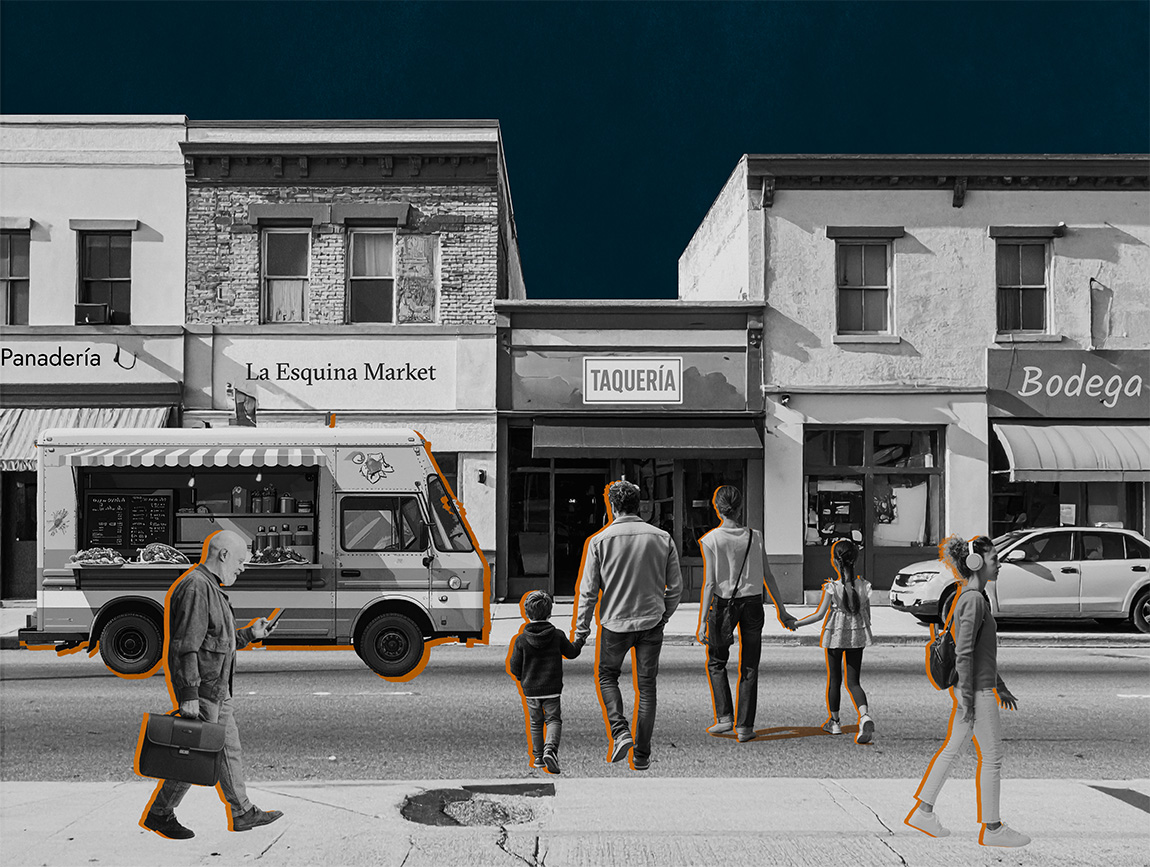
The Rise of Latino America
In The Rise of Latino America, Hernandez & Kotkin argue that Latinos, who are projected to become America’s largest ethnic group, are a dynamic force shaping the nation’s demographic, economic, and cultural future. Far from being a marginalized group defined by oppression, Latinos are integral to America’s story. They drive economic growth, cultural evolution, and workforce vitality. Challenges, however, including poverty, educational disparities, and restrictive policies, threaten their upward mobility. Policymakers who wish to harness Latino potential to ensure national prosperity and resilience should adopt policies that prioritize affordability, safety, and economic opportunity over ideological constraints.















Spielberg’s Empty Hope
'Disclosure Day' should have been called 'Hope and Change,' or rather 'Change and Hope.'
.jpg)
.jpg)

