Religious Charter Schools Should Pass the Supreme Court Test

A case from Oklahoma will determine whether American education becomes more or less centralized, homogeneous, and anticompetitive.
On Wednesday, the United States Supreme Court will consider whether St. Isidore of Seville Catholic Virtual School will become the nation’s first religious charter school. Squaring off against the school at the high court is Oklahoma Attorney General Gentner Drummond, a law-and-order Republican, who has argued that his state’s prohibition against public aid for sectarian schools is justified to prevent “extreme sects of the Muslim faith” from using public tax dollars to teach sharia law. Proponents of educational freedom should reject such fearmongering. A ruling against St. Isidore would be a significant blow to charter schools of all stripes, particularly in underserved communities in most need of choice.
The policy standing in the way of St. Isidore’s charter dates back to the discredited “Blaine amendment” movement. Named after their proponent, a 19th-century Maine politician and diplomat, Blaine laws make it illegal for public aid to go to religious organizations. Animated by anti-Catholic bias, 37 states amended their constitutions to include “no aid” provisions, with many, including Oklahoma, adopting Blaine provisions as a condition for their admission to the United States.
Blaine laws have since fallen into disfavor. Oklahoma’s governor, the state’s charter school board, the state superintendent of schools, and two former Oklahoma attorneys generals have all weighed in for St. Isidore. So have several U.S. senators, led by Oklahoma’s James Lankford. The Trump Justice Department filed a brief in favor of the school, building on a 2020 opinion from the first Trump DOJ’s Office of Legal Counsel concluding that the exclusion of “sectarian” schools from federal charter school programs is unconstitutional. Newly confirmed Trump administration Solicitor General John Sauer will share argument time on Wednesday with the lawyers arguing for the constitutionality of faith-based charter schools.

Pursuit of Happiness

The Rise of Latino America
In The Rise of Latino America, Hernandez & Kotkin argue that Latinos, who are projected to become America’s largest ethnic group, are a dynamic force shaping the nation’s demographic, economic, and cultural future. Far from being a marginalized group defined by oppression, Latinos are integral to America’s story. They drive economic growth, cultural evolution, and workforce vitality. Challenges, however, including poverty, educational disparities, and restrictive policies, threaten their upward mobility. Policymakers who wish to harness Latino potential to ensure national prosperity and resilience should adopt policies that prioritize affordability, safety, and economic opportunity over ideological constraints.











Spielberg’s Empty Hope
'Disclosure Day' should have been called 'Hope and Change,' or rather 'Change and Hope.'
.jpg)
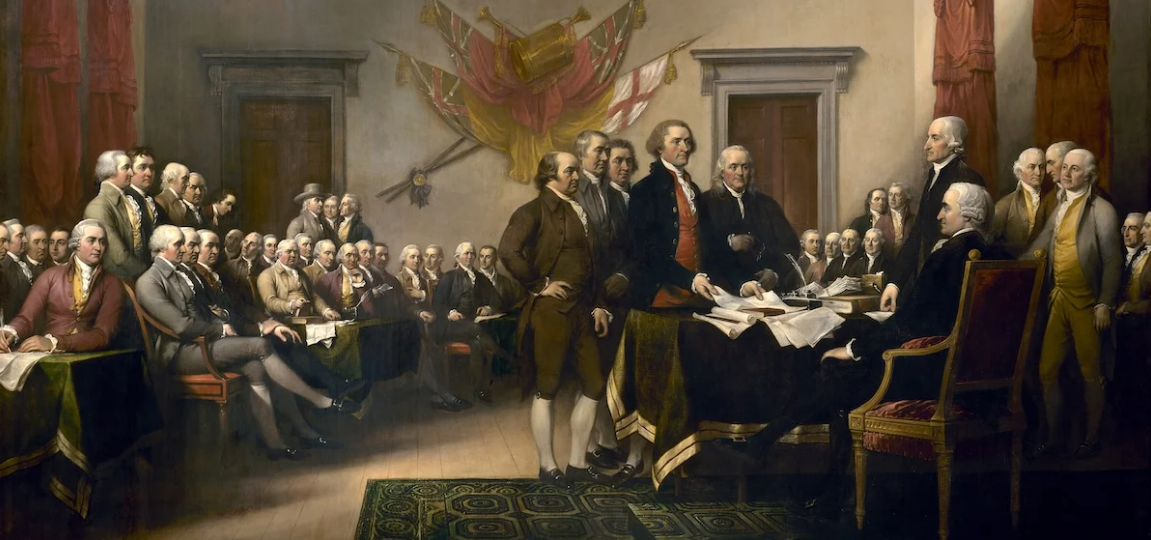
Deliberative Republicanism and the Triumph of the American Founding
Instead of rejecting the moral urgency of the postliberal right and left, it is fitting and proper that we redirect it through the right kind of education—both formal and informal—that can inspire affection for our Constitution.
.jpg)