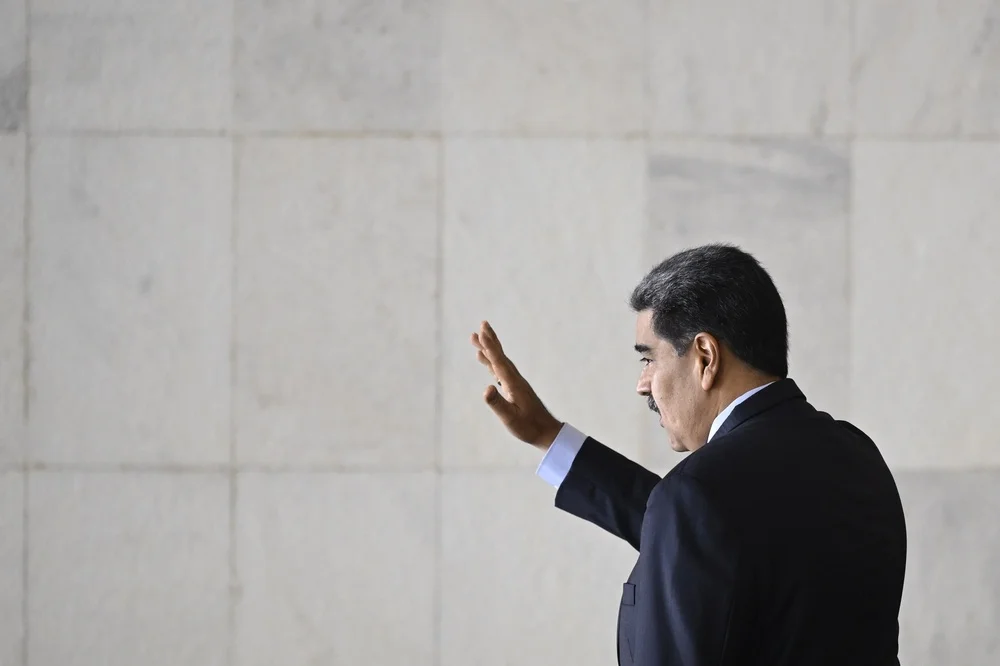
Prosecuting Maduro

What effect will the extraction of Maduro have on his pending trial? The answer, quite clearly, is, “Nada.”
On Saturday January 3, 2026, the U.S. Army’s elite Delta Force operatives, relying on intelligence gathered over months by Central Intelligence Agency personnel in Venezuela and supported by other elements of American military and federal law enforcement, successfully executed (military personnel described the operation as “‘virtually flawless’”) a carefully planned nighttime extraction of Nicolas Maduro, a dictator who had been charged with several drug-related violations of federal law. The military brought Maduro to this country for trial on a four-count federal indictment made public the same day. That indictment charged Maduro, his wife, Cilia Adela Flores de Maduro (who was also extracted), and four other parties with violations of federal laws prohibiting the illegal distribution of controlled substances, the commission of terrorist activity, and the possession of automatic weapons in connection with the first two actions. Guilty verdicts would expose Maduro to a lengthy period of confinement.
Maduro has made it clear that he will not go gentle into that good night. When arraigned on narcotics charges in federal court on Monday, January 5, Maduro argued that he had been “‘kidnapped’” from Venezuela, that he still claims to be president, and therefore cannot be subject to a trial in this country. Maduro’s lawyer, Barry Pollack, amplified his client’s claim by telling the court that “there were questions about the legality of his client’s ‘military abduction.’” Over the last three days, several legal commentators have discussed the legality of the President’s use of the military to enter Venezuela to arrest Maduro. Not surprisingly, different scholars have taken different positions on that issue.
Consider the opinions of three eminent commentators. Harvard Law School Professor Jack Goldsmith has (reluctantly) concluded that the congressionally unauthorized entry and seizure could be defended as lawful under contemporary executive practice, but was inconsistent with the U.N. Charter and, because Congress had not authorized the action, is not the way the railroad should be run. Yale Law School Professor Jed Rubenfeld has concluded that the extraction is lawful under current precedent and doctrine, while National Review writer Andrew McCarthy believes that the extraction was unlawful. Both Rubenfeld and McCarthy agree, however, that, regardless of the legality of the military’s extraction of Maduro, he has no persuasive legal argument that would justify dismissal of the charges against him.
Rubenfeld and McCarthy point to the decision by the U.S. Court of Appeals for the Eleventh Circuit in the case of United States v. Noriega as being, in Rubenfeld’s words, “a direct precedent” for upholding the legality of the Maduro seizure. That prosecution was brought against Manuel Noriega, who argued on appeal that, for various reasons, his conviction must be set aside. The Eleventh Circuit rejected every one of his claims, as follows: First, Noriega was not entitled to immunity from criminal prosecution by virtue of the “act of state doctrine,” which prohibits federal courts from holding invalid unlawful the acts of a foreign government, because the United States did not recognize him as a legitimate head of state.
Second, the government’s failure to invoke the designated judicial process for extraditing Noriega to this nation for trial was not a defense to his prosecution, because the treaty did not bar “self-help” procedures. Third, the federal courts’ authority to supervise the administration of justice did not permit them to dismiss charges simply because the government’s conduct, though constitutional, was “outrageous.”
The disagreement among scholars over the legality of the Maduro military-led extraction process raises a range of issues in domestic and international law. For example, in Youngstown Sheet & Tube Co. v. Sawyer, popularly known as the Steel Seizure Case, the Supreme Court made it clear that “[t]he President's power, if any, to issue the order must stem either from an act of Congress or from the Constitution itself.” Accordingly, the first question posed by the Maduro case is whether the President has authority to order the extraction of a foreign leader, an action that, some will argue, is tantamount to a “War” that, under Article I, § 8, cl. 11, only Congress may declare?
Maduro’s argument would go as follows: Congress has not declared war against Venezuela, nor has it passed an authorization for the use of military force (AUMF), like the ones that the United States invoked for the invasion of Afghanistan and Iraq, expressly or implicitly approving such an action. In fact, his argument would continue that using our armed forces would violate the Posse Comitatus Act, which bars, on pain of criminal penalty, the use of the military “to execute the laws” of the United States.
One response would be that, under Section 3052 of Title 18, Congress has authorized Federal Bureau of Investigation (FBI) special agents to “make arrests without warrant for any offense against the United States . . . if they have reasonable grounds to believe that the person to be arrested has committed or is committing such felony,” and an FBI hostage negotiator was involved in the extraction process to assist were Maduro to barricade himself, as he tried to do. Relying on Section 3052 in this context, however, would be like the tail wagging the dog. Maduro’s extraction, whether he is a legitimate government official, is not the type of “arrest[]” that Congress contemplated for that provision because of (among other reasons) the foreign policy implications of that act (e.g., toppling a foreign government). That is certainly true under the Major Questions Doctrine, which applies to cases where the “‘history and the breadth of the authority that [the agency] has asserted,’ and the ‘economic and political significance’ of that assertion, provide a ‘reason to hesitate before concluding that Congress’ meant to confer such authority.”
Two better responses are available. One is that the text of the Posse Comitatus Act does not authorize a court to dismiss an indictment. The only remedy it provides is criminal prosecution of anyone who violates its terms. As explained below, any exclusionary rule that the act might be said to contain would bar the use of evidence obtained after Maduro’s arrest, but not preventhis trial. On top of that is the strong presumption that statutes apply only domestically. That is the case here, as the Justice Department concluded in 1989. The text of the act is silent on its extraterritorial application, and the purpose of the act was to curb use of the military for domestic law enforcement — specifically federal troops in the Reconstruction South — not overseas. Indeed, the military’s mission is to operate abroad, and it commonly polices the areas it occupies. In sum, the Maduro extraction was neither expressly authorized by nor expressly forbidden by an act of Congress.
The legality of this incursion then becomes whether the President has the implied power to arrest and remove someone like Maduro as part of his Article II, § 3, responsibility to “take care that the laws be faithfully executed,” and to use the military for overseas law enforcement under his Article II, § 2, power as “commander in chief of the Army and Navy.” There is substantial history on that issue. Presidents have used the military for law enforcement and other purposes without a declaration of war or a specific AUMF. For example, in 1983, Ronald Reagan ordered the military to protect and return American citizens in Grenada being held by Cuban forces. In 1989, George H.W. Bush used the military to extract Manuel Noriega from Panama for trial or narcotics charges, like the ones brought against Maduro. Three years later, Bush sent the military into Somalia for the humanitarian purpose of ensuring that international aid and food could reach the nation’s residents, who were being starved to death by Somali warlords. In 2011, Barack Obama, along with European nations, ordered airstrikes in Libya against Muammar Gaddafi. So, there is ample precedent for the President using the armed forces to secure military objectives or for other reasons.
What legal status does that practice have? In Marbury v. Madison, the Supreme Court stated that “[i]t is emphatically the province and duty of the Judicial Department to say what the law is.” Our nation has accepted that proposition since its adolescence. Some have argued that the President, by sitting atop a co-equal branch of government, has the same authority to decide what the law is for every other executive official, and his conclusions are entitled to the same respect as the Supreme Court’s. However that argument is resolved, it cannot affect what has already happened; that is a matter of indelible history. The answer can only affect what happens going forward. So, we should put aside the question of whether the Maduro extraction was a lawful use of America’s military and focus on the issue at hand: namely, even if we assume that his extraction was unlawful, what, if any, effect would that illegality have on his prosecution?
Maduro cannot challenge his prosecution on the ground that his arrest was more in the nature of a “kidnap[ping]” for which the most appropriate remedy is to set him free and return him to Venezuela. The Fourth Amendment governs the “search” and “seizure” of physical items, such as contraband (e.g., heroin), or of a person (e.g., an arrest, like Maduro’s). The Fourth Amendment Exclusionary Rule — an evidentiary doctrine that the Supreme Court adopted to deny law enforcement officer the ability to profit from wrongdoing — requires a court to exclude at trial any evidence that a law enforcement officer obtains by virtue of the illegality (e.g., white powder in a glassine baggie), as well as any “fruits” of that evidence (e.g., a lab report finding that the seized powder is heroin). For several reasons, however, Maduro cannot persuasively argue that the Fourth Amendment requires his release.
Start with the fact that the Fourth Amendment does not apply in Venezuela. In 1992, the U.S. Supreme Court held in United States v. Verdugo-Urquidez, which involved the search of property in Mexico for use in a federal criminal case, that the provision applies only domestically and does not regulate the search of a nonresident alien's property in his homeland. Maduro, therefore, cannot prevail on a claim that either our entry into his Venezuelan residence or his arrest was an unlawful “search” or “seizure.”
Even if it were, however, Maduro would still not be released. The Fourth Amendment exclusionary rule, created by the Supreme Court in 1914 in Weeks v. United States, only precludes the government from using at trial evidence obtained by exploiting a Fourth Amendment violation (and, even then, there are exceptions). All that Maduro could hope for would be the suppression of any statement and any physical evidence the Army gathered after his arrest. Put differently, the exclusionary rule does not apply retroactively, nor does it demand the suppression of lawfully obtained evidence. Moreover, it certainly does not require the dismissal of charges that can be established by independent proof. As Justice Byron White explained in United States v. Morrison, any exclusionary remedy “is limited to denying the prosecution the fruits of its transgression.” A grand jury indicted Maduro before he was arrested (twice in fact), so the government most likely has independent proof of his guilt regardless of what it learned on January 3.
Finally, an arrest warrant had issued for Maduro based on the first indictment brought against him, and, as the Supreme Court noted in Gerstein v. Pugh, “an indictment, ‘fair upon its face,’ and returned by a ‘properly constituted grand jury,’ conclusively determines the existence of probable cause and requires issuance of an arrest warrant without further inquiry.” Moreover, unlike a search warrant, which can become stale over time because property can be moved, an arrest warrant cannot become stale because it is based on an unchangeable historical fact. Accordingly, even if Maduro could invoke the Fourth Amendment exclusionary rule, the government lawfully arrested him.
Can Maduro nonetheless argue that he cannot be prosecuted because his very presence in federal court is due to an illegal seizure? The answer is, “No.” The Supreme Court’s 1992 decision in United States v. Alvarez-Machain stands in his way.
The Alvarez-Machain case stemmed from the murder in Mexico of Drug Enforcement Administration (DEA) Special Agent Enrique Camarena-Salazar by members of a drug cartel. Humberto Alvarez-Machain, a physician, participated in the murder by keeping Camarena-Salazar alive so that he could be interrogated and tortured. Unable to extradite Alvarez-Machain to this country, the DEA arranged for him to be kidnapped and turned over to American authorities. Chief Justice William Rehnquist summarized the issue before the Court and its resolution: “The issue in this case is whether a criminal defendant, abducted to the United States from a nation with which it has an extradition treaty, thereby acquires a defense to the jurisdiction of this country's courts. We hold that he does not, and that he may be tried in federal district court for violations of the criminal law of the United States.” The Alvarez-Machain case, by the way, does not stand alone. On four separate prior occasions beginning in 1886—in Ker v. Illinois, Frisbie v. Collins, Gerstein v. Pugh, and United States v. Crews—the Supreme Court has made clear that the unlawful seizure of a defendant does not justify dismissing the charges against him. As the Supreme Court summarized in Crews, “[a]n illegal arrest, without more, has never been viewed as a bar to subsequent prosecution, nor as a defense to a valid conviction.” More specifically, in Noriega, the 11th Circuit Court of Appeals applied that principle to an analogous case.
Can Maduro shift everyone’s attention to the Fifth Amendment Due Process Clause and contend that it serves as an alternative ground of protection against an unlawful seizure due to the “outrageous” nature of the government’s conduct? Again, the answer is, “No.” In 1989 in Graham v. Connor, the Supreme Court held that, “[b]ecause the Fourth Amendment provides an explicit textual source of constitutional protection against this sort of physically intrusive governmental conduct” challenged there—viz., the use of excessive force — all claims that the government acted unlawfully “in the course of an arrest, investigatory stop, or other ‘seizure’ of a free citizen should be analyzed under the Fourth Amendment and its ‘reasonableness’ standard, rather than under a ‘substantive due process’ approach.” That Amendment, not the more generalized notion of “substantive due process,” must be the guide for analyzing these claims. Any challenge to Maduro’s extraction must stand or fall under the Fourth Amendment, and, as explained above, it fails.
The debate over whether the President may use the military overseas without a declaration of war or advance congressional approval is thorny, involving domestic constitutional law, national security policy, and separation of powers principles. The Constitution creates an office of the Presidency to be held by only one person because only a single individual can act with the dispatch necessary to execute the nation’s laws. The Congress comprises numerous representatives and senators who collectively reflect the judgment of the American people.
The Framers allowed only Congress to declare war to ensure that a fledgling nation would not undertake potentially disastrous enterprises without the prior approval of the body whose composition best reflected the opinions, beliefs, and views of the entire nation. Only when Congress found war justified, the Framers believed, would the President have the necessary backing to commit our military to what could be a very fraught endeavor. Nonetheless, over time, the Article I and II branches have clashed over the wisdom and legality of a President’s use of the armed forces without express congressional before-the-fact approval. If history is any guide, they will likely do so again. What is the proper resolution of that dispute that might never be definitively resolved?
Today, however, the issue is what, if any, effect the extraction of Maduro should have on his pending trial. The answer, quite clearly, is, “Nada.”
Paul J. Larkin is a Senior Legal Fellow in the Meese Institute for the Rule of Law at Advancing American Freedom

Politics
%20Richard%20Samuelson%20%20-%20Is%20American%20Nationalism%20Still%20Creed-able_-1.jpg)
Is American Nationalism Still Creed-able?
We are not there now, but there is reason to worry that the United States is in danger, if we are not careful, of ceasing to be a nation with the principles of 1776 at its core.
National Civitas Institute Poll: Americans are Anxious and Frustrated, Creating a Challenging Environment for Leaders
The poll reveals a deeply pessimistic American electorate, with a majority convinced the nation is on the wrong track.
.webp)
%20(1).avif)
.jpg)



Can Britain’s Next Prime Minister Escape the Net Zero Trap?
Britain has burned through five Prime Ministers and is paying some of the highest electricity prices in the world.
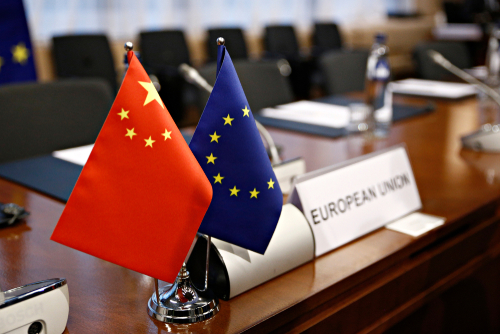
The Scanner at the Gate: Europe’s China Policy Litmus Test
China’s industrial policy is entering Europe through public procurement—and reshaping sensitive markets from within.

Confronting the New Antisemitism
"The postwar effort 'to rebrand Judaism as a religion' has made it impossible for American Jews to understand what they are facing today, because what we are facing today is an attack on the idea of Jewish peoplehood.”
“Democratic” Socialism Is Undemocratic
By promoting class hatred, suppressing private initiative, and seeking enhanced control of our lives, today’s democratic socialists undermine patriotism and individual initiative—two qualities that have long distinguished the United States from other major nations.

