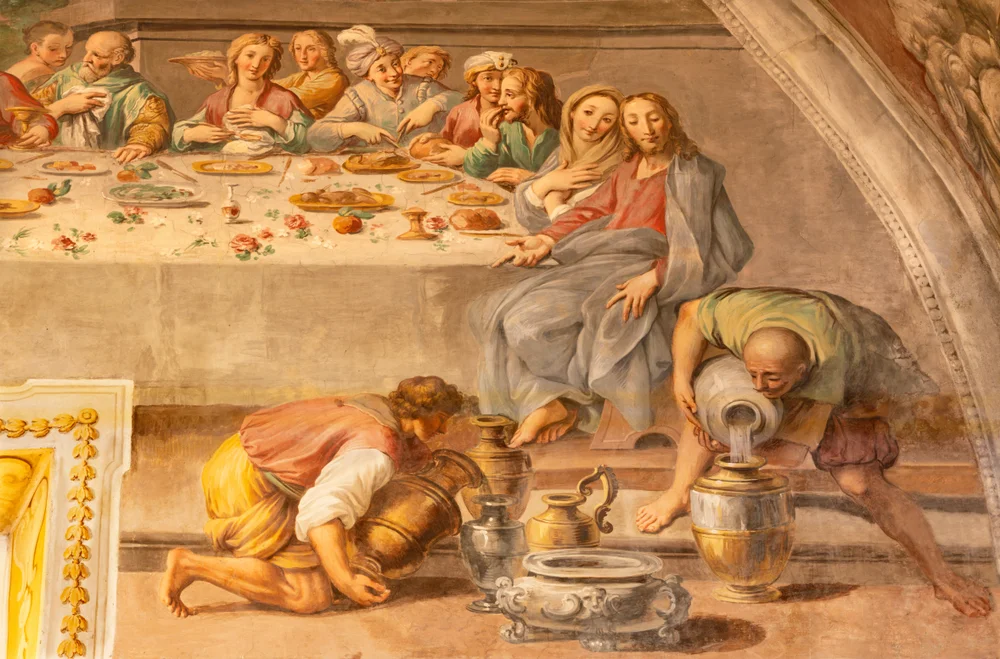
Family Policy Enthusiasts Get the Ecology Wrong

The family in America today is not suffering from a lack of government help, nor from an improper calibration of the levers of that help. It is suffering from the wrong kind of help.
Editor's Note: This is part of Civitas Outlook's Family Policy Symposium.
In 1978, a U.S. Fish and Wildlife Service biologist published a report with a stunning conclusion: “The wolf niche appears essentially vacant. Therefore I recommend restoring this native predator by introducing wolves to Yellowstone.” John Weaver’s tract was the first to make a formal case for what is regarded today as a wildly successful ecological intervention: the reintroduction of the grey wolf into Yellowstone in 1995.
Wolves had been absent from Yellowstone for at least seventy years. The return of these “top predators” vitally improved the park ecosystem. Elk began to avoid open areas where they were easily ambushed, allowing willows, cottonwood, aspen, and wild grasses to regrow. The resulting “trophic cascade” restored beaver populations, renewed wetlands, attracted songbirds, and led to the thriving of many other plant and animal species.
The lesson: if you wanted to encourage beavers or chickadees, it was not enough to provide food or shelter. You had to figure out, as Weaver did, that the missing “top predator” played a function the park service could not fill. Elk had to be afraid of the wolves — night and day. The park service's role was to understand the wolf's place: to seek the wolves, welcome them, and protect them from human predation. Without the wolf, the park service fundamentally lacked the capacity to see to the thriving of the ecosystem.
As it is with the flourishing of Yellowstone, so it is with the family in America. The question is not whether the government has a role, but rather the nature of that role. The park service is not running a zoo. Federal and state governments that engage in tax and transfer schemes for everything from health and education to pensions and income security are behaving rather like zookeepers than park rangers. Families, as much as beavers, are equipped by nature to feed (and shelter) themselves and their offspring. But if the wolf niche is vacant, families as much as beavers will be little able to do so. The state less so.
The conservative position on the family has always been thus. It’s not a dwarf state that is wanted per se, prevented from leaning into its "state capacity" because of a misbegotten sense of freedom. Rather, American conservatives have spoken of a government limited by nature, by rights and duties prior to the state, which the state may not abrogate. The state may not, for instance, deny the right of persons to worship, since persons owe a prior debt of worship to God. A rightly ordered state, therefore, boasts a limited government: limited by God’s design and not by man. The state must not deny the duty of fathers to provide for their offspring by taking from some families systematically and giving to other families. The duty of fathers may not be abrogated or absorbed by the national collective. Of course, when the means are unjust, the ends fail to obtain.
A wealthy state may pull off an elaborate family-village cosplay for a while. More kids may be in school, but they won’t be getting an education. Fewer people will seem to be in poverty, but they will be trapped in cycles of dependence. Prices will be “stable” at two or three percent inflation, but prices are supposed to fall in a market economy: when they don’t, wage earners are most injured. One is reminded of Ivan Illich’s observation in 1971:
This total failure to improve the education of the poor despite more costly treatment can be explained in three ways: (1) Three billion dollars are insufficient to improve the performance of six million children by a measurable amount; or (2) The money was incompetently spent: different curricula, better administration, further concentration of the funds on the poor child, and more research are needed and would do the trick; or (3) Educational disadvantage cannot be cured by relying on education within the school.
This non-conformist Catholic priest could not have been described as a Buckley conservative, even less as a Reagan conservative. But he uses “cannot” in the way that American conservatives have meant it in relation to the family and the functions of the state: you can spend the money, set up little institutional boxes; assign methods and metrics; but you cannot do the thing you mean to do.
For a while, of course, zookeepers can keep up the appearance of a thriving animal population. But over time, the fiction erodes. Animals lose their vitality. They no longer want to reproduce. The males and females become ill-suited to their complementary roles. They even forget the meaning of maleness and femaleness — so distant are they from their functions.
The family in America today is not suffering from a lack of government help, nor from an improper calibration of the levers of that help. It is suffering from the wrong kind of help — the wolf niche is vacant, and the government is playing the role of zookeeper rather than wolf protector.
What about this wolf? “Men have forgotten God,” Solzhenitsyn declared. “That’s why all this has happened.” The top predator, so to speak, as Pope Leo XIII put it, is that “power greater than human [that] must be called in to teach men's hearts, awaken in them the sense of duty, and make them better.” Grace alone fosters the “better angels of our nature” and vanquishes evil in the heart of every man. As wolves to the elk, true religion teaches men to walk in the right paths, to fear the right things, and to strive for the right goods: to choose chastity over immorality, justice over injustice, and the kingdom of God over the earthly city. Like the park service to the wolf, the job of the government is to recognize the value of biblical religion: to seek it out, to welcome it, and to protect it from the predation of men, as it is ever under threat from direct attack, sidelining, and usurpation. Cede to religious bodies the primary role of regulating marriages, educating children, correcting morals, and reforming institutions. Above all, keep churches, religious institutions, and their activities safe. Be wolf-protectors, not zoo-keepers.
In turn, there is a veritable “trophic cascade” one can expect from wolf protection: early marriages and happier adults, revived birth rates, low divorce rates, reduced promiscuity, better education, strong work ethic, citizens willing to serve in the military, national piety, a thrift and savings, a culture of life, a culture of honesty, respect for the property of others, rejection of redistribution, a culture of almsgiving — and more. The cascade encompasses all pro-social virtues. No society has yet figured out a way to normalize these things without biblical faith. And indeed, where Christian and Jewish communities are strong in America, these salutary effects still abound.
We don’t have a marriage problem: we have a try-to-foster marriage without fostering chastity problem. We don’t have a birth-rate problem: we have a try-to-foster birth rates without fostering the transcendent value of children. We don’t have an affordability problem: we have a try-to-foster affordability without reducing government spending and endemic inflation. In short, we have a virtue problem. The tax code won't fix it, housing expansion won’t fix it, new schools won’t fix it, even if all these things bear improvement.
Bring back the wolf, get the ecology right.
Catherine Ruth Pakaluk is the incoming Executive Director (January 2026) of the Institute for Human Ecology, and Associate Professor of Economics at The Catholic University of America. She is the author of Hannah’s Children: The Women Quietly Defying the Birth Dearth, and host of the Paidaxiology podcast.

Politics
%20Richard%20Samuelson%20%20-%20Is%20American%20Nationalism%20Still%20Creed-able_-1.jpg)
Is American Nationalism Still Creed-able?
We are not there now, but there is reason to worry that the United States is in danger, if we are not careful, of ceasing to be a nation with the principles of 1776 at its core.

National Civitas Institute Poll: Americans are Anxious and Frustrated, Creating a Challenging Environment for Leaders
The poll reveals a deeply pessimistic American electorate, with a majority convinced the nation is on the wrong track.
.webp)
%20(1).avif)


The G7 Is Failing To Address Global Imbalances
The G7 was not created to issue an endless procession of carefully calibrated communiqués.

Immigration Alone Won't Solve Canada's Population Decline
Rather than looking abroad for solutions, we should ensure young Canadians have a hopeful future






Can Britain’s Next Prime Minister Escape the Net Zero Trap?
Britain has burned through five Prime Ministers and is paying some of the highest electricity prices in the world.

The Scanner at the Gate: Europe’s China Policy Litmus Test
China’s industrial policy is entering Europe through public procurement—and reshaping sensitive markets from within.

Confronting the New Antisemitism
"The postwar effort 'to rebrand Judaism as a religion' has made it impossible for American Jews to understand what they are facing today, because what we are facing today is an attack on the idea of Jewish peoplehood.”
“Democratic” Socialism Is Undemocratic
By promoting class hatred, suppressing private initiative, and seeking enhanced control of our lives, today’s democratic socialists undermine patriotism and individual initiative—two qualities that have long distinguished the United States from other major nations.

