
Tariffs Are Working, Just Not for the American People

Tariffs are taxing Americans, destroying manufacturing jobs, and pushing our allies into the arms of our competitors.
Sean Spicer wants us to believe that President Trump’s tariffs are “delivering real results.” He points to record investment announcements, provides photo ops from a steel plant, and tariff revenues flowing into the Treasury like never before. If only official statistics and the lived experiences of each American agreed with him.
Here’s what the actual data shows: the Institute for Supply Management finds that manufacturing employment has contracted for nine consecutive months. The Bureau of Labor Statistics, even with the chill that came from firing Erika McEntarfer for producing “biased” numbers, reports that there are 58,000 fewer jobs in manufacturing today than when Trump took office and 67,000 fewer since Liberation Day in April. Even more alarming, job openings in manufacturing have declined by over 100,000 in the same time span. Not only are there fewer jobs in manufacturing today, but there is less opportunity, too. This isn’t a statistical blip nor is it the result of “bias” or “fake numbers.” It’s a pattern that economists all too frequently warn about.
But what about the beloved steel industry? Cleveland-Cliffs cut 1,200 jobs in Michigan and Minnesota. US Steel announced that it was shuttering its mill in Illinois, though, thanks to a deal they signed with the Trump administration, the 800 workers will remain employed through 2027. In other words, US Steel is losing so much money by making steel that it’s cheaper for them to pay their workers not to do so.
So much for the long-promised renaissance in manufacturing and steel production.
With the revenue that’s coming in thanks to tariffs, Spicer again echoes remarks that the President has made. Unfortunately, this free lunch is being paid for by the American people. But don’t take my word for it, we can turn to President Trump, who told Walmart to “EAT THE TARIFFS” and Treasury Secretary Scott Bessent, who said that American firms were paying tariffs in the form of reduced profits. If tariffs are paid for exclusively by foreign entities, what is there to eat, and why do American profits have to decline?
The truth is that there are only three groups that could pay the tariffs: American consumers, American investors, and foreigners. And transparently, all the data that we have shows that these tariffs are decidedly not being paid for by foreigners. The BLS’s import price index, for example, remains flat. If foreigners were paying an appreciable amount of the tariff, we would see this index fall. Instead, the Harvard Pricing Lab has found that American consumers bear about 20 percent of the tariffs in the form of higher prices, commonly referred to as the “tariff passthrough rate.” Others, such as Goldman Sachs and the Council on Foreign Relations find that the burden of paying the tariffs is quickly shifting from US importers to US consumers, with US importers paying 64 percent and American consumers paying 22 percent of the tariffs in June. As of October, the Council on Foreign Relations estimates that American consumers bear 55 percent of the tariffs, while US importers bear 27 percent. By comparison, the 2018 Trump tariffs had a passthrough rate to consumers of just five percent even after a full year. These new tariffs are affecting American consumers more severely and more quickly than before.
None of this is news to anyone who remembers even recent history. The 2018 tariffs on steel and aluminum did save about 1,000 jobs in the steel and aluminum producing sectors, but they cost upwards of 75,000 jobs in the steel and aluminum using (i.e. manufacturing) sectors. In 2002, when President Bush imposed tariffs on imported steel, the result was similar; steel prices skyrocketed as Americans paid the tariff, and employment in downstream, steel-using industries plummeted as employers scaled back production. In fact, there were more jobs lost in domestic manufacturing than there were in the entire domestic steel industry. The political and economic backlash from these tariffs was so severe that President Bush had to rescind them a full two years ahead of schedule.
The damage of these tariffs reaches far beyond our borders. As we continue to erect walls to keep talented people, affordable goods, and useful materials out of our country, our trading partners are responding not with capitulation, but with alternatives. The EU has finalized a partnership agreement with the South American trading bloc Mercosur, which some consider a direct response to the ad hoc tariffs imposed by President Trump. The CPTPP, the Pacific Rim trading bloc born after Trump withdrew the US in 2017, now includes twelve nations and is actively expanding. Recently, they affirmed their commitment to tearing down barriers to trade between member nations “at a time when the international trading system is facing significant challenges.”
Most tellingly, however, is the response by Canada. Prime Minister Carney has made it very clear that Canada needs to distance itself from US trade relations to whatever extent is feasible. At a recent meeting, he said, “The decades-long process of ever closer economic relationship between Canada and the U.S. is over” and that the strengths of being tied to America are now their vulnerabilities. To facilitate this, Carney has committed to doubling Canada’s non-US exports and continuing the work that Mary Ng, Canada’s former trade minister under Trudeau, began.
These friends are no longer seeking to supplement US trade. They are seeking to supplant it. To the extent that they do, this will make it even more difficult for the US to re-enter the international scene.
The simple truth is that the American people are, on a per-capita basis, the most industrious and productive workers on the planet, bar none. China receives a lot of attention these days for its manufacturing prowess. But once you realize that they employ sixteen times as many people in manufacturing as we do to get only sixty percent more output, the fears evaporate. We do not need protection, we need empowerment. We need the ability to buy inputs at competitive prices, have easy access to foreign markets for our exports, and maintain trade relationships with partners who see us as allies, not adversaries. Tariffs accomplish none of these.
Spicer served as White House press secretary. Spinning is the job description. Unfortunately for him, the facts remain stubborn, no matter the spin. Tariffs are taxing Americans, destroying manufacturing jobs, and pushing our allies into the arms of our competitors. Tariffs have not been vindicated in the past, they are not being vindicated now, and they will not be vindicated in the future.
David Hebert is a Senior Research Fellow at the American Institute for Economic Research specializing in public finance and trade policy.

Politics
%20Richard%20Samuelson%20%20-%20Is%20American%20Nationalism%20Still%20Creed-able_-1.jpg)
Is American Nationalism Still Creed-able?
We are not there now, but there is reason to worry that the United States is in danger, if we are not careful, of ceasing to be a nation with the principles of 1776 at its core.
National Civitas Institute Poll: Americans are Anxious and Frustrated, Creating a Challenging Environment for Leaders
The poll reveals a deeply pessimistic American electorate, with a majority convinced the nation is on the wrong track.
.webp)
%20(1).avif)






Can Britain’s Next Prime Minister Escape the Net Zero Trap?
Britain has burned through five Prime Ministers and is paying some of the highest electricity prices in the world.
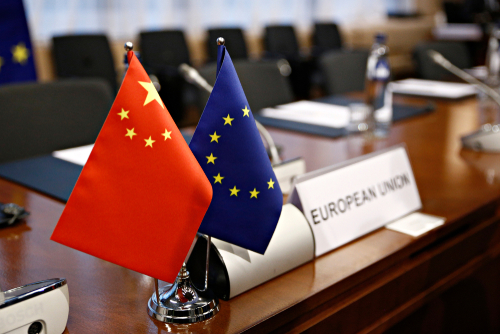
The Scanner at the Gate: Europe’s China Policy Litmus Test
China’s industrial policy is entering Europe through public procurement—and reshaping sensitive markets from within.

Confronting the New Antisemitism
"The postwar effort 'to rebrand Judaism as a religion' has made it impossible for American Jews to understand what they are facing today, because what we are facing today is an attack on the idea of Jewish peoplehood.”
“Democratic” Socialism Is Undemocratic
By promoting class hatred, suppressing private initiative, and seeking enhanced control of our lives, today’s democratic socialists undermine patriotism and individual initiative—two qualities that have long distinguished the United States from other major nations.

