Gratitude, Grit, and Miracles: The New Facts of Jewish Life in America
Any proposal regarding making Jewish life better must begin with more, better-trained, and more heavily armed individuals standing guard and close cooperation with the police.
Last week, I published a piece in the New York Post applauding New York Council Speaker Julie Menin’s five-point antisemitism plan for emphasizing Jewish institutions’ security needs. A couple of days later, I spoke next to Matt Continetti at a conference where I mentioned, and Matt emphasized, the importance of hardening Jewish targets in the face of rising, and increasingly violent, antisemitism. And on Thursday, in suburban Detroit, a would-be attacker trying to slaughter Jewish children rammed his car into a synagogue before opening fire. A security guard appears to have killed the assailant before he could harm anyone else.
Some Jews are inclined to see miracles everywhere; others are just relieved that this story has a happy ending thanks to brave security, a quick law enforcement response, and solid lockdown protocols. This Jew would like to make the case for both.
Thursday’s near-tragedy vindicates the growing consensus that target-hardening is the essential precondition for Jewish communal life in this moment. Any proposal regarding making Jewish life better must begin with more, better-trained, and more heavily armed individuals standing guard and close cooperation with the police.
Here is the first reason why. The ambient level of antisemitic conspiracy-mongering in American culture is now high enough that violence, on any given day, at some place and time, is a near-statistical inevitability. Popular podcast hosts, streamers with millions of followers, radical religious and ethnic leaders, and mainstream political figures who play footsy with them simply reach too many people with too many suggestions about what the Jews are up to and what it will take to stop them.
Not all of them will act, of course, and this may not be a reason to restrain the activators in a manner consistent with the First Amendment. But it only takes one. And until this fit of antisemitic fervor runs its course — and it probably will — ongoing attempts at mass violence are close to assured. They are something we must plan for.
The second reason is that there is nothing our enemies will not do. The diversity of attack methods means we have to think creatively about our own defense. A particular attacker, in Michigan, took a recent jihadist favorite, reminiscent of the New Orleans New Year’s attack: A ramming-shooting, this time into a synagogue, when the attacker had reason to believe Jewish children would be at play. Infamously, we have also experienced a shooter opening fire during Shabbat services, arsons, bombings, and drive-by shootings. The only answer that covers the full range is a posture of near-certain overwhelming force. In other words, hardening. Deter attackers; don’t wait for them to outsmart you.
Third: attackers are not particularly careful about who they target, because to them, Jews are Jews. They do not draw the distinctions we Jews draw among ourselves, so none of us should think that our own relative anonymity or views will save them. Our enemies do not care whether the congregation is Orthodox or Reform, Zionist or anti-Zionist, politically conservative or progressive. To the man who drives to West Bloomfield to kill Jews, a Jewish institution is a Jewish target. This is not a moment for any Jewish community to imagine that its politics, theology, alliances, or public expressions of goodwill towards all provide some kind of security. Those are important things for other reasons. But the only thing that provides security is security.
Now for the miracles — and there are two of them. The small miracle is that a security guard neutralized the attacker before he could perpetrate an atrocity. Hopefully, he never pays for another beer in his life. Even a brave guard could have missed or been overwhelmed. Unfortunately, security forces have given their lives for American Jews more than once. That the good guy with a gun won this time is a miracle indeed.
But the greatest miracle is the one we risk taking for granted. We live in a country where there is simply no question that the authorities will come to our defense. I was moved to tears hearing the local sheriff tell reporters that West Bloomfield police were on scene almost instantly — because they knew, going in, that Jewish institutions were at elevated risk, and they acted accordingly. They trained Jewish communities, and when things went wrong, they rushed toward the danger.
That is, to anyone familiar with Jewish history, a breathtaking description of events. Jews have rarely lived among neighbors who regarded their lives as valuable as anyone else’s — who would risk their own lives rather than look the other way. We are blessed beyond measure to live in such a place, among such people. The least we can do is lighten their load by taking on more of the burden of hardening our institutions,, arming ourselves, and letting our enemies know we are not weak or afraid to meet threats with overwhelming, unapologetic force — and thank our extraordinarily decent neighbors and law enforcement officers for treating us truly, fully, as equals.
Tal Fortgang is an adjunct fellow of the Manhattan Institute.

Pursuit of Happiness

The Rise of Latino America
In The Rise of Latino America, Hernandez & Kotkin argue that Latinos, who are projected to become America’s largest ethnic group, are a dynamic force shaping the nation’s demographic, economic, and cultural future. Far from being a marginalized group defined by oppression, Latinos are integral to America’s story. They drive economic growth, cultural evolution, and workforce vitality. Challenges, however, including poverty, educational disparities, and restrictive policies, threaten their upward mobility. Policymakers who wish to harness Latino potential to ensure national prosperity and resilience should adopt policies that prioritize affordability, safety, and economic opportunity over ideological constraints.









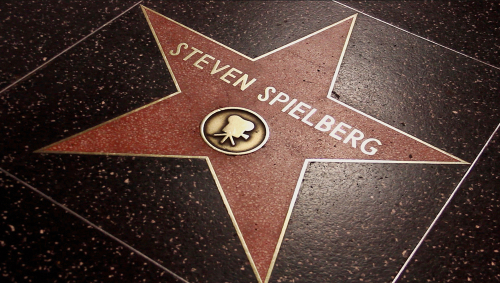
Spielberg’s Empty Hope
'Disclosure Day' should have been called 'Hope and Change,' or rather 'Change and Hope.'
.jpg)
Deliberative Republicanism and the Triumph of the American Founding
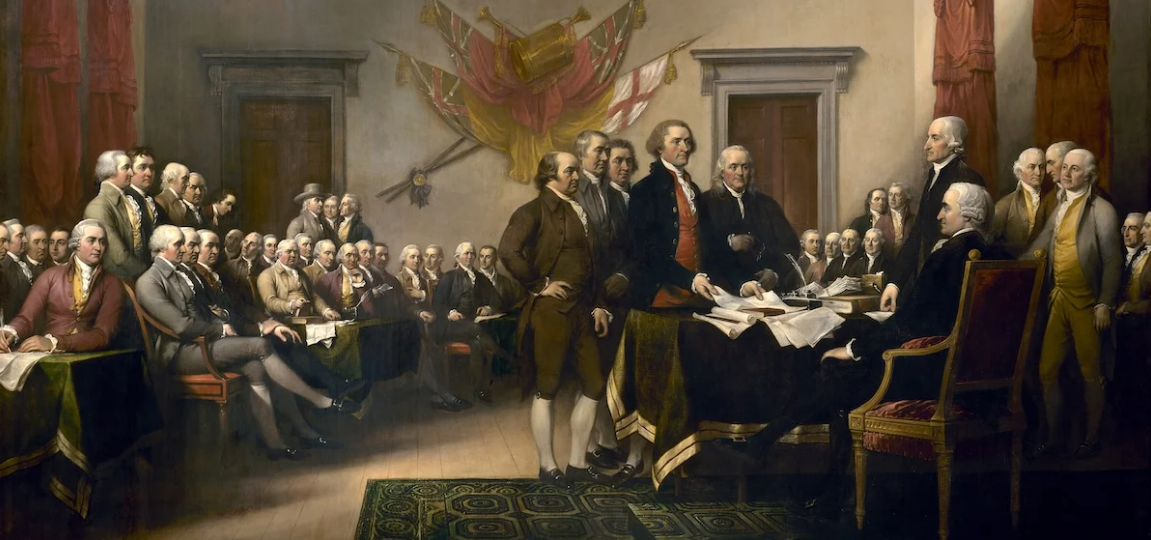
Instead of rejecting the moral urgency of the postliberal right and left, it is fitting and proper that we redirect it through the right kind of education—both formal and informal—that can inspire affection for our Constitution.
.jpg)