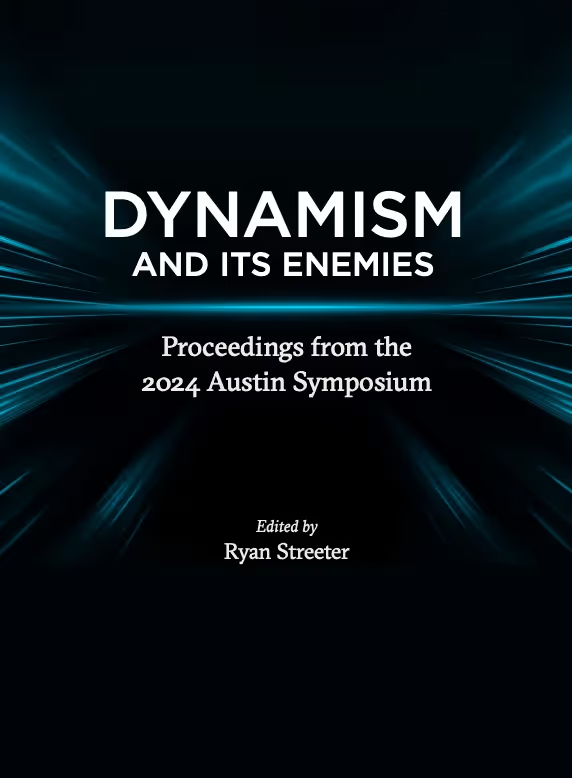
Dynamism and Its Enemies
Proceedings from the 2024 Austin Symposium
If we want more people in more places building and creating more good things, what should we do?
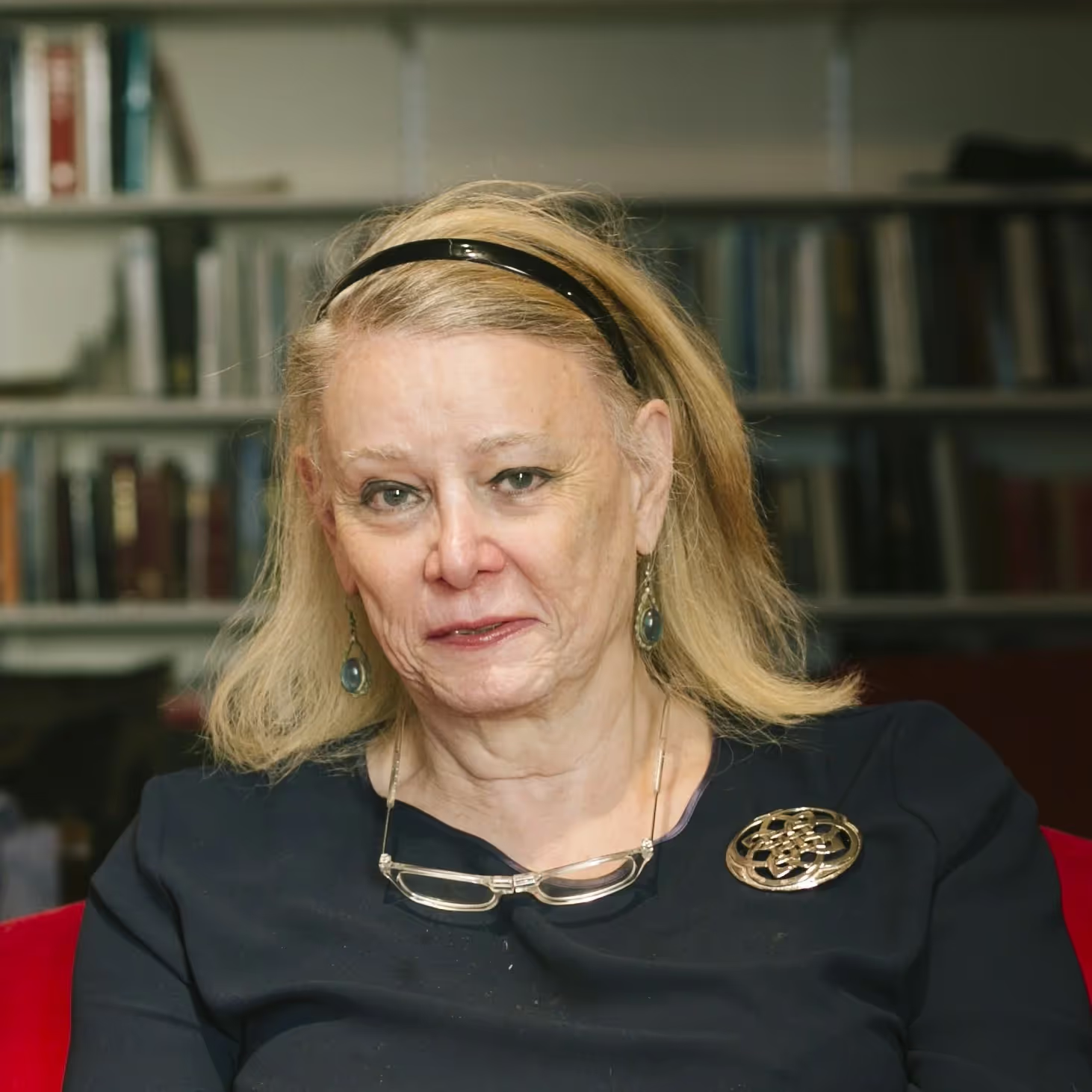
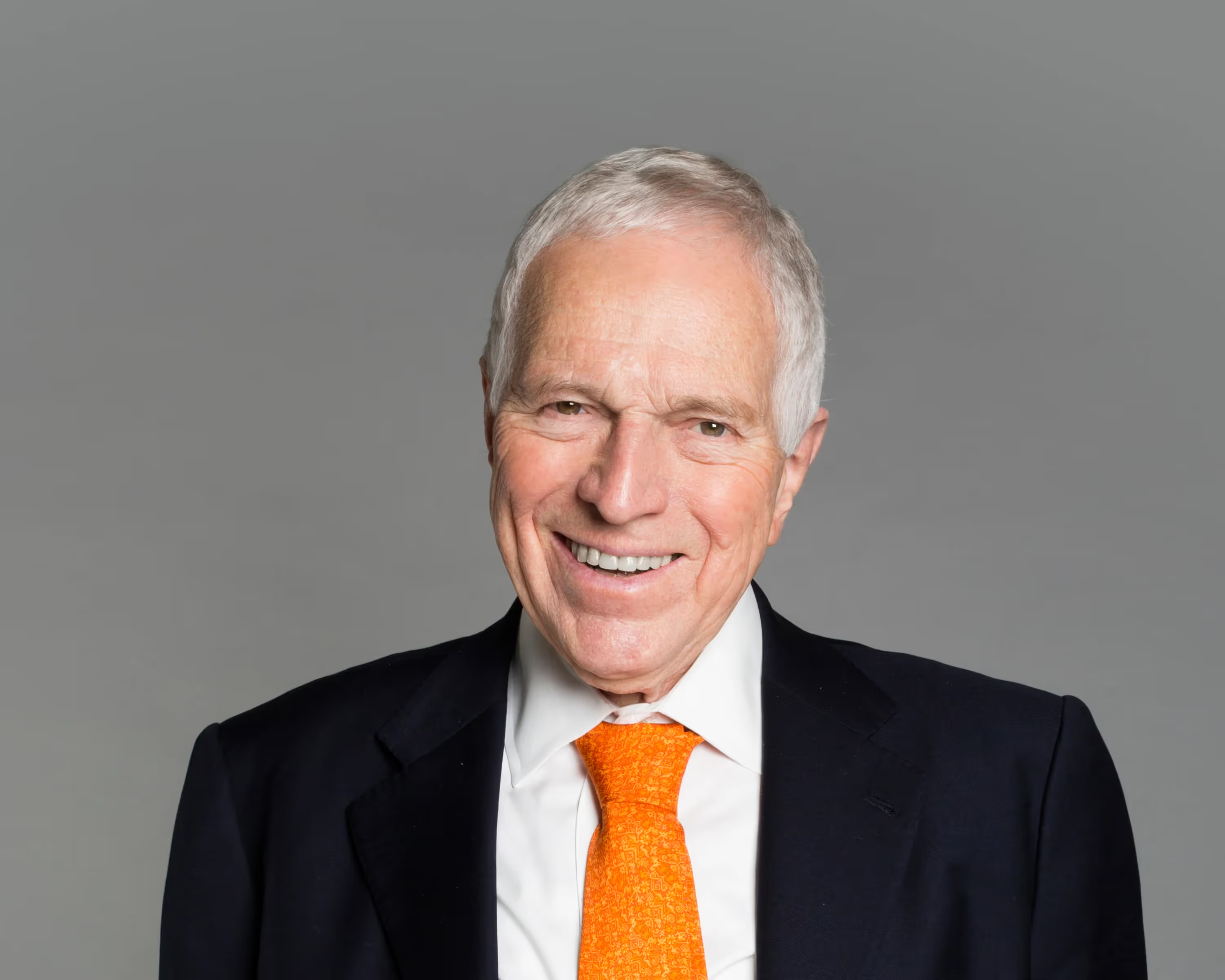
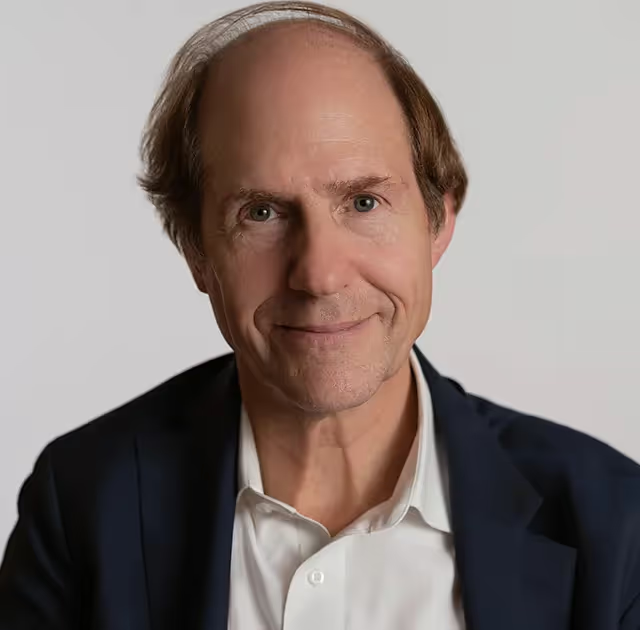
This volume, edited by Ryan Streeter, presents perspectives on key issues of economic and societal dynamism by Ryan Decker (Federal Reserve), Ed Glaeser (Harvard University), Deirdre McCloskey (University of Illinois at Chicago), Edmund Phelps (Columbia University), Dan Shoag (Case Western Reserve University), and Cass Sunstein (Harvard Law School).
The chapters in Dynamism and Its Enemies began as presentations at the 2024 Austin Symposium, a one-day seminar on dynamism in America hosted by the Civitas Institute at the University of Texas at Austin. This first annual event, held in one of America’s most dynamic cities, was designed to bring various leading scholars of dynamism’s various aspects into one place in order to think together about how to foster a more dynamic future.
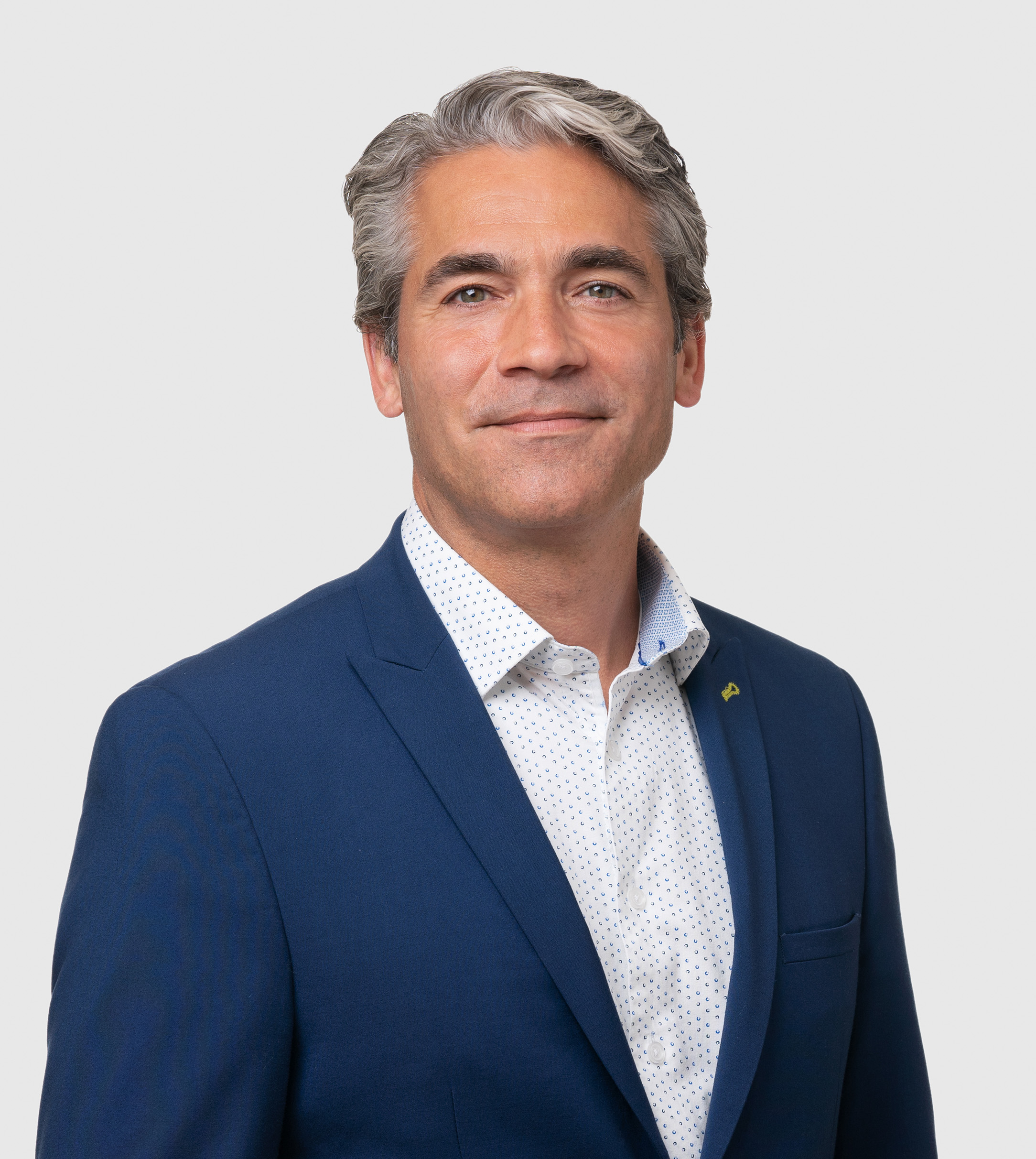
Meet the Editor

Ryan Streeter is executive director of the Civitas Institute. He is also a senior lecturer in the School of Civic Leadership. Previously, Streeter was the State Farm James Q. Wilson Scholar and director of domestic policy studies at the American Enterprise Institute (AEI), where he facilitated research in education, technology, housing, urban policy, poverty studies, workforce development, and public opinion. Before joining AEI, he was executive director of the Center for Politics and Governance at UT Austin.
Earlier in his career, Streeter was a senior fellow at the Legatum Institute in London and a research fellow at the Hudson Institute. He also served as special assistant for domestic policy to President George W. Bush at the White House, deputy chief of staff for policy for Indiana Governor Mike Pence, and policy adviser to Indianapolis Mayor Stephen Goldsmith. Streeter is the author, coauthor, and editor of many books, including Doing Right by Kids: Leveraging Social Capital and Innovation to Increase Opportunity (AEI Press, 2024) which he co-edited with Scott Winship and Yuval Levin, and The Future of Cities, (AEI Press, 2022) which he co-edited with Joel Kotkin.
In addition, his writings have appeared in The Washington Post, The Wall Street Journal, The Atlantic, Politico, USA Today, The Hill, City Journal, National Affairs, and National Review, among others. He has a Ph.D. in political philosophy from Emory University.
Table of Contents
Introduction
Ryan Streeter, Executive Director of the Civitas Institute
Part I: The History and Nature of Dynamic Societies
1. Deirdre McCloskey, “The Great Enrichment”
2. Edmund Phelps, “Reflections on Mass Flourishing, Ten Years Later”
Part II: How Policymakers Inhibit or Promote Dynamism in Our Economy
3. Edward Glaeser, “Dynamism and Stagnation: An Outlook”
4. Cass Sunstein, “Sludge, Stagnation, and Dynamism”
Part III: Key Drivers of Dynamic Economies: New Businesses and Housing
5. Ryan Decker, “Recent Patterns of New Business Creation”
6. Daniel Shoag, “The Housing and Migration Crisis”
Acknowledgements
Contact Us
To speak with an expert about the book, please email the Civitas Institute press office at media@utexas.edu.
Economic Dynamism


.jpg)


Social Mobility Wins
When people live within an environment offering good jobs, good education, social networks, and a culture of self-improvement and hard work, they experience progress in a way that undercuts the philosophical rationale that socialists need to justify the policies they advocate.


.jpg)