
The Future of Conservatism in America

Conservatives are beginning to understand that the brute exercise of political power may be necessary to force some of our cultural institutions to change.
American conservatism finds itself in its most confused condition and precarious circumstances in the last 75 years. This may seem a startling proposition coming after an election representing a substantial repudiation of progressive governance and cultural leftism. Although conservatives can look forward to some salutary policy victories because of the election, it is far from clear that the election or its aftermath herald a definite conservative turn in the same fashion Ronald Reagan’s 1980 landslide victory did. In fact, there are many voices on the right arguing that the present moment represents the passing—if not repudiation—of Reaganism, sometimes pejoratively labeled “zombie Reaganism.” And as we lift our gaze beyond the political realm—as conservatives always should—we see facts and trends in our culture that should fill everyone with a sense of foreboding.
It is necessary to take inventory, so to speak. Or as Lincoln put it, “If we could first know where we are, and whither we are tending, we could then better judge what to do, and how to do it.” Start with the political scene. To be sure, today’s populist political conservatism is not your father’s Reaganism of the 1980s or your grandfather’s “fusionist” conservatism of the 1950s. Along with Donald Trump’s salutary determination to challenge the pillars of the administrative state and attack “wokism” (or “political correctness” if you like the legacy term), there are his other heterodox positions that have caught on and find a significant constituency among right-of-center intellectuals and activists, which means Trump’s heterodoxy is likely to outlive his tenure in office. Trade is the most conspicuous issue: tariffs and the skepticism about if not opposition to, liberalized trade would have been unthinkable as recently as the 1990s. Add to this a conspicuous sympathy for industrial-age labor unions, once anathema to conservatives, let alone Republican electoral interests, and even industrial policy itself, which conservatives equated with socialism when Walter Mondale proposed centralized industrial policy in the 1984 election cycle.
Beyond these specific ideas is the more fundamental thought that we have entered a “post-liberal” era. This concept has at least two parts, one of which is entirely harmonious with older conservative views and one of which is less so. For over a century, conservative thinkers have criticized the liberal individualism that arose from the Enlightenment and modern social contract theory. While conservatives agreed with John Locke’s defense of property rights and constitutional government based on consent, there was concern that radical individualism combined with unregulated markets would undermine tradition, community, and ultimately individual happiness itself. Leo Strauss famously wrote that Lockean liberalism sanctified hedonism but would result in a “joyless quest for joy, while Russell Kirk or Roger Scruton arrived at similar conclusions, harkening to Edmund Burke’s warning: “The effect of liberty to individuals is that they may do what they please; we ought to see what it will please them to do, before we risk congratulations which may be soon turned into complaints.”
The revival of these old conservative doubts about the liberal tradition manifests itself in a second way: American conservatism has usually been considered a part of the classical liberal tradition, but peripheral challenges to that standard view that have been largely dormant for decades are now gaining a new and wider hearing. Suddenly John Locke is no longer undisputed as “America’s philosopher,” while prominent voices on the right now attack “neoliberalism” in much the same manner as the left, which originated the term as a pejorative for the market-oriented political economy that Ronald Reagan and Margaret Thatcher championed. Theoretical speculation about the outline of a “postliberal” order is accompanied by a newfound skepticism or open opposition to long-held conservative policy positions, such as free trade, low taxes, de-regulation, anti-trust law, the social safety net, opposition to labor unions, internationalism, and our military alliances and defense commitments. Many conservatives have embraced the (mistaken in my view) liberal narrative of the role of finance capitalism in the housing crisis of 2008. A more striking example is Tucker Carlson's proposal to ban the development and use of self-driving cars and trucks because of their likely effects on job prospects for working-class men.
Beyond these immediate policy controversies is a potentially more ominous aspect: some conservative advocates of post-liberalism go beyond policy mistakes to embrace, sometimes explicitly, the view that America itself was “ill-founded.” Whereas the attack on the American Founding chiefly came from the left, today it is common to hear young conservatives express disdain and even contempt for the founders, partly for theoretical reasons (the rejection of Locke), but also because it is claimed the founding was not sufficiently robust to prevent the rise of runaway progressivism and wokism we have today. Even if elections halt or reverse progressivism to some extent, the debate about the principles and foundation of the American order will continue to fester.
This new disposition is said to have arisen with the rise of the “national conservative” movement, or NatCons for short. The “NatCons” have quickly asserted themselves as a full-fledged school of conservatism, like the Neocons, Paleocons, libertarians, and religious conservatives of previous eras. But is this disposition completely new with the arrival of Trump and nationalist populism? Cast your mind back to a decade ago when Trump was still The Apprentice and the newest thing on the right was the “Reform Conservatism” (or “Reformicon”) movement. (Disclosure: I participated in some of the Reformicon deliberations, chiefly on energy and the environment, but this gave me a front-row seat to some of the lively policy arguments it engaged.) The disposition of the Reformicons might be regarded as a paraphrase of Herbert Croly from the Progressive Era—exploring how to use national government power for conservative ends, in particular helping to protect the family, fixing health care and education, and remediating the stagnant economic conditions of the working class. This represented a departure of sorts from the old dominant purpose of shrinking centralized government, if not explicitly sidelining libertarianism. The Reformicons had heated debates internally about their ideas, often failing to reach a policy consensus and attracting criticism from outside for surrendering to “Big Government Conservatism,” or worse, “Compassionate Conservatism.” For example, the Reformicon proposal for expanded tax credits for families with children upset the supply-siders who champion simple, low marginal rates and eschew using the tax code for social engineering purposes.
Reform Conservatism, which was never a mass movement in any case, has not much been heard from lately, and the NatCons can be regarded as their successor to a large extent. The NatCons have some of the same internal policy debates as the Reformicons. Regardless of whether using government power for conservative purposes is now deemed an acceptable practice, there remains a powerful fact behind the populist impulses here and abroad: anti-establishment populism is surging almost everywhere in part because of the growing incompetence of the modern state. Governments proving themselves increasingly incompetent at basic tasks, like preserving social order, preventing crime, defending borders, or building public works projects, think they have the competence to control the planet’s temperature. Even when governments attempt to deal with real problems and not the pet causes of elites, the result is still more incompetent. In the U.S. and elsewhere, efforts to reform healthcare systems result in higher costs, worse service provision, and increased public unhappiness; every attempt at education reform increases spending while delivering more deterioration in student achievement. There is good reason to remain skeptical that conservatives in power can make large government more competent than the incumbent parties currently in power.
While the political scene offers some reason for hope that salutary reforms can advance because conservatives still win elections, the more important cultural scene is bleak for a simple reason: the left remains in firm control of all the leading cultural institutions of our civilization: universities, museums, the fine arts, the mass media, publishing, popular entertainment, and even the scientific establishment. Wall Street and large corporations have largely succumbed to the cultural left, too. It is amazing that conservatives can win national elections at all against this massive cultural juggernaut. Add to this another ominous fact: demographics. The sharply declining fertility rate in every advanced democracy will soon see shrinking populations. For example, if present trends continue, it is no exaggeration to say that the last South Korean will be born late in this century. Other advanced Western nations will follow shortly after. Immigration might make up for falling native populations, but as we already see, an immigrant population will not preserve a national culture. Can a pro-natalist policy reverse this?
As Daniel Patrick Moynihan observed several decades ago, “The central conservative truth is that it is culture, not politics, that determines the success of a society. The central liberal truth is that politics can change a culture and save it from itself.” The second sentence here is operative for the present moment. Conservatives are beginning to understand that the brute exercise of political power may be necessary to force some of our cultural institutions to change. The “hands-off” attitude toward public universities seems to have ended in many red states, with legislatures and governors creating new programs in civic education while curbing some of the grotesque ideological abuses of the so-called “diversity, equity, and inclusion” programs. The introduction of intellectual competition in universities may be the spark that spreads ultimately to other realms like the media and publishing. Other cultural institutions may require more hardball tactics, such as stripping tax-exempt status or imposing new rules on what many “non-profit” activist organizations do that affect our elections and political process. Such interventions do not fit easily with a long-standing disposition not to use government power in such direct political ways. But the crisis of our time may require it if conservatism is to have a meaningful future in America.
Steven F. Hayward is the Edward Gaylord distinguished visiting professor at Pepperdine University’s School of Public Policy.

Politics
%20Richard%20Samuelson%20%20-%20Is%20American%20Nationalism%20Still%20Creed-able_-1.jpg)
Is American Nationalism Still Creed-able?
We are not there now, but there is reason to worry that the United States is in danger, if we are not careful, of ceasing to be a nation with the principles of 1776 at its core.

National Civitas Institute Poll: Americans are Anxious and Frustrated, Creating a Challenging Environment for Leaders
The poll reveals a deeply pessimistic American electorate, with a majority convinced the nation is on the wrong track.
.webp)
%20(1).avif)


The G7 Is Failing To Address Global Imbalances
The G7 was not created to issue an endless procession of carefully calibrated communiqués.

Immigration Alone Won't Solve Canada's Population Decline
Rather than looking abroad for solutions, we should ensure young Canadians have a hopeful future



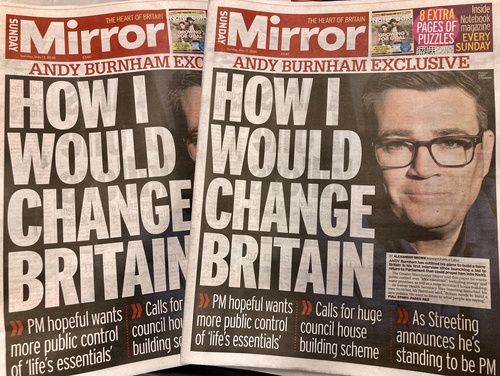
Can Britain’s Next Prime Minister Escape the Net Zero Trap?
Britain has burned through five Prime Ministers and is paying some of the highest electricity prices in the world.

The Scanner at the Gate: Europe’s China Policy Litmus Test
China’s industrial policy is entering Europe through public procurement—and reshaping sensitive markets from within.

Confronting the New Antisemitism
"The postwar effort 'to rebrand Judaism as a religion' has made it impossible for American Jews to understand what they are facing today, because what we are facing today is an attack on the idea of Jewish peoplehood.”
“Democratic” Socialism Is Undemocratic
By promoting class hatred, suppressing private initiative, and seeking enhanced control of our lives, today’s democratic socialists undermine patriotism and individual initiative—two qualities that have long distinguished the United States from other major nations.

