.webp)
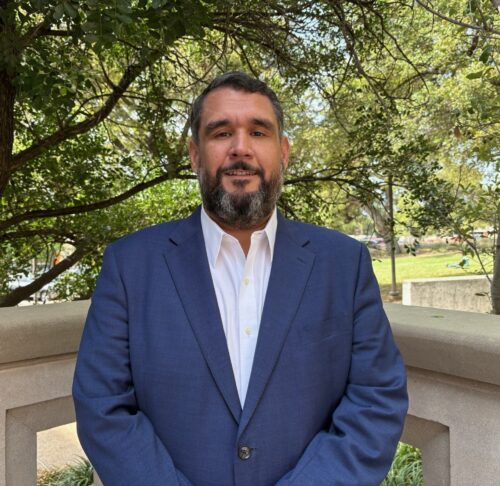
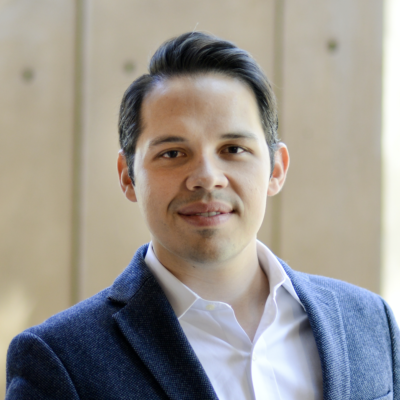
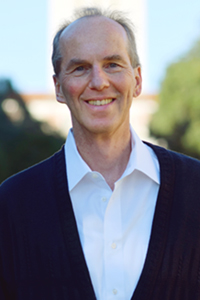
Join Professor Juan Miguel Matheus (Bowden Resident Fellow at Texas Law and member of the opposition parliament in Venezuela), Professor Diego Zambrano (Stanford Law), and Professor Kurt Weyland (UT Austin) to discuss the constitutional consequences of Nicolás Maduro’s removal and the challenges facing the democratic opposition in achieving genuine democratization.
Lunch will be served.
This event is hosted by the Bech-Loughlin Frist Amendment Center, and co-sponsored by the Clements Center for National Security, The School of Civic Leadership, and The Strauss Center for International Security and Law.
Directions to the Francis Auditorium can be found here.
PANELISTS
Juan Miguel Matheus is the current resident Bowden Fellow at Texas Law and professor of Political and Constitutional Theory at Universidad Monteávila (Caracas, Venezuela). He obtained his Ph.D. in Constitutional Law from the University of Navarra (Pamplona, Spain) and has been a visiting professor at several universities across Ibero-America. He is also an Affiliate at the Constitutional Law Center of Stanford University. In 2015, he was elected as a Deputy to the National Assembly of Venezuela, where he served as President of the Committee for the Defense of the Constitution and the Committee for the Reform of the Judiciary.
Diego A. Zambrano’s primary research and teaching interests lie in the areas of civil procedure and comparative law. A central focus of his research is private enforcement—the distinctively American phenomenon of regulating major policy areas through private litigation rather than public agencies. Professor Zambrano is authoring a book on this subject, How Americans Enforce the Law, which traces the historical roots of this regulatory approach and evaluates where private enforcement is effective and where it falls short, including his critique of its use in areas like environmental law. He also has an interest in comparative constitutional law and legal developments related to Latin America. Professor Zambrano is the Associate Dean for Global Programs and faculty director of the Neukom Center for the Rule of Law. In 2021, Professor Zambrano received the Barbara Allen Babcock Award for Excellence in Teaching.
Professor Kurt Weyland’s research interests focus on democratization and authoritarian rule, on social policy and policy diffusion, and on populism in Latin America and Europe. He has drawn on a range of theoretical and methodological approaches, including insights from cognitive psychology, and has done extensive field research in Argentina, Bolivia, Brazil, Chile, Costa Rica, Peru, and Venezuela. After receiving a Staatsexamen from Johannes-Gutenberg Universitat Mainz in 1984, a M.A. from UT in 1986, and a Ph.D. from Stanford University in 1991, he taught for ten years at Vanderbilt University and joined UT in 2001. He has received research support from the SSRC and NEH and was a fellow at the Woodrow Wilson Center in Washington, DC, in 1999/2000 and at the Kellogg Institute, University of Notre Dame, in 2004/05. From 2001 to 2004, he served as Associate Editor of the Latin American Research Review.

